
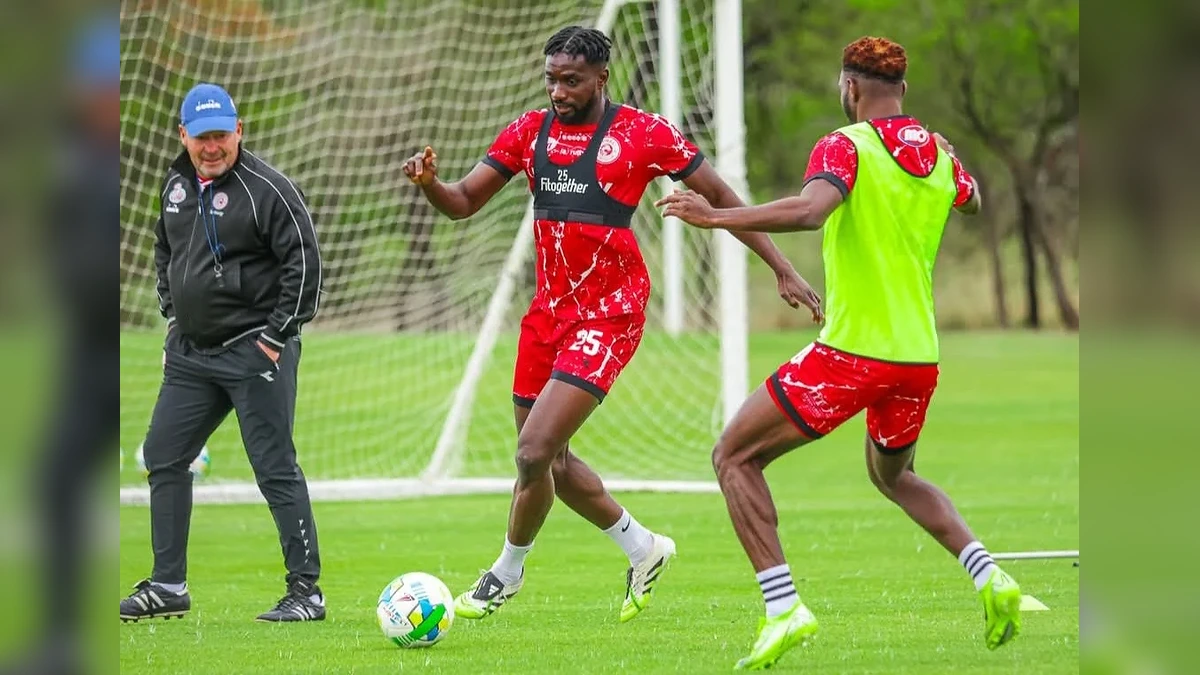
Simba SC head coach Steve Barker believes South African football’s leading clubs should place greater trust in homegrown coaches, particularly as a growing number of local tacticians continue to make their mark outside the country.
Barker, who is in his second season with Tanzanian giants Simba, has pointed to the increasing presence of South African coaches at major clubs across the continent as evidence that local managers possess the quality required to operate at the highest level.
South African Coaches Making Their Mark Abroad
Barker is among several South African coaches currently working outside the country.
In Tanzania, Manqoba Mngqithi is in charge of Simba’s biggest rivals, Young Africans, creating a situation where two South African coaches are leading the country’s most prominent clubs.
Rhulani Mokwena is also managing in Egypt with Pyramids FC, while Eric Tinkler recently had a spell at Ghanaian giants Asante Kotoko. Fadlu Davids, meanwhile, has previously managed major Moroccan club Raja CA.
The growing presence of South African coaches in prominent foreign leagues has strengthened the argument that local tacticians deserve more opportunities at home.
Barker Questions the Lack of Local Trust
Despite those developments, several of South Africa’s biggest clubs continue to favour coaches from abroad.
Mamelodi Sundowns are coached by Portuguese tactician Miguel Cardoso, while Orlando Pirates are led by French-Moroccan coach Abdeslam Ouaddou. Kaizer Chiefs have also turned to Frenchman Fernando Da Cruz.
Barker believes the continued preference for foreign coaches raises questions about the opportunities available to South African managers.
“South African coaches locally are perhaps not properly looked at enough in terms of the bigger clubs and bigger jobs,” Barker said.
Senior Coaches May Have Missed Their Opportunity
At 58, Barker acknowledged that some of the more experienced generation of South African coaches may not get another opportunity to take charge of the country’s biggest clubs.




However, he believes the situation could change for younger coaches if they continue building strong records with the teams they manage.
“All we can do as coaches is just to continue to be successful wherever we are and the teams that we coach,” Barker said.
He added that opportunities could emerge in the future, particularly for younger South African coaches seeking to break into the highest-profile jobs in the domestic game.
Pitso Mosimane Helped Open the Door
Barker also highlighted the international achievements of several South African coaches as evidence that the country has produced tacticians capable of succeeding outside its borders.
Pitso Mosimane was among the pioneers to gain significant recognition abroad, particularly during his successful spell in Egypt.
Bradley Carnell has also built a coaching career in the United States, while Mokwena has established himself in Egypt.
Barker believes the achievements of these coaches, together with the work being done by himself and Mngqithi in Tanzania, demonstrate that South African managers can compete in demanding football environments.
Tanzania Provides a Significant Test
The presence of Barker and Mngqithi at Simba and Young Africans respectively has also created an unusual coaching dynamic in Tanzanian football.
Both clubs are among the country’s biggest sides, meaning the success of the two South African managers is being closely followed.
For Barker, their experiences abroad provide another example of local coaches being trusted with major responsibilities when opportunities are made available.
Barker Backs the Next Generation
Rather than focusing solely on his own prospects, Barker believes the long-term solution lies in creating more opportunities for younger coaches.
He stressed that managers must continue proving themselves through their results and performances, while clubs also need to be prepared to give them opportunities at the highest level.
“I do believe that South African coaches have shown that they have qualities,” Barker said.
He pointed to the achievements of Mosimane, Carnell, Mokwena, Mngqithi and others as evidence of the depth of coaching talent coming from South Africa.
Bigger Domestic Jobs Could Become the Next Challenge
With South African coaches increasingly taking charge of major clubs abroad, the next question is whether domestic giants will follow the same path by giving more local tacticians opportunities.
For Barker, continued success remains the most important way for coaches to strengthen their case.
The Simba coach believes that if South African managers continue producing results both domestically and internationally, younger members of the profession could eventually find themselves competing for the biggest jobs in the country.

