
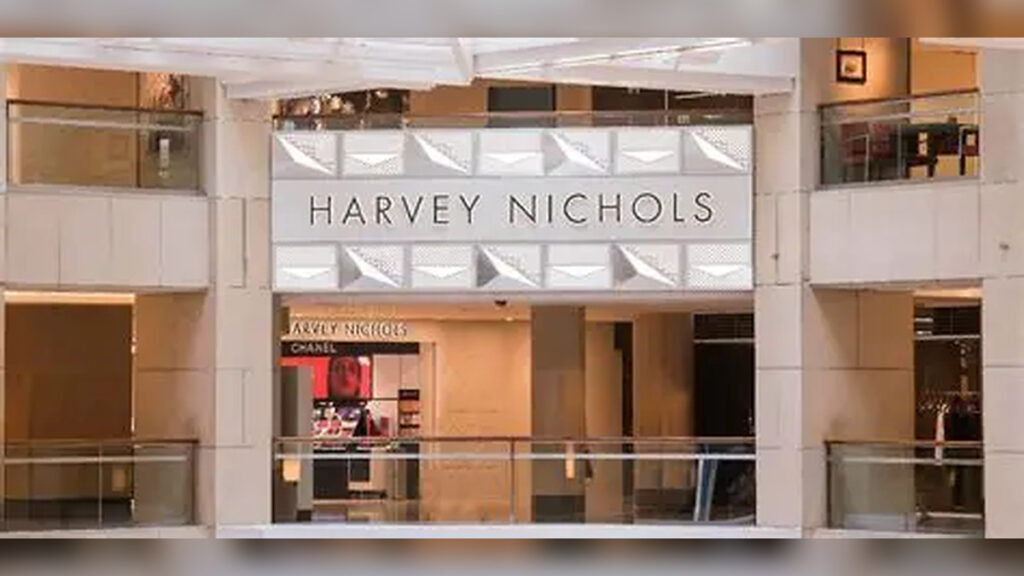
Harvey Nichols has avoided the fate that once appeared increasingly possible, with Frasers Group stepping in to rescue the long-established luxury retailer from serious financial difficulty.
For fans of the British department store, the takeover is undoubtedly better than watching the business disappear.
Jobs have been protected, the brand has been preserved and a retailer with almost two centuries of history has been given another chance.
Yet the rescue has also sparked an uncomfortable question: can Harvey Nichols remain Harvey Nichols under the ownership of Frasers and its billionaire majority owner, Mike Ashley?
For some loyal admirers, that question matters almost as much as whether the company survives financially.
A Rescue That Comes With Mixed Emotions
The prospect of Harvey Nichols shutting its doors would have represented a significant loss for Britain’s retail landscape.
The company has long occupied a distinctive position, offering high-end fashion, beauty and luxury products in stores designed to feel different from conventional department stores.
Its survival is therefore welcome news.
But ownership by Frasers Group has created a sense of unease among those who believe Harvey Nichols’ value extends beyond its balance sheet.
The concern is not simply whether the retailer will make money again.
It is whether the strategy required to restore profitability could gradually strip away the character that made Harvey Nichols so desirable in the first place.
The Magic Was Never Just About Shopping
Harvey Nichols has always offered something that goes beyond the products displayed on its shelves.
For many visitors, particularly those who cannot regularly afford its designer merchandise, entering one of its stores can feel like stepping temporarily into another world.
The atmosphere, architecture, beauty counters and carefully curated fashion collections all contribute to that experience.
That sense of aspiration is part of the brand’s identity.
A visit can be enjoyable even without a purchase because the environment itself provides the attraction.
It is precisely that intangible quality that some observers fear could be sacrificed in a restructuring focused heavily on commercial performance.
Leeds Store Holds a Special Place
The concern is particularly emotional for people who have grown up with Harvey Nichols as a fixture in their cities.
The Leeds branch, located in the historic Victoria Quarter, is one such example.
For longtime visitors, the store has become part of the city’s identity as much as a place to shop.
The experience of entering the building can evoke memories that have little to do with actually buying anything.
For younger visitors, the store can represent a first glimpse into the world of luxury fashion.
Even simply being welcomed through the doors can create a sense of occasion.
That is difficult to measure on a balance sheet, but it is arguably one of Harvey Nichols’ greatest strengths.
Frasers Has Already Signalled Major Changes
Frasers Group has made clear that Harvey Nichols requires substantial work to return to a stronger commercial position.
The retailer could become smaller in the short term as part of the turnaround strategy, although the precise shape of the business under its new ownership remains uncertain.




From a purely commercial perspective, such changes may be unavoidable.
Harvey Nichols was in serious enough trouble to require a rescue, meaning maintaining every aspect of the existing operation without alteration was unlikely to be realistic.
The challenge will be determining which parts of the business need to change and which are essential to preserving the brand.
The Sports Direct Comparison Is Hard to Ignore
For some Harvey Nichols fans, the most controversial aspect of the takeover is not the financial restructuring itself but the association with Sports Direct.
Frasers Group owns Sports Direct alongside a large portfolio of other retail businesses.
Sports Direct is one of Britain’s most recognisable retail names, but its mass-market image appears almost completely removed from the world Harvey Nichols has traditionally occupied.
That contrast has prompted questions about whether two radically different retail philosophies can exist comfortably under the same corporate umbrella.
Harvey Nichols trades on exclusivity, presentation and luxury.
Sports Direct has built its reputation around scale, accessibility and value.
The two businesses could theoretically coexist, particularly given Frasers’ expanding presence in premium and luxury retail.
But preserving Harvey Nichols’ distinctive character will require a careful approach.
Flannels Offers a Clue to What Could Come Next
Frasers’ ownership of Flannels provides an indication of how the group has already moved into the premium fashion market.
Flannels carries major designer brands and appeals to consumers who shop for luxury goods, making it closer to Harvey Nichols than Sports Direct in terms of merchandise.
Yet there remains a fundamental difference between the two.
Flannels operates as a much larger chain, with more than 80 stores across the UK, while Harvey Nichols has only seven locations across the UK and Ireland.
Harvey Nichols’ smaller footprint has also allowed its stores to develop individual identities, with interiors and concepts reflecting their respective locations.
That individuality is one of the features that makes the retailer distinctive.
Will Harvey Nichols Become Another Chain?
This is where some of the greatest anxiety lies.
There is concern that a successful formula used elsewhere in the Frasers portfolio could eventually be applied to Harvey Nichols, resulting in stores that become increasingly standardised.
For supporters of the brand, that would be a serious mistake.
The appeal of Harvey Nichols has partly rested on the fact that its stores do not simply feel like interchangeable branches of a national chain.
Their surroundings, design and atmosphere contribute to a sense of place.
Turning that experience into something more uniform might improve efficiency, but it could also weaken the very exclusivity that attracts customers.
Mike Ashley Faces a Delicate Balancing Act
The concerns should not necessarily be interpreted as an attack on Mike Ashley’s business abilities.
Frasers has built an enormous retail empire, and Ashley’s ability to identify struggling businesses, restructure operations and pursue growth is well established.
That expertise could ultimately be exactly what Harvey Nichols needs.
The retailer’s financial difficulties suggest that maintaining the status quo is not a viable option.
A successful turnaround may require difficult decisions, including changes to its store network, operating model and cost base.
The question is whether those changes can be made without destroying the brand’s emotional and cultural value.
Saving the Name Is Only Half the Battle
There is a fundamental difference between preserving a company’s name and preserving what that name represents.
Harvey Nichols can remain on the signs, continue selling designer fashion and operate in Britain’s major cities while still becoming a very different retailer.
That is the fear among some of its longtime admirers.
If the business becomes more profitable but loses its sense of exclusivity, individuality and aspiration, the rescue could ultimately preserve the company while changing its identity beyond recognition.
The 200th Anniversary Is Now Within Reach
Harvey Nichols is approaching a major milestone, with its 200th anniversary due in 2031.
The Frasers takeover gives the company a realistic opportunity to reach that landmark rather than disappear before it.
That alone makes the rescue significant.
But the next five years will determine what exactly reaches that anniversary: a rejuvenated luxury institution that has successfully adapted to modern retail, or a more commercially streamlined business carrying a historic name.
For those who have loved Harvey Nichols for decades, the hope is obvious.
They want the retailer to survive, become financially stronger and continue for another century or two.
But they also want the thing that made it special in the first place to survive with it.

