
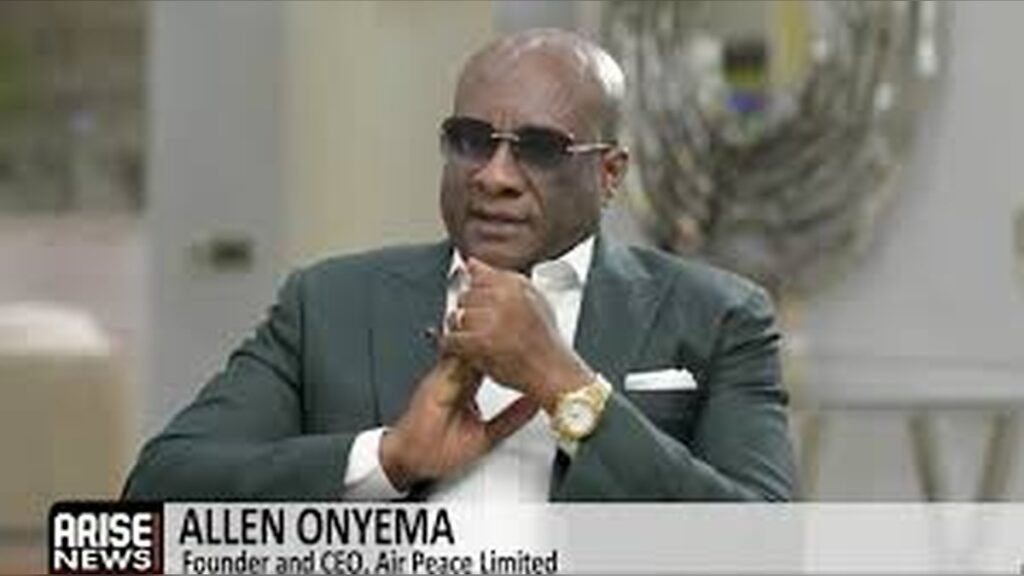
The Chairman and Chief Executive Officer of Allen Onyema has called on Nigerians to respond to recurring xenophobic incidents in South Africa through economic measures rather than violence.
Speaking during an interview on Arise Television, the airline executive urged citizens to withhold investments from South Africa while encouraging South African businesses to operate in Nigeria under regulations set by Nigerian authorities.
According to Onyema, a strategic economic response would be a more effective and responsible way of expressing dissatisfaction over the treatment of African migrants, particularly Nigerians, in the southern African nation.
Advocate of Non-Violent Retaliation
While backing calls for a stronger response to the attacks, Onyema emphasized that any action taken should remain peaceful and lawful.
He argued that Nigerians should channel their frustrations into economic decisions rather than street protests or attacks on foreign-owned businesses.
He proposed that Nigerians avoid committing capital to South Africa while allowing South African investors to continue operating in Nigeria, provided they comply with local policies governing investments and profit repatriation.
For Onyema, economic pressure represents a form of retaliation that sends a strong message without escalating tensions or endangering lives.
Criticism of South African Authorities
The Air Peace founder expressed frustration with what he described as the inability or unwillingness of South African authorities to prevent repeated attacks against foreign nationals.
He questioned how incidents involving mobs confronting migrants, demanding identification documents, and forcing people out of their homes could continue despite the presence of law enforcement and security agencies.



According to him, such recurring episodes raise concerns about the level of protection available to immigrants who live and work in South Africa.
Nigerians Contribute to South Africa’s Economy, Says Onyema
Onyema also highlighted the economic contributions made by Nigerians residing in South Africa.
He noted that many migrants establish businesses, create employment opportunities, and inject capital into the local economy.
Rather than being viewed as a burden, he argued, these entrepreneurs should be recognized for their role in supporting economic growth and fostering commercial activity.
He suggested that local communities could benefit from learning entrepreneurial skills and business practices from successful foreign investors instead of targeting them during periods of unrest.
Opposition to Attacks on South African Businesses in Nigeria
Despite his strong criticism of xenophobic violence, Onyema rejected suggestions that Nigerian authorities should shut down South African-owned companies operating in the country.
He pointed out that many Nigerians have financial interests in such businesses and that these companies provide jobs for thousands of citizens.
As a result, he warned that punitive actions against legitimate businesses could ultimately harm Nigerians as much as foreign investors.
His comments reflected a preference for targeted economic choices by individuals rather than government-led closures or retaliatory measures against companies.
Renewed Tensions Amid Anti-Foreigner Demonstrations
Onyema’s remarks come as concerns grow over fresh anti-immigrant protests in parts of South Africa.
Demonstrators have reportedly demanded that undocumented migrants leave the country before a June 30 deadline, creating anxiety among affected communities.
The situation has prompted efforts by Nigeria and several other African nations to facilitate the return of citizens who wish to leave South Africa amid the rising tensions.
As diplomatic discussions continue, Onyema’s proposal for a non-violent economic boycott adds another voice to the ongoing debate about how African countries should respond to recurring xenophobic attacks while preserving regional cooperation and economic stability.

