
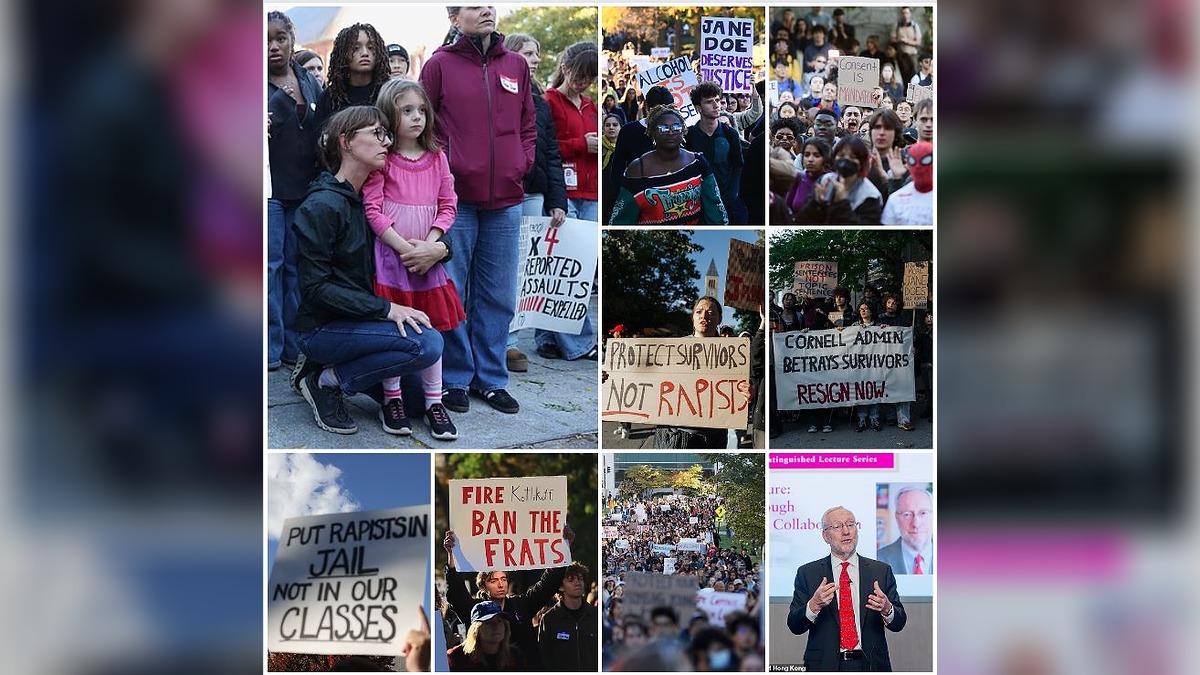
Cornell University President Michael Kotlikoff is facing growing pressure from students and faculty over the university’s handling of a 2024 sexual assault case involving seven former members of the Chi Phi fraternity.
The controversy has intensified after a civil lawsuit filed by a former student, identified as Jane Doe, reignited scrutiny of what happened at the fraternity house and how university officials responded afterward.
Hundreds of students and supporters demonstrated on campus this week, with protesters demanding greater accountability, tougher action against sexual violence and changes to Cornell’s approach to fraternity life.
The case has also prompted Cornell faculty to prepare a rare no-confidence resolution against the university’s administration.
Kotlikoff Rejects Claims That Cornell Hid Information
Speaking during a meeting with graduate and professional students on Monday, Kotlikoff defended the university’s response and rejected suggestions that Cornell had deliberately concealed information about the case.
“We’re not hiding anything at Cornell,” he said, according to The Cornell Daily Sun.
The president acknowledged that the university community was angry and said students wanted answers about what happened and how the case was handled.
He also said Cornell would present proposals aimed at improving campus culture and addressing sexual misconduct.
Kotlikoff has separately backed an independent review of Cornell’s handling of the allegations, while also supporting New York Gov. Kathy Hochul’s decision to appoint Attorney General Letitia James as a special prosecutor in the criminal investigation.
Faculty Prepare No-Confidence Resolution
The pressure on Kotlikoff is no longer limited to student demonstrations.
Cornell’s Faculty Senate is preparing to vote on a resolution expressing no confidence in the university’s central administration over its handling of sexual assault concerns.
A draft resolution states that the faculty senate has no confidence in the administration’s ability to effectively address the ongoing crisis of sexual assault at Cornell.
The resolution would not automatically remove Kotlikoff or any other university official, but it would represent a significant escalation in the internal pressure facing the administration. A vote is expected later this month.
Lawsuit Brings 2024 Allegations Back Into Focus
The controversy centres on allegations dating to October 19, 2024, when Jane Doe says she went to the Chi Phi fraternity house after drinking in Ithaca.
According to her civil complaint, she was pressured to consume ketamine, marijuana and high-proof alcohol before becoming incapacitated.
She alleges that seven fraternity members subsequently sexually assaulted her over several hours, with the alleged ordeal continuing into the early hours of October 20.
The allegations have not been established in court, and several of the accused men have denied participating in a sexual assault.




The Case Has Raised Questions About Consent
One of the central issues surrounding the case is the difference between Jane Doe’s initial account and her later description of what happened.
The lawsuit says Doe initially described the sexual activity as consensual but later came to understand the encounter as a sexual assault.
More recent reporting has revealed that she told Cornell police during an interview that she was completely confident she had been raped, a detail that has intensified scrutiny of the original investigation.
The Tompkins County district attorney did not bring criminal charges in 2024. The case has since been reopened following the renewed public attention and the emergence of additional information.
Cornell’s Internal Investigation Led to Discipline
Cornell conducted its own Title IX investigation after Doe reported the allegations.
The university has said the investigation was conducted professionally and resulted in disciplinary action against some of the students involved.
Two students were expelled, while others received suspensions or other disciplinary measures. Cornell has also shut down the Chi Phi chapter.
Critics, however, have questioned whether the university’s response was sufficiently strong and whether the disciplinary process adequately addressed the seriousness of the allegations.
Protesters Demand Sweeping Changes
The demonstrations on campus have reflected anger extending beyond the individual case.
Protesters have called for Kotlikoff’s resignation and demanded that Cornell take tougher action against students accused of sexual misconduct.
Signs displayed during the protests included calls to “Fire Kotlikoff” and “Ban the Frats”, while others demanded that alleged perpetrators not be allowed to remain in university classrooms.
Organisers have also called for the immediate expulsion of all seven men named in the lawsuit, an external investigation into Cornell’s handling of the case, mandatory sexual assault training and changes to the university’s sexual assault policies.
They have also demanded compliance with New York’s Enough Is Enough law, which requires colleges and universities to maintain policies addressing sexual violence, stalking and related issues.
New York Has Taken Over the Criminal Investigation
The controversy has now expanded beyond Cornell’s internal disciplinary process.
Hochul appointed New York Attorney General Letitia James as a special prosecutor after the case attracted renewed scrutiny.
The appointment means the allegations are being examined again at the state level, with prosecutors reassessing evidence surrounding the 2024 incident.
Newly reported documents have also raised questions about evidence collected during the original investigation, including efforts by Cornell police to obtain phone records.
Kotlikoff Says Cornell Must Do Better
Despite defending the university’s previous Title IX investigation, Kotlikoff has acknowledged that serious questions have been raised about Cornell’s response.
In a statement released over the weekend, he described the allegations as deeply disturbing and said the university needed to learn from what happened.
He said the period following the filing of the lawsuit had been among the most difficult in Cornell’s history and acknowledged that members of the campus community were angry, sad and struggling.
Kotlikoff also expressed sympathy for Jane Doe and said Cornell had a responsibility to prevent similar incidents from happening again.
The Debate Now Extends to Greek Life
The controversy has also renewed debate about the role of fraternities and sororities at Cornell.
Kotlikoff has said the university will take a serious look at the role of Greek life and examine its approach to preventing and responding to sexual misconduct.
For protesters, however, promises of reform have so far failed to satisfy demands for accountability over the 2024 allegations.
With the criminal investigation reopened, an independent review of Cornell’s handling of the case expected and faculty preparing a no-confidence vote, pressure on the university administration is unlikely to ease soon.
The allegations remain the subject of ongoing legal proceedings, and the accused men are entitled to due process as the investigations continue.

