
Nigerian journalist, lawyer and author Richard Akinnola has called for stronger documentation of the country’s environmental struggles, warning that important episodes such as the Ogoni movement could be distorted or forgotten if they are not properly preserved.
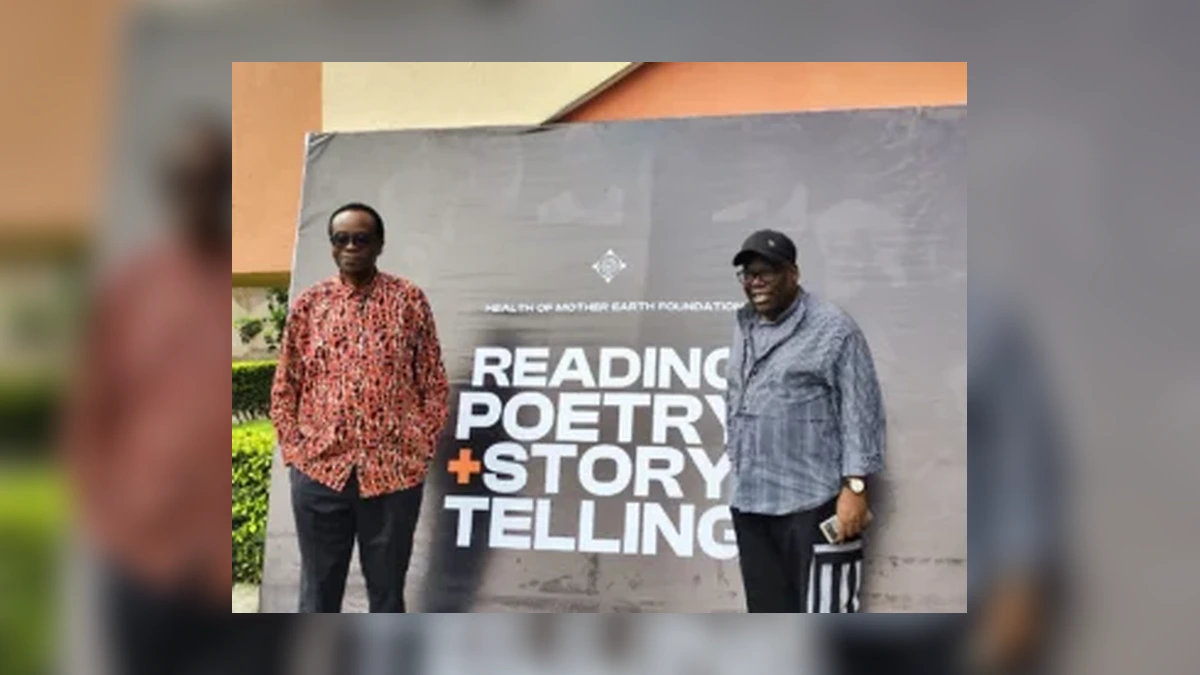
Akinnola made the call during a Book Day organised by the Health of Mother Earth Foundation (HOMEF) in Benin, where he stressed the importance of maintaining reliable records for future generations.
Ogoni Struggle Must Remain Part of Nigeria’s History
Akinnola identified the environmental campaign led by the Ogoni people and the activities of the Movement for the Survival of the Ogoni People (MOSOP) as significant parts of Nigeria’s history.
He argued that environmental issues should not be separated from the country’s wider political, legal and human-rights history because the environment affects virtually every aspect of society.
“Everything depends on the environment. Everything,” he said.
According to him, journalists, lawyers, activists and other public-interest actors have a responsibility to record environmental injustices, campaigns and major developments so younger Nigerians can understand the events and circumstances that shaped the country.
Call for More Environmental Advocacy
The journalist also advocated greater use of public-interest litigation to address environmental concerns and hold institutions accountable for violations.
He urged environmental organisations to work more closely with groups involved in public-interest legal action, arguing that stronger collaboration could contribute to the development and enforcement of environmental law.
Akinnola said the same commitment to documentation should extend to Nigeria’s political, legal and human-rights history.
He noted that incomplete records could create opportunities for important events to be misrepresented, particularly as the individuals who currently occupy positions of power will eventually leave them.
Lessons From a Career in Journalism
Akinnola said his work in journalism, law and activism had reinforced his belief in the value of research and historical records.
Reflecting on his time at The Guardian, he recalled an approach to journalism in which reporters were encouraged to provide historical background rather than simply report events as they happened.
“When we started Guardian in 1983, it wasn’t just to write news reports. You were tying it to background,” he said.
He explained that this approach influenced his own work documenting political, legal, environmental and human-rights developments over several decades.
Remembering Ken Saro-Wiwa and the Ogoni Trial
Among the events Akinnola documented was the trial and execution of environmental activist Ken Saro-Wiwa and eight other Ogoni leaders under Nigeria’s military government.
He recalled recording details surrounding the trial, the judicial proceedings, allegations involving the treatment of prosecution witnesses and the events that followed the death sentences.
He also highlighted the efforts of human-rights lawyer Gani Fawehinmi and other members of the defence team to challenge aspects of the proceedings and pursue legal interventions.



The Ogoni activists were ultimately executed at Port Harcourt prison on November 10, 1995.
Why Small Records Can Matter
Akinnola said historical evidence does not always come in the form of major official documents.
He recalled the activism of Fawehinmi and described how the late lawyer maintained records of his encounters with successive military administrations.
Akinnola cited an occasion when Fawehinmi, while being taken into detention, reportedly left a message on a piece of tissue paper indicating that security officials were taking him to an unknown destination.
For Akinnola, such a seemingly minor record can become significant when official accounts are incomplete, disputed or unavailable.
“Nothing is too small for Gani not to put in publication. No document is too small,” he said.
Akinnola Recalls His Own Detention
The journalist also reflected on his own experience with Nigeria’s security authorities.
He recalled being abducted in 1996 after writing about the killing of businessman and pro-democracy figure Alfred Rewane.
Akinnola later documented the incident in a book, including his detention and questioning by security officials.
He said the experience reinforced his view that journalists working in difficult political environments should preserve their records and document their own experiences.
He also recalled the assassination of Newswatch founding editor-in-chief Dele Giwa, arguing that events involving journalists, activists and other influential figures must remain accessible as part of the nation’s historical record.
Digital Platforms Could Reach Younger Nigerians
Akinnola said the arrival of artificial intelligence and the growing dependence on digital information had made accurate documentation even more important.
He is exploring platforms including YouTube and TikTok to make some of his historical accounts available to younger audiences who may be less inclined to engage with traditional books.
The aim, he said, is to ensure that important stories remain accessible even as the way people consume information changes.
HOMEF Promotes Wider Access to Knowledge
HOMEF Executive Director Dr Nnimmo Bassey described Akinnola as an activist, lawyer, journalist, editor, publisher and author whose work has contributed to documenting Nigeria’s political, environmental, legal and human-rights history.
Bassey encouraged young Nigerians to engage more actively with the country’s history through reading and other forms of learning.
“We need to get ourselves educated. Read and read,” he said.
He said HOMEF’s Book Day and its broader cultural activities were designed to create opportunities for people to exchange ideas and examine the links between environmental protection, human rights and social justice.
HOMEF Turns to Digital Storytelling
Bassey acknowledged that changing patterns of media consumption require organisations to find new ways of communicating complex ideas.
He noted that shorter digital content has become increasingly popular, making it necessary to use a wider range of formats to reach audiences.
HOMEF’s cultural programmes therefore extend beyond conventional book discussions to include poetry, films and animation.
Bassey said the organisation intends to use multiple platforms and creative approaches to ensure that environmental knowledge reaches people who may not engage with traditional books.
Preserving History Beyond the Written Page
The discussions at the Book Day highlighted a broader challenge facing Nigeria: preserving historical knowledge while adapting to changing ways of consuming information.
For Akinnola, detailed records of environmental struggles, political events, legal battles and human-rights campaigns can help future generations understand how the country arrived at its present circumstances.
HOMEF’s approach, meanwhile, seeks to make that knowledge accessible through both traditional and digital forms, ensuring that important lessons from Nigeria’s past remain available to new audiences.

