
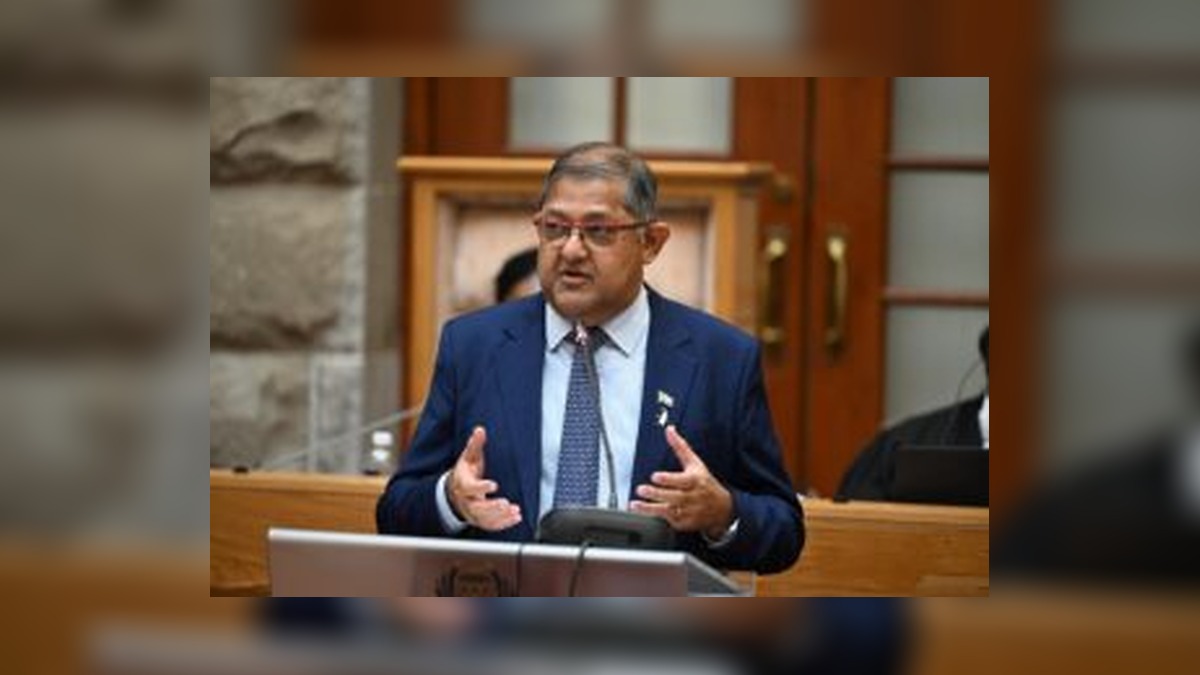
South Africa has been urged to accelerate its shift towards a circular economy as the country grapples with climate change, rising resource costs, unemployment and growing pressure on municipal waste management systems.
Deputy Minister of Forestry, Fisheries and the Environment Narend Singh says the country has reached an important point where it must reconsider an economic model built around extracting resources, producing goods, consuming them and ultimately throwing them away.
He argues that a circular economy could turn many of the country’s waste challenges into opportunities for economic growth, job creation and industrial development.
From Waste Problem to Economic Opportunity
For decades, South Africa’s economy has largely operated according to a linear model in which resources are extracted, products are manufactured and consumed before being discarded.
While that approach contributed to industrial development, Singh says it has also placed increasing pressure on natural resources and public infrastructure while creating significant environmental costs.
A circular economy offers an alternative by keeping materials and products in use for as long as possible and treating waste as a potential resource rather than the final stage of a product’s life.
Countries around the world are increasingly viewing circularity as more than an environmental objective, with resource efficiency, innovation and industrial resilience becoming important elements of economic competitiveness.
EPR Regulations Could Transform Waste Management
South Africa has already taken steps towards this transition through the government’s Extended Producer Responsibility (EPR) Regulations.
The regulations require producers to take greater responsibility for the environmental impact of their products throughout their life cycles.
This creates incentives for improved product design, increased recycling and investment in systems for collecting and recovering materials.
Singh says the importance of EPR extends beyond ensuring that companies comply with regulations.
When properly implemented, the system can support job creation, encourage small businesses, stimulate innovation and reduce some of the pressure currently carried by municipalities dealing with increasing waste volumes.
Plastics Present Both a Challenge and Opportunity
The plastics industry provides a clear example of how circular economy principles could deliver economic and environmental benefits.
Although plastics are frequently associated with pollution, they remain important across sectors including healthcare, agriculture, construction and food security.
The challenge, therefore, is not simply eliminating the material but improving how plastics are produced, used, collected and managed after use.
Greater emphasis on reuse, repair and recycling could keep plastics within the economy for longer while reducing pollution and creating opportunities throughout the recycling value chain.




Government Seeks Stronger Industry Partnerships
Singh highlighted the growing importance of cooperation between government, businesses and Producer Responsibility Organisations such as Polyco.
Such partnerships can combine regulation with investment, innovation and practical interventions aimed at improving recycling and resource recovery.
The Department of Forestry, Fisheries and the Environment is currently reviewing the implementation of the EPR Regulations after five years.
The review is intended to ensure that the system remains effective, transparent and capable of responding to emerging challenges in the waste sector.
Municipalities and Waste Pickers Remain Central
Policy changes alone will not be enough to achieve a successful circular economy, according to Singh.
Municipalities need stronger waste management infrastructure, while businesses must continue investing in recycling systems and products designed with resource recovery in mind.
Communities also need improved access to separation-at-source programmes so recyclable materials can be recovered before they enter the waste stream.
Waste pickers are another critical part of the system. Singh says their contribution to recycling should receive greater recognition, alongside efforts to integrate them more formally into the economy and provide fairer economic opportunities.
South Africa Already Has Circular Economy Examples
Signs of a circular economy are already emerging in different parts of South Africa.
Wastewater is increasingly being treated as a resource that can contribute to water security, while former landfill sites have opportunities to be repurposed for renewable energy generation.
Materials that would previously have been sent for disposal are also being recovered and used to create businesses, employment and new economic value.
According to Singh, these initiatives demonstrate that circular economy principles can operate as practical economic solutions rather than remaining an abstract environmental concept.
Africa Could Benefit From Greater Circular Investment
South Africa’s ambitions also extend beyond its own borders.
As co-chair of the Africa Circular Economy Alliance, the country is working with continental partners to encourage investment, strengthen circular economy initiatives and promote more sustainable approaches to managing resources.
The role provides South Africa with an opportunity to contribute to the development of circular economy solutions that address challenges shared by countries across the continent.
Circular Economy Could Support Inclusive Growth
Singh argues that the transition should be viewed simultaneously as an environmental strategy, an industrial policy opportunity and an economic development programme.
Reducing pollution does not necessarily have to come at the expense of economic growth. By keeping resources in circulation, South Africa could conserve raw materials while creating new businesses, jobs and industrial opportunities.
The approach could also contribute to climate action and improve environmental conditions in communities.
South Africa Urged to Change Its Approach to Waste
The Deputy Minister says the country now needs to move beyond treating sustainability primarily as a compliance requirement.
Instead, sustainability should be viewed as an opportunity to encourage investment, innovation and economic development.
With government, industry, municipalities, communities and citizens working together, South Africa has the potential to develop an economy that uses fewer resources, generates less waste and creates greater economic value.
The transition to circularity, Singh argues, could ultimately help build a more resilient and prosperous economy for future generations.
Singh is the Deputy Minister of Forestry, Fisheries and the Environment.
- Cornell President Says ‘We’re Not Hiding Anything’ as Sexual Assault Scandal Rocks University
- Tories Consider Tobacco Tax Cut as Kemi Badenoch Ally Warns High Duties Are Fueling Black Market
- Nigerian Army Honours Late Lt-Gen Obiakor as His Extraordinary UN Peacekeeping Legacy Is Remembered
- Green Party Erupts Into Bitter Israel Row as Controversial Zionism Motion Faces Vote
- Green ID Book Deadline Looms as Home Affairs Gives Naturalised Citizens and Permanent Residents Key Smart ID Assurance
- Halevi Drops Bombshell on Netanyahu Over 2023 Reservist Crisis: ‘Don’t Dismiss Them’

