
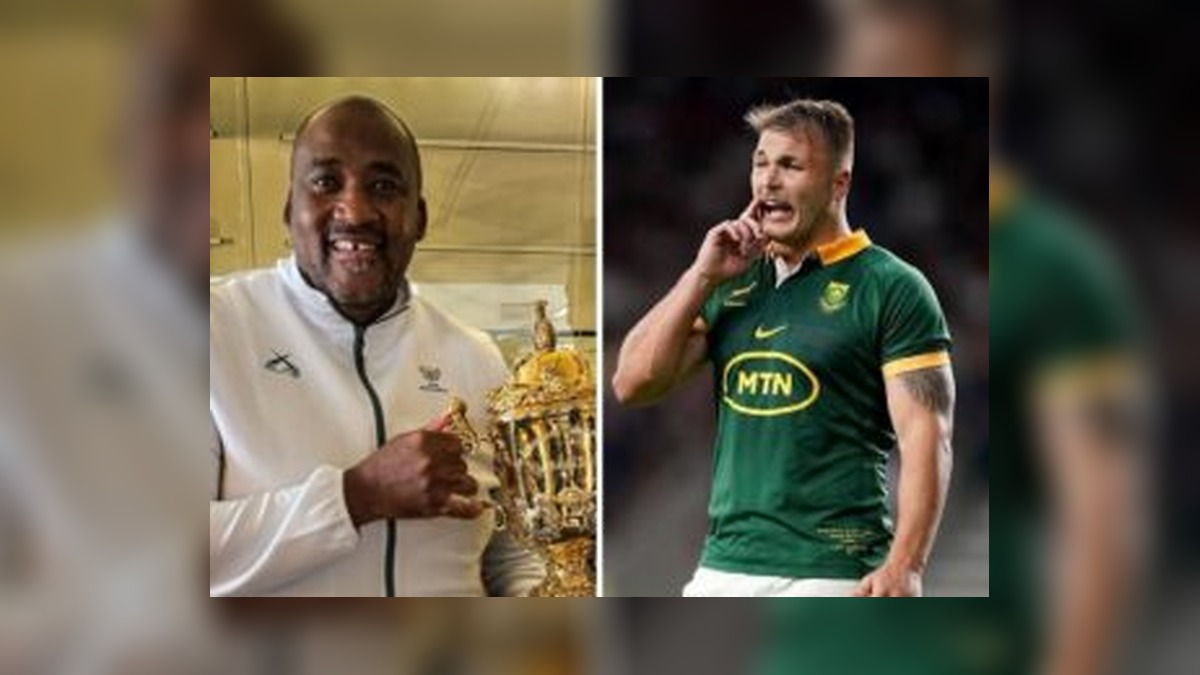
Minister of Sport, Arts and Culture Gayton McKenzie has defended Springbok player Andre Esterhuizen amid renewed controversy over a racial slur allegation dating back to the rugby player’s teenage years.
McKenzie said Esterhuizen should not be defined permanently by an incident that occurred in 2012, when the player was 18 years old and still a schoolboy.
The minister also called on SA Rugby to provide clarity about how the organisation has dealt with the historical incident, saying the public deserved an explanation.
Minister Wants SA Rugby to Explain Its Position
Speaking in a video shared on his Facebook account, McKenzie addressed the backlash surrounding Esterhuizen after questions about the old allegation resurfaced.
The minister said he was planning to meet with SA Rugby to obtain a full report on the matter.
His intervention follows a recent media briefing involving Esterhuizen, who captained the Springboks against Australia, during which SA Rugby declined to answer questions concerning the historical racial-slur allegation.
McKenzie said the organisation’s failure to explain its position had contributed to public frustration.
He argued that people who were affected by racism deserved to understand why the matter had been handled in the way it was.
McKenzie Says People Can Change
Despite acknowledging the seriousness of the allegation, McKenzie urged the public to consider Esterhuizen’s age at the time of the incident and the possibility that people can change as they grow older.
The minister said he believed in second chances and pointed to his own experiences as an example of why individuals should not necessarily be judged for the rest of their lives by mistakes made in the past.
McKenzie also said he hoped Esterhuizen had apologised to the person involved and had recognised the seriousness of his actions.
He further stated that he did not believe Esterhuizen should be regarded as a racist based solely on the historical incident.
Esterhuizen Was Suspended After 2012 Incident
The controversy dates back to 2012, when Esterhuizen was a matric learner at Klerksdorp High School.
He was accused of directing a racial slur at Thabo Molete, who was coaching Potchefstroom Gymnasium, during a rugby-related confrontation.
Esterhuizen was subsequently found guilty of misconduct and initially received a one-year suspension.




That punishment was later reduced to six months on condition that he completed a life-skills course.
The suspension also resulted in him missing the opportunity to participate in Craven Week.
McKenzie Says Esterhuizen Should Not Be Written Off
McKenzie said the circumstances surrounding the incident should be considered in the context of Esterhuizen’s age at the time.
He argued that an individual who made a serious mistake as a teenager could potentially mature and change significantly over the years.
The minister said he had spoken to people who currently work with Esterhuizen and claimed they had given him positive feedback about the Springbok.
McKenzie suggested that Esterhuizen’s situation could also be used to demonstrate that confronting racism and allowing people to learn from past mistakes can form part of a broader conversation about change.
Minister’s Own Controversial Posts Resurface
McKenzie’s comments come against the backdrop of controversy over his own past social media posts.
Screenshots of posts from his former X account resurfaced last year, triggering criticism over alleged use of the K-word.
The minister acknowledged that some of his old posts were insensitive and stupid and apologised for some of them.
However, he disputed some of the posts attributed to him, claiming that those containing the racial slur had been generated using artificial intelligence.
McKenzie has also previously rejected accusations that he is racist and challenged his critics to produce evidence that he had used the K-word against another person.
SA Rugby Faces Pressure for Clarity
The latest controversy has placed renewed attention on SA Rugby’s handling of historical misconduct allegations involving players.
McKenzie said the organisation needed to explain its position because members of the public remained hurt by the issue.
His planned engagement with SA Rugby is expected to focus on the circumstances surrounding Esterhuizen’s case and the organisation’s decision not to address questions about it publicly.
The minister’s intervention could therefore bring renewed scrutiny to how sporting bodies deal with historical allegations while balancing accountability, rehabilitation and the possibility of personal change.
Human Rights Commission Previously Investigated McKenzie Controversy
The minister’s own history with the K-word controversy has also attracted institutional attention.
A South African Parliament spokesperson previously said the parliamentary ethics committee could not investigate McKenzie’s old social media posts because the posts dated from a period before he became a Member of Parliament.
The South African Human Rights Commission, however, indicated that it would investigate the matter.
McKenzie’s latest defence of Esterhuizen therefore comes as he continues to face questions of his own over controversial statements attributed to him from years before he entered Parliament.
Debate Over Past Mistakes Returns to the Spotlight
The Esterhuizen controversy has reignited a wider debate in South Africa about how society should respond when public figures are accused of offensive conduct committed many years earlier.
For McKenzie, the focus should include accountability but also the possibility that people can acknowledge their mistakes, learn from them and change.
His comments have now put the spotlight back on SA Rugby to explain its handling of the Esterhuizen matter and provide clarity on the historical incident that has resurfaced years after it occurred.

