
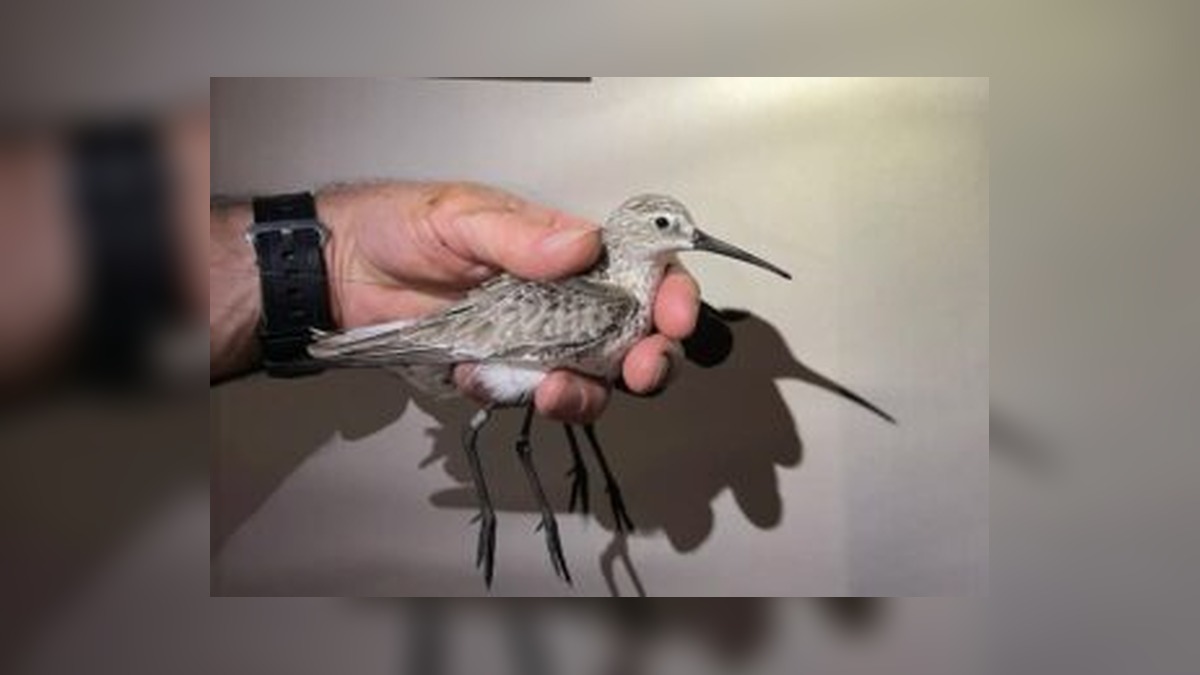
At just 60 grams, Wembere is small enough to fit into the palm of a hand. But the Curlew Sandpiper has completed a journey that would be remarkable for a much larger traveller.
In less than seven months, Wembere flew more than 25,000 kilometres between South Africa and the Arctic, following one of the world’s great migratory routes.
His return to South Africa’s West Coast comes just as World Migratory Bird Day is being observed on Saturday, 10 October, providing a striking reminder of the extraordinary distances migratory birds cover each year.
Wembere’s Flight Took Him to the Arctic
Wembere was fitted with a satellite tracker at Velddrif in February 2026, allowing conservationists to follow his movements across thousands of kilometres.
The small West Coast fishing town, located roughly two hours north of Cape Town, became the starting point for his latest migration.
On 27 February, Wembere departed South Africa and headed north towards his breeding grounds in the Arctic tundra.
Months later, he returned to Velddrif, where he will spend the coming months resting and building up his energy before making the journey north once again.
Jessica Wilmot, BirdLife South Africa’s flyway and migrants project manager, said she was amazed by the routes revealed through the satellite tracking, describing herself as being “in awe of the lines on the map.”
World Migratory Bird Day Puts Ordinary Observations in Focus
Wembere’s journey provides a fitting example of the message behind this year’s World Migratory Bird Day.
The 2026 theme, “Every Bird Counts – Your Observations Matter!”, focuses on community science, also known as citizen science, and the contribution ordinary people can make to understanding and protecting migratory birds.
World Migratory Bird Day is observed twice each year — on the second Saturday of May and the second Saturday of October.
The two observances recognise the different migration seasons experienced across the northern and southern hemispheres.
This year’s campaign also coincides with the 60th anniversary of the International Waterbird Census, an international programme that tracks migratory waterbird populations and helps researchers understand changes in their numbers and distribution.
The Numbers Behind the Migration Are Extraordinary
Wembere’s 25,000-kilometre journey is more than an impressive statistic. It illustrates the scale of the migration undertaken by birds that cross continents and ecological regions during their annual cycles.
BirdLife South Africa says the Curlew Sandpiper’s movements show how closely linked different parts of the world are when it comes to migratory birds.




A bird may breed in one country, stop to feed in several others and spend part of the year in a completely different region.
That makes protecting a single species much more complicated than safeguarding one local habitat.
Migratory Birds Face Growing Threats
The spectacular journey of birds such as Wembere is taking place against a worrying global conservation backdrop.
BirdLife International’s State of the World’s Birds report estimates that 45% of migratory bird species are declining, while one in nine bird species is threatened with extinction.
Illegal hunting remains one of the threats facing migratory birds.
The Killing 3.0 report from BirdLife International and EuroNatur estimates that between 11 million and 36 million birds are illegally killed or taken in the Mediterranean region every year.
Because migratory birds cross numerous borders during their journeys, threats in one part of their route can have consequences for populations thousands of kilometres away.
Conservation Cannot Stop at National Borders
The international nature of bird migration is one reason BirdLife South Africa recently signed the Nairobi Flyways Declaration, a commitment aimed at strengthening protection for migratory birds throughout their entire migration routes.
The organisation has stressed that birds do not recognise political boundaries, meaning conservation efforts must also extend beyond individual countries.
Protecting feeding and breeding grounds is important, but so is maintaining the wetlands, coastal areas and other habitats birds depend on during their journeys.
Wembere’s satellite-tracked route offers conservationists a clearer picture of how individual birds use these interconnected landscapes.
South Africans Can Help Track Migratory Birds
World Migratory Bird Day is not only about professional researchers and conservation organisations.
Members of the public can contribute by recording the birds they see in their communities.
Those observations can become part of wider datasets used by scientists to monitor populations, understand migration patterns and identify areas that may require greater protection.
The campaign’s flagship species this year include the Abdim’s Stork, a bird known for following rainfall patterns across Africa.
People organising bird walks or bird counts can also register their events on the official World Migratory Bird Day world map.
Birding Big Day Returns in 2026
Bird enthusiasts in South Africa also have another opportunity to get involved, with registration open for Birding Big Day 2026, BirdLife South Africa’s annual birding challenge.
Events such as these can help turn birdwatching into a valuable source of information while encouraging more people to pay attention to the wildlife around them.
For many participants, it may begin simply with identifying a bird in a garden, wetland or coastal area.
One Small Bird Offers a Powerful Reminder
Wembere’s journey puts the scale of bird migration into perspective.
A Curlew Sandpiper weighing only about 60 grams has travelled more than 25,000 kilometres between the West Coast and the Arctic in less than seven months.
His journey is a reminder that some of the world’s most extraordinary wildlife movements happen largely unnoticed above and around us.
As World Migratory Bird Day approaches, conservation groups are encouraging people to take a closer look at the birds in their surroundings — because even one observation can contribute to understanding and protecting the remarkable journeys of migratory species.

