
In a terraced house in Leicester, life looks almost ordinary on the surface.
A heavily pregnant woman moves around the kitchen preparing lunch for her in-laws, speaking about family routines and the arrival of a new baby.
But beneath that calm setting sits a story shaped by one of the most devastating aviation disasters in recent memory.
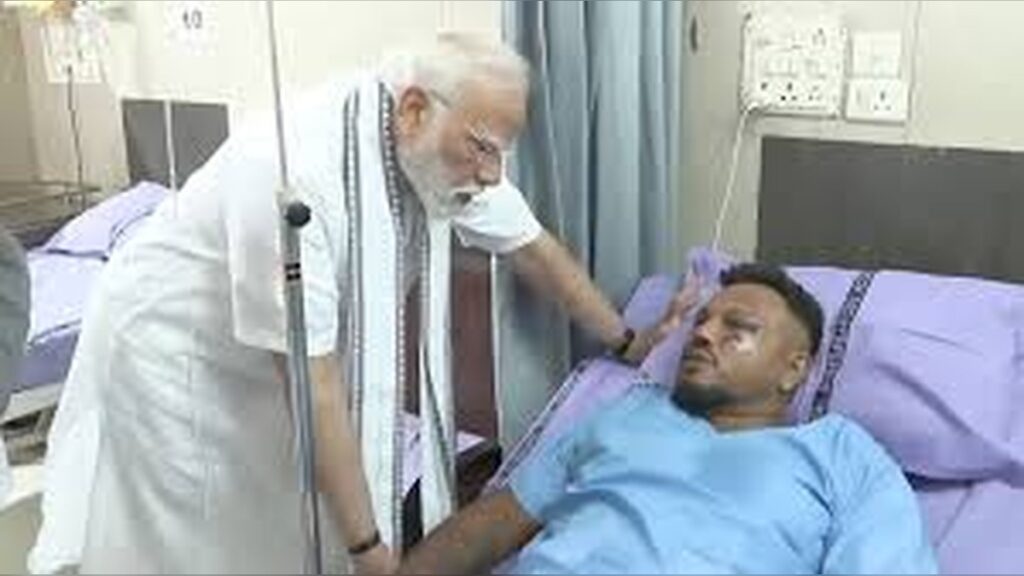
The woman, Hiral Ramesh, is the wife of Vishwash Kumar Ramesh, whose life was permanently altered after surviving the crash of an Air India Boeing 787 Dreamliner crash that killed nearly everyone else on board and several people on the ground.
His survival turned him into an unlikely global figure — and a deeply troubled one.
The Man Who Walked Out of the Fireball
Vishwash Kumar Ramesh, a 40-year-old businessman, became the sole surviving passenger after escaping through a breach in the fuselage moments before flames engulfed the wreckage.
The crash reportedly killed 229 passengers and 12 crew members, along with additional casualties on the ground after impact with a medical college hostel area.
He reportedly suffered only minor physical injuries, but the psychological impact has been far more severe.
What makes his story even more haunting is the fact that his older brother Ajay was also on the flight and did not survive.
The contrast between survival and loss has defined his life ever since.
A Life Shrinking Into Silence and Isolation
According to relatives, Vishwash has struggled badly with post-traumatic stress.
Instead of recovery, there has been withdrawal.
Family members describe him spending long periods alone in his bedroom, avoiding conversation even with his wife and young son.
He has reportedly said in past interviews that he feels “lucky” to be alive but also completely broken by what he witnessed.
The emotional weight is intensified by survivor’s guilt — a psychological condition often seen in major disasters where one person lives while others around them perish.
The “Miracle Survivor” Who Doesn’t Feel Lucky
Publicly, his survival has been framed as miraculous.
Internally, it has been anything but. He has described struggling physically and mentally, unable to process how he escaped while his brother did not.
Even routine activities, including travel, reportedly trigger intense anxiety.
At one point, he feared returning home on the same aircraft model involved in the crash.
His case is now often referenced in trauma studies as an example of how survival does not necessarily equal recovery.




Airline Response and Compensation Disputes
The aftermath of the crash has also raised questions about how the airline handled survivors and victims’ families.
Lawyers and advisers working with affected families have accused Air India of slow communication, limited support, and low initial compensation offers.
Reports suggest interim payments offered to some victims or survivors were relatively small compared to the scale of loss, and in some cases came with conditions that families felt pressured to accept.
There are also claims that some passengers’ families were asked to complete detailed financial questionnaires to determine compensation value — a process many described as emotionally distressing and impersonal.
The Wider Grief: Families Still Searching for Answers
The disaster did not only affect those on board.
Families of victims continue to describe confusion, anger, and procedural failures in how remains and personal belongings were handled.
Some relatives say they received incorrect or incomplete remains, while others claim identification processes lacked transparency.
In certain cases, only fragments were returned after DNA testing.
There are also allegations that personal belongings recovered from the crash site were poorly documented, leading to fears of misplacement or loss.
For many families, closure remains incomplete even a year later.
Competing Theories and an Ongoing Investigation
The crash itself remains under intense scrutiny.
Early investigative discussions have included conflicting theories — ranging from mechanical malfunction to pilot error or even deliberate action.
One line of speculation has focused on cockpit communications suggesting confusion during a critical phase of flight.
However, families of the crew, particularly the pilot, strongly reject claims of intentional wrongdoing and are calling for independent review.
A final official report from aviation authorities is still expected, and many believe it will determine how responsibility is ultimately assigned.
The Human Cost Behind the Headlines
Beyond technical debates, the emotional toll continues to expand.
Survivors like Vishwash are living reminders of the crash, while bereaved families struggle with both grief and bureaucracy.
In some communities, the tragedy has also become a legal and political issue, with lawyers preparing claims involving the airline, aircraft manufacturers, and regulatory bodies.
Meanwhile, memorials and private anniversaries are beginning to form around the date of the crash, marking what many describe as an “unhealed wound.”
Impact and Consequences
The psychological impact on the sole survivor has become one of the most striking outcomes of the disaster.
His ongoing PTSD highlights how survival in mass casualty events can lead to long-term mental health struggles that are often overlooked.
For the airline, reputational damage continues to grow alongside legal and financial pressure.
Public trust issues, compensation disputes, and accusations of poor crisis handling are likely to persist.
On a broader level, the crash has intensified global debate about aviation safety oversight, emergency response procedures, and how airlines treat both survivors and victims’ families after catastrophic events.
What’s Next?
The most immediate development expected is the release of the final accident investigation report.
That document is likely to determine whether mechanical failure, human error, or a combination of factors caused the crash.
For Vishwash Ramesh, the next stage is far more personal.
His recovery depends heavily on mental health support, family stability, and whether he can eventually rebuild a sense of normal life.
For families, the focus will remain on accountability, compensation disputes, and ensuring proper handling of remains and belongings is reviewed and corrected.
Summary
The sole survivor of a devastating Air India Boeing 787 crash continues to struggle with severe psychological trauma while families of victims push for answers and accountability.
The disaster, which killed hundreds including passengers and people on the ground, has left behind unresolved grief, compensation disputes, and an ongoing investigation into what went wrong.
Bulleted Takeaways
- Vishwash Kumar Ramesh survived a deadly Air India Boeing 787 crash that killed hundreds.
- He escaped moments before the aircraft was engulfed in flames but lost his brother in the tragedy.
- He is reportedly suffering from severe PTSD and isolation.
- Families of victims criticize Air India’s compensation and communication process.
- Allegations include mishandling of remains and recovered belongings.
- The final crash investigation report is still pending and may reshape public understanding of the disaster.
- Spanish Health Officials Confirm New Hantavirus Infection Among MV Hondius Cruise Evacuees in Madrid After Deadly Tenerife Outbreak
- Oakland City Council fines Nigerian doctor Matthew Bernard and partner over illegal tree removal in Claremont Avenue property dispute United States
- Deadly MV Hondius Hantavirus Outbreak Deepens as Dutch Ornithologist Leo Schilperoord Is Identified as Patient Zero After Argentina Trip
- NHS chief pushes volunteers transform healthcare system as Jim Mackey calls for reform across NHS England United Kingdom
- Deadly Hantavirus Cruise Sparks Alarm In U.S. As Texas And Virginia Passengers Return Home Before Outbreak Is Identified
- Health experts reassure public as Hantavirus outbreak spreads on MV Hondius cruise ship near Canary Islands in Europe
- NHS ADHD crisis forces patients in Leeds and UK to wait ten years as Sort Health launches new assessment service in Bradford
- Rudy Giuliani Enters Hospital as Former New York Mayor Receives Treatment in United States Medical Facility
- Meghan Markle Declares Online Abuse Reality During Australia Mental Health Visit in Batyr University Discussion on Youth Safety
- Veterinary doctors warn Lafia Modern Abattoir threatens public health in Nasarawa State as sanitation crisis sparks urgent government action call
- UK Government Rolls Out Radical Clinical Trial Reforms in England as Regulators Slash Approval Times and Spark Debate Over Patient Safety in 2026 Health Overhaul
- Florida doctor sparks outrage after removing wrong organ during surgery in Walton County leading to patient death

