
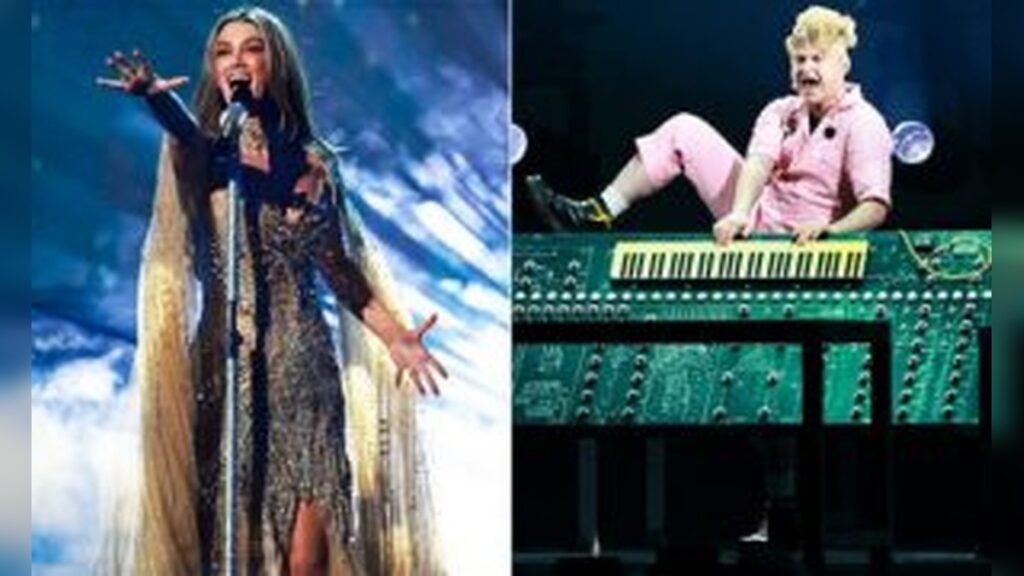
The Eurovision Song Contest is back tonight, celebrating its 70th year with a grand final in Austria that already feels bigger than the performances themselves.
Hosted in Vienna, the event brings together 25 competing nations, all hoping to win one of the world’s most watched live music prizes.
But even before the first song hits the stage, the atmosphere has been anything but simple.
Political tension, fan anticipation, and a growing boycott movement have turned this year’s contest into one of the most talked-about editions in recent memory.
Boycott Fallout Casts a Shadow Over the Competition
This year’s final has been overshadowed by the decision of five countries—Spain, the Netherlands, Ireland, Iceland, and Slovenia—to boycott the event in protest over Israel’s participation.
That move has added a layer of controversy that goes beyond music, with debates spilling into social media, news coverage, and fan forums across Europe.
While Eurovision has always carried subtle political undertones, this year’s division has been more openly visible than usual.
Despite the tension, the competition continues with a full lineup of acts taking the stage.
Who Is Competing in the Grand Final
The final brings together a wide mix of returning favourites, rising newcomers, and established music industries.
Countries competing include Austria, France, Germany, Italy, Sweden, Ukraine, and the United Kingdom, alongside dozens of others such as Finland, Greece, Cyprus, and Australia.
Israel is also among the finalists, adding to the political conversation surrounding the event.
The UK is represented by an unconventional entry: “Look Mum No Computer,” the stage name of musician and inventor Sam Battle, who is known for blending electronic music with handmade synthesizer technology.
UK Entry Brings Experimental Energy to the Stage
The British act has stood out this year for its unusual style and chaotic creativity.

Performing the track “Eins, Zwei, Drei,” Sam Battle’s project leans heavily into experimental electronics rather than traditional pop structure.
Rehearsal footage from Vienna shows a performance packed with mechanical instruments, flashing lights, and DIY sound systems, giving it a distinctly different feel from more polished mainstream entries.
While bookmakers have placed stronger odds on countries like Finland, Greece, and Australia, the UK entry has developed a cult following among fans who enjoy unpredictable performances.
Rehearsals Build Final-Night Tension in Vienna
Ahead of tonight’s live broadcast, artists completed final dress rehearsals at the Wiener Stadthalle in Vienna, fine-tuning staging, lighting, and choreography.
Among those rehearsing were Australia’s entry, including well-known singer Delta Goodrem, alongside several other frontrunners polishing their performances.
These rehearsals often shape final expectations, with last-minute adjustments sometimes making or breaking a country’s chances on the night.
A Contest That Mixes Music, Politics, and Pop Culture
Over its 70-year history, the Eurovision Song Contest has evolved from a simple post-war European unity broadcast into a global entertainment phenomenon.
It is now as much about identity, cultural expression, and political messaging as it is about music.
Voting patterns often reflect regional alliances, diaspora influence, and shifting cultural trends across Europe and beyond.
That mix is part of why Eurovision remains unpredictable—and endlessly debated—year after year.
Impact and Consequences
This year’s boycott has intensified debate about whether Eurovision can remain politically neutral in an increasingly divided global environment.
While organisers insist the contest is about music and unity, the public reaction shows how difficult that separation has become.
The controversy may also affect viewership in certain regions, particularly where participating broadcasters face domestic pressure.
At the same time, the heightened attention could increase global curiosity, drawing in viewers who don’t usually follow the contest.
For artists, the political backdrop adds pressure that goes beyond performance quality, potentially influencing public perception and voting behaviour.
What’s Next?
Tonight’s final will determine the winner of the 70th edition of the Eurovision Song Contest, with results expected late into the night after all performances and voting rounds are complete.
After the winner is crowned, attention will quickly shift to next year’s host country and whether the current political tensions will influence future participation.
There is also growing discussion around possible rule adjustments or diplomatic guidelines aimed at reducing controversy in future editions.
Summary
The Eurovision Song Contest grand final in Vienna brings together 25 countries for one of the world’s biggest live music events, but this year’s celebration is clouded by a multi-country boycott over Israel’s participation.
While acts like the UK’s “Look Mum No Computer” add creative energy to the stage, political tension and fan debate have become just as central to the story as the music itself.
Bulleted Takeaways
- Eurovision Song Contest celebrates its 70th year with the grand final in Vienna, Austria
- 25 countries compete, including the UK, France, Germany, Sweden, and Italy
- Five countries—Spain, Netherlands, Ireland, Iceland, and Slovenia—are boycotting the contest
- Israel’s participation has been a key source of political tension this year
- The UK entry “Look Mum No Computer” performs experimental electronic track “Eins, Zwei, Drei”
- Final rehearsals took place at the Wiener Stadthalle in Vienna ahead of the live show
- Australia’s Delta Goodrem and other acts completed last-minute staging preparations
- The winner will be decided during tonight’s live broadcast on BBC One and BBC iPlayer

