
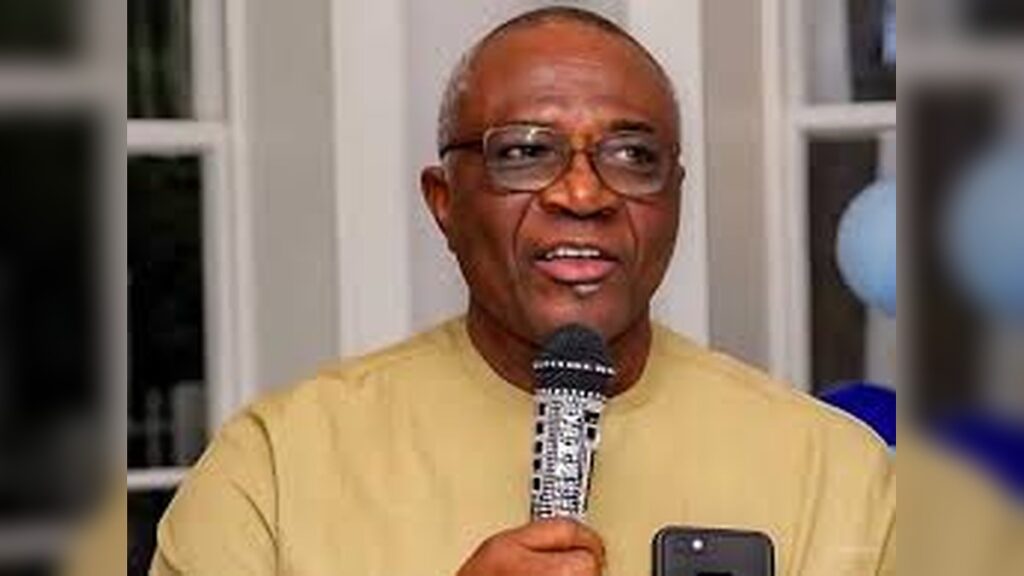
The Nigerian Presidency has stepped in to address growing confusion around the reported killing of a senior Islamic State West Africa Province figure, Abu-Bilal Al-Manuki, insisting that earlier claims of his death in a 2024 military operation were inaccurate and based on mistaken identity.
The clarification comes after a joint Nigeria–United States operation reportedly eliminated the militant leader in what officials described as a carefully coordinated strike, first publicised by former U.S. President Donald Trump.
According to the Presidency, earlier intelligence reports had wrongly linked Al-Manuki to a separate counterterrorism strike in the Birnin Gwari axis of Kaduna State, creating years of confusion around his status.
Government Says Earlier 2024 Death Report Was Wrong
Officials explained that Al-Manuki’s name had previously appeared on lists of suspected terrorists believed to have been killed during operations in 2024, but this was later reviewed and corrected.
The Presidency, through Special Adviser on Information and Strategy Bayo Onanuga, stated that security agencies now believe the earlier identification was a misattribution caused by overlapping intelligence during ongoing counterinsurgency operations.
He added that the Birnin Gwari theatre of operations was never actually within Al-Manuki’s known area of influence, which further weakened the credibility of the earlier claim.
Months of Surveillance Before Final Strike
Government sources say the latest operation was not a sudden development but the result of months of intelligence gathering and monitoring.
Security agencies reportedly tracked communications, phone activity, and movements linked to Al-Manuki from late 2025, gradually narrowing down his location.
At one stage, authorities allegedly considered capturing him alive, which is why surveillance was extended across multiple Nigerian cities, including Abuja and Maiduguri, before the final decision to strike was made.
Officials insist multiple verification layers were used before authorising the operation, describing it as far more precise than earlier attempts.
US and Nigeria Present Coordinated Operation Narrative
The United States confirmed involvement in the strike, with the operation also supported by Nigerian forces as part of a broader counterterrorism partnership across the Sahel region.
U.S. defence officials described Al-Manuki as a high-ranking operational figure responsible for coordinating attacks, managing hostage activity, and overseeing financial networks within ISIS-linked structures.
Military footage reportedly released by US Africa Command showed precision strikes targeting suspected militants in northeastern Nigeria, reinforcing claims that the operation was successful.



History of False Death Claims Fuels Public Doubt
Despite official assurances, public scepticism remains strong due to Nigeria’s history of inaccurate announcements regarding militant leaders.
Past cases, particularly involving Boko Haram leader Abubakar Shekau, have shaped public caution after multiple premature reports of his death circulated for years before his actual demise was confirmed in 2021.
Security analysts note that such history naturally makes communities wary of new claims, even when backed by international partners.
However, officials argue that modern intelligence systems have significantly improved, reducing the likelihood of repeated errors.
Identity and Background of the Target
Authorities also provided background details on Al-Manuki, describing him as a long-standing figure within ISWAP structures.
He was reportedly born in 1982 in Borno State and rose through militant ranks following internal leadership changes within the group.
He was later designated a global terrorist by the United States in 2023 and linked to transregional networks operating across Nigeria and the wider Sahel.
Security officials claim he played a role in coordinating operations tied to ISIS-aligned structures in West Africa.
Impact and Consequences
The reported elimination of Al-Manuki, if fully confirmed, would represent a significant symbolic and operational blow to ISWAP’s command structure.
It could disrupt coordination channels and weaken communication networks across insurgent cells in the region.
However, the controversy over previous mistaken identity claims also highlights a recurring problem in counterterrorism reporting — the difficulty of verifying high-value targets in real time.
Public trust remains fragile, and any inconsistencies risk undermining confidence in official statements, especially in regions already affected by long-running insecurity.
For Nigeria and its international partners, the episode reinforces the importance of transparency and verification in joint military communications.
What’s Next?
Security agencies are expected to continue post-operation assessments, including identity confirmation and intelligence validation, before issuing a final definitive status on Al-Manuki.
Further operations may also follow as authorities attempt to exploit intelligence gathered during the strike to track remaining ISWAP leadership figures.
On the diplomatic side, Nigeria–US security cooperation is likely to deepen, with both sides using the operation as a reference point for future joint missions.
At the same time, officials are expected to address public scepticism more directly, given past controversies around militant death announcements.
Summary
The Nigerian Presidency has clarified that earlier reports claiming the death of ISWAP commander Abu-Bilal Al-Manuki in 2024 were incorrect due to mistaken identity.
Officials now say he was actually eliminated in a more recent joint Nigeria–US operation following months of surveillance and intelligence gathering.
While the government insists the latest operation is accurate, public scepticism remains due to past counterterrorism misreporting in Nigeria’s security history.
Bulleted Takeaways
- Presidency says earlier 2024 death report of Al-Manuki was incorrect
- Abu-Bilal Al-Manuki was killed in a recent Nigeria–US joint operation
- Claims first announced publicly by Donald Trump
- Bayo Onanuga clarified the earlier report was a case of mistaken identity
- Months of surveillance reportedly preceded the final strike
- Authorities tracked communications and movements across multiple cities
- US Africa Command supported the operation with strike footage
- Al-Manuki was a senior ISWAP commander designated a global terrorist in 2023
- Public scepticism persists due to past cases like Abubakar Shekau
- Officials insist this time intelligence verification was more rigorous and reliable

