
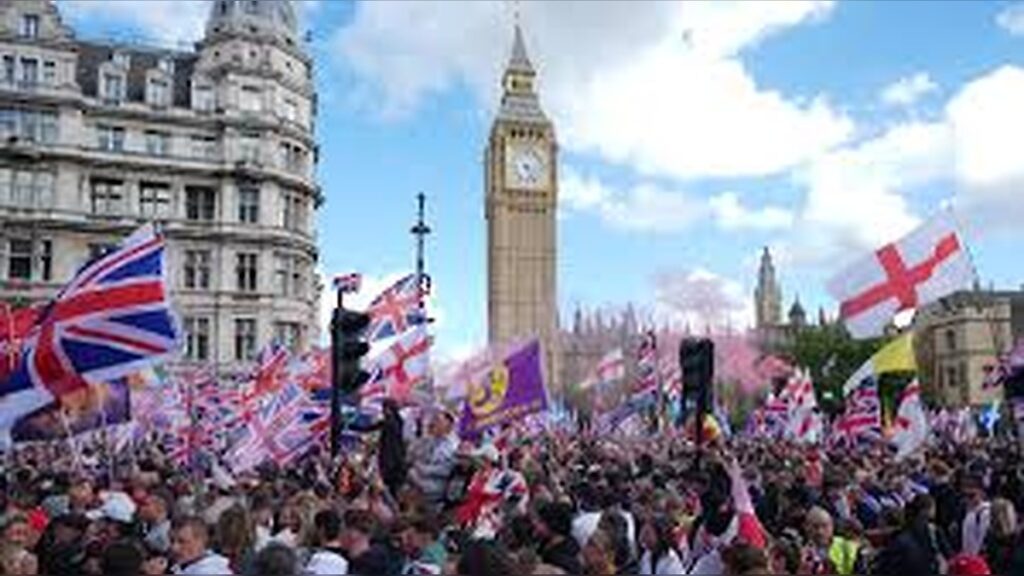
Saturday in London turned into one of those days where the city felt split in two.
On one side, a huge nationalist rally. On the other, a pro-Palestine march marking Nakba Day.
Between them, thousands of officers trying to keep everything from tipping over into chaos.
By the end of the day, police had made dozens of arrests after flares were lit, statues were climbed, and tensions flared across central streets.
Huge Crowds Flood Central London from Early Morning
From as early as 9am, central London was already packed.
Around 80,000 people are estimated to have taken part across both demonstrations, with flags, chants, banners, and heavy police presence filling the capital.
One march branded “Unite the Kingdom” brought supporters waving Union Jacks and St George’s flags through Westminster.
The rival march, focused on Palestinian solidarity, moved through Kensington and surrounding areas.
The atmosphere wasn’t just loud—it was layered with political anger, emotion, and sharp divisions playing out in real time.
Churchill Statue Incident Sparks Police Response
Things escalated sharply in Parliament Square when protesters climbed the Winston Churchill statue and set off flares. That moment quickly became one of the most talked-about scenes of the day.
Police moved in fast, detaining several people as the situation intensified.
Officers later confirmed multiple arrests across both demonstrations, with the figure rising as the day went on.
Despite the chaos in pockets, authorities said most of the marches remained largely under control.
Massive Police Operation Covers the Capital
The scale of policing was hard to miss.
Roughly 4,000 officers were deployed across London, supported by horses, drones, armoured vehicles, police dogs, and helicopters.

It was described internally as one of the most expensive and complex operations in recent years, costing millions of pounds.
Officials also had to prepare for an added complication: the FA Cup Final at Wembley, which brought large football crowds into the city on the same day.
Arrests, Injuries, and Rising Pressure on Officers
By late evening, police confirmed around 43 arrests linked to the two protests, with additional arrests tied to football-related incidents nearby.
Officers reported being assaulted during the day, and several suffered hate-related offences.
Fortunately, none of the injuries were considered serious.
Still, the strain on police was obvious, with long shifts, cancelled leave, and officers drafted in from other regions to cover the workload.
Political Leaders Warn of Deepening Divide
The protests didn’t just stay on the streets—they echoed in politics too.
The Prime Minister warned about what he called a “fight for the soul of the country,” pointing to rising tensions and division.
Other officials stressed the right to protest but warned firmly against violence or hate speech.
On both sides of the marches, speakers delivered emotional speeches, with accusations, slogans, and political messaging aimed directly at the government.
What Made This Day Different from Previous Protests
This wasn’t just another weekend demonstration.
Several factors made it stand out:
- Two major rival marches happening at the same time
- A football final increasing crowd pressure in central London
- Use of live facial recognition technology by police for the first time in a protest setting
- Heightened political tension already running through national debates on immigration, identity, and foreign policy
Taken together, it created a pressure cooker effect across the city.
Impact and Consequences
The immediate impact is a renewed debate over how Britain manages large-scale protests involving opposing groups in the same space. The heavy policing bill, estimated in the millions, is likely to be scrutinized.
There’s also the political fallout. The protests have sharpened divisions around immigration, policing, foreign policy, and national identity—issues already dominating public discussion.
For police, the day is expected to be reviewed closely, especially the use of surveillance tools and the logistics of managing multiple large events simultaneously.
What’s Next?
Authorities are expected to publish a full breakdown of arrests and incidents in the coming days.
There will likely be internal reviews of crowd control tactics, especially around separating rival marches and managing high-risk flashpoints like Parliament Square.
Politically, both sides are expected to continue mobilizing supporters, suggesting these demonstrations may not be isolated events but part of a longer, ongoing cycle of protest activity in the capital.
Summary
London saw one of its largest coordinated protest days in recent times, with tens of thousands of people gathering for rival demonstrations across the city.
While most of the day remained relatively controlled, moments of escalation—including flares, arrests, and statue climbing—drew significant police intervention.
The event highlighted deep political divisions and placed enormous pressure on law enforcement, both operationally and financially.
Bulleted Takeaways
- Around 80,000 people took part in two major rival protests in London
- A Winston Churchill statue was climbed and flares were lit during unrest
- Police made roughly 43 arrests across both demonstrations
- Four officers were assaulted, with several hate-related offences reported
- A massive 4,000-officer operation was deployed across the city
- Armoured units, drones, horses, and helicopters supported policing efforts
- The FA Cup Final added extra crowd pressure in London
- Political leaders warned about rising division and unrest
- Live facial recognition technology was used in protest policing for the first time
- The day is expected to trigger further political and policing reviews

