
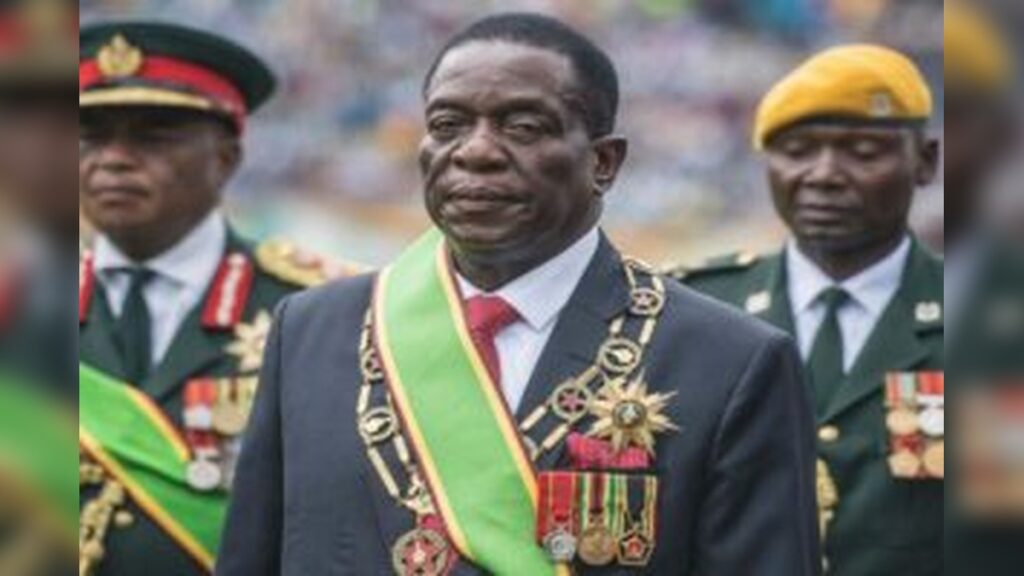
Zimbabwe has formally enacted sweeping constitutional amendments after President Emmerson Mnangagwa approved legislation introducing significant changes to the country’s political system.
The reforms extend both presidential and parliamentary terms from five years to seven, while also replacing direct presidential elections with an indirect parliamentary voting process.
The amendments were officially gazetted after securing approval from both chambers of Parliament, making them part of Zimbabwe’s Constitution.
Presidential Term Extended Until 2030
One of the most significant outcomes of the reforms is the extension of President Mnangagwa’s current and final constitutional term.
Instead of leaving office in 2028 as previously required, the new legal framework allows him to remain president until 2030.
Supporters of the legislation argue that longer terms could provide greater continuity in governance, while critics view the move as a major shift away from established democratic practices.
Parliament Overwhelmingly Approved the Bill
The constitutional amendments moved comfortably through Zimbabwe’s legislature, where the ruling ZANU–PF party and its allies command a strong majority.
The Senate endorsed the legislation by 75 votes to four before the National Assembly followed with a decisive 226-to-41 vote, clearing the way for presidential assent.
Opponents have described the process as one-sided, arguing that the governing party used its parliamentary dominance to push through changes with far-reaching political consequences.



Zimbabwe Abandons Direct Presidential Elections
Perhaps the most controversial reform is the elimination of nationwide presidential elections.
Instead of citizens casting ballots directly for a president, future heads of state will be chosen by Members of Parliament and Senators meeting in a joint sitting after each general election or whenever the presidency becomes vacant.
To secure victory, a candidate must receive more than half of the votes cast by lawmakers.
If no contender reaches that threshold in the first round, the top two candidates will advance to a runoff supervised by the Zimbabwe Electoral Commission.
Critics Warn of Reduced Public Accountability
Legal experts and democracy advocates have expressed concern that the constitutional overhaul could significantly weaken public influence over national leadership.
Human rights lawyer Doug Coltart argued that the new framework could allow presidents to repeatedly obtain fresh mandates through Parliament without having to seek direct approval from voters.
He also warned that lawmakers could continue extending political authority without regularly returning to the electorate.
These concerns have fueled accusations that the reforms concentrate political power within Parliament rather than among ordinary citizens.
Opposition Leaders Condemn the Changes
The amendments have sparked strong reactions from opposition politicians and civil society organisations.
Former opposition legislator Fadzayi Mahere described the reforms as a severe setback for Zimbabwe’s democratic system, saying they marked a bleak moment in the country’s political history.
Constitution Defenders Forum leader Tendai Biti also criticised the legislation, arguing that it shifts decision-making authority away from citizens and places greater control in the hands of a political elite.
Political Debate Expected to Intensify
Mnangagwa, now 83, became Zimbabwe’s president in 2017 following the military-backed removal of longtime leader Robert Mugabe, who had governed the country for 37 years.
With the constitutional amendments now officially in force, debate is expected to intensify over Zimbabwe’s democratic direction, electoral system, and the long-term implications of transferring the power to elect a president from voters to Parliament.
- Israeli Politics Rocked: Gantz Suffers Another Major Defection as New Zionist Alliance Emerges
- Rare 1776 Declaration of Independence Copy Discovered in UK National Archives
- Paul Pelosi Under Investigation After Alleged Hit-and-Run Crash in California Wine Country
- Trump Launches America 250 Celebrations at Mount Rushmore With Fireworks, Patriotic Speech
- New York Mayor Zohran Mamdani Uses America 250 Speech to Defend Immigration and Criticize Trump Administration
- Andy Burnham Emerges as Labour’s Clear Leadership Favourite as Senior Party Figures Back a Swift Transition and Reject Calls for an Internal Battle

