
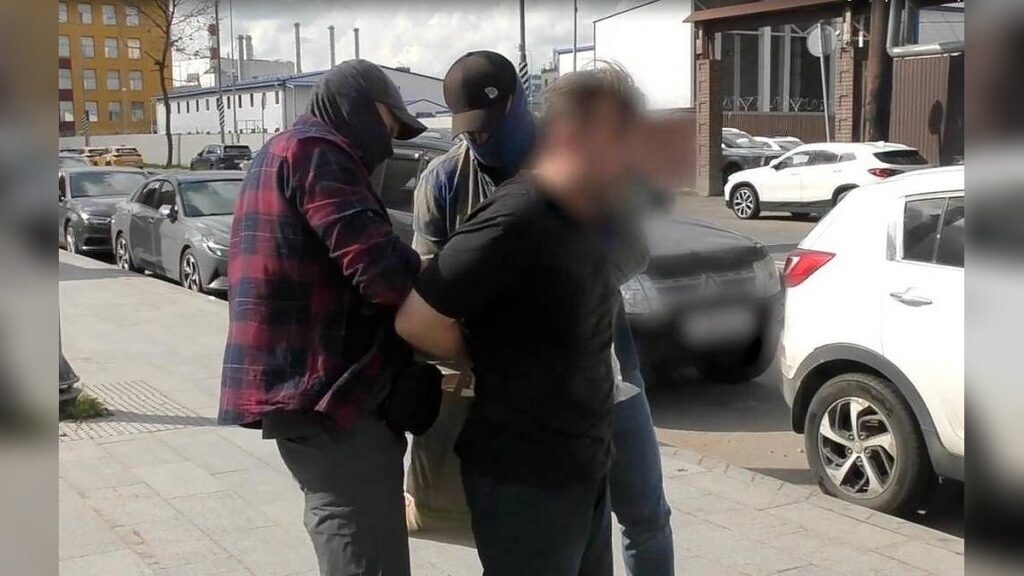
Russia’s Federal Security Service has detained a former security guard who worked at the British Embassy in Moscow, accusing him of collecting sensitive information about UK diplomats on behalf of Ukrainian interests.
The Russian citizen, born in 1981, is suspected of state treason under Article 275 of Russia’s Criminal Code. The FSB said a criminal investigation has been opened and remains underway.
Russian authorities allege that the suspect worked with Ukrainian blogger Dmitry Karpenko, also known as Apostol Dmitry, whom the FSB linked to Ukraine’s Security Service, or SBU.
Suspect Worked for Company Protecting UK Embassy
According to the FSB, the detained man was employed by a private security company responsible for providing protection at the British Embassy in Moscow.
His position allegedly gave him access to information concerning embassy personnel, diplomatic activities and security arrangements.
The FSB said the suspect was also involved in security operations at the residence of the British ambassador, potentially placing him in a position to obtain detailed information about diplomatic personnel and their movements.
FSB Alleges Diplomatic Information Was Collected
Russian investigators claim the suspect gathered photographs of British diplomatic personnel as well as information about their residential addresses, vehicles, meetings and travel.
The FSB also accused him of collecting details about the embassy’s security arrangements and events taking place at the diplomatic mission.
Authorities allege that some of the information was subsequently transmitted to Karpenko.
The FSB released what it described as excerpts from communications between the two men as part of its announcement about the case.
Ambassador Nigel Casey’s Schedule Allegedly Shared
According to screenshots released by the Russian security service, information concerning meetings involving British Ambassador Nigel Casey was among the material allegedly transmitted.
The FSB said preliminary schedules covering February and March were shared, including planned events involving the ambassador and his deputy at both the embassy and ambassadorial residence.
Russian authorities also alleged that lists of security personnel, photographs of diplomats and information about people residing at diplomatic facilities were transmitted.
The authenticity and full context of the correspondence released by the FSB have not been independently established.
Russia Claims Information Was Intended for Sabotage Plot
The FSB made a significantly broader allegation concerning what Ukrainian intelligence supposedly intended to do with the information.
According to the Russian agency, Ukrainian authorities planned to use the intelligence to prepare attacks against the British ambassador and other UK diplomats in Russia.




The FSB alleged that such attacks would subsequently have been blamed on Moscow in an attempt to provoke a confrontation between Britain and Russia.
No independently verified evidence establishing the existence of such a Ukrainian plan was presented in the information released alongside the Russian announcement.
FSB Claims Plot Was Designed to Draw Britain Into War
Russian authorities further alleged that the supposed operation was intended to encourage greater British involvement in the Ukraine conflict.
The FSB claimed Kyiv hoped an attack on British diplomats could lead London to increase military assistance to Ukraine, strengthen sanctions against Russia and potentially move closer to direct armed confrontation with Moscow.
These assertions represent the Russian security service’s account of the alleged motive behind the operation. Ukraine and Britain were not quoted in the material providing responses to the accusations.
Detainee Appears in FSB Interrogation Video
The Russian security service also released footage showing what it described as the suspect’s interrogation.
According to the FSB’s account of his statements, the detainee acknowledged collecting information about the British ambassador, embassy personnel and security arrangements.
He reportedly said he had contacted Karpenko on his own initiative and subsequently supplied information to him.
The FSB also said the man confirmed during questioning that Ukrainian authorities were considering a sabotage operation involving the British ambassador.
Statements made by detainees while in the custody of security agencies cannot necessarily be independently verified.
Suspect Allegedly Discussed Joining Ukrainian Forces
The communications released by the FSB allegedly contained another significant detail concerning the suspect’s intentions.
Russian authorities said the man expressed an interest in defecting and joining Ukraine’s armed forces.
The FSB presented the correspondence as part of its evidence that the suspect was knowingly cooperating with individuals working in Ukraine’s interests.
High Treason Investigation Moves Forward
Russian investigators have opened proceedings against the man under Article 275, which covers high treason.
The preliminary investigation is continuing, and Russian authorities have indicated that additional counterintelligence activity could follow.
The FSB said it would continue efforts to identify and disrupt operations allegedly conducted by foreign intelligence services inside Russia.
Russian Security Service Issues Warning Over Ukrainian Contacts
Following the detention, the FSB issued a broader warning to Russian citizens about communicating with pro-Ukrainian bloggers, specifically naming Karpenko.
The agency urged anyone who has already established such contacts to report them to Russian authorities.
The FSB noted that Russian law contains provisions under which someone involved in treason may potentially avoid criminal liability by voluntarily approaching authorities in time to prevent further harm, provided their conduct does not constitute another criminal offense.
Case Adds New Tension to Russia-UK Relations
The allegations come amid already strained relations between Moscow and London over Britain’s extensive political and military support for Ukraine.
An FSB officer commenting on the case accused Britain of encouraging Ukraine’s confrontation with Russia and suggested British citizens themselves could ultimately become victims of that policy.
The officer said the agency hoped British intelligence services had no knowledge of the alleged operation against UK diplomats, while warning that any evidence of British awareness would make the situation considerably more serious.
For now, the most consequential allegations — including claims of a Ukrainian plan to attack British diplomats and blame Russia — remain assertions made by Russian security authorities as their investigation continues.
