
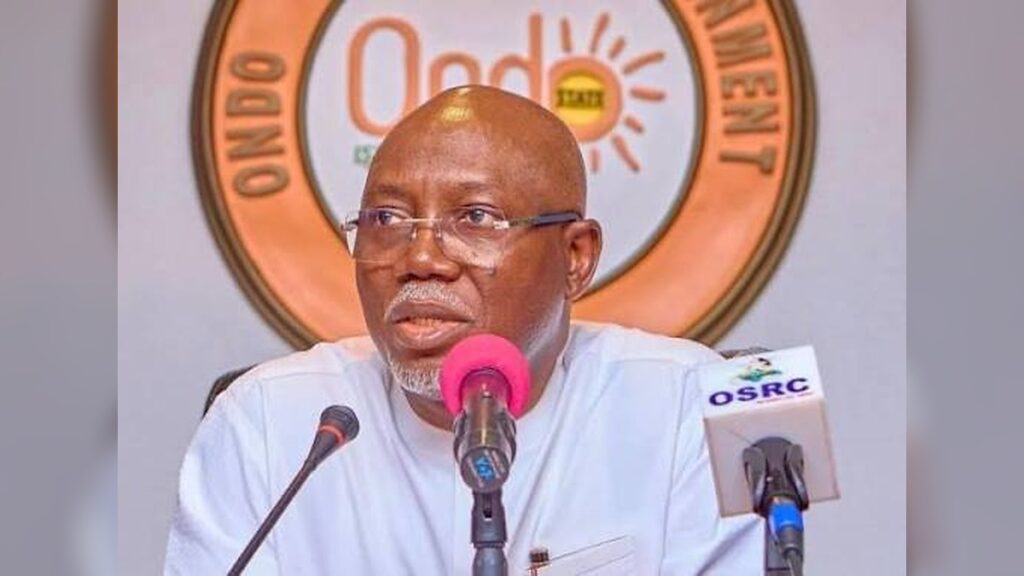
Ondo State Governor Lucky Aiyedatiwa has urged political leaders across Nigeria to take concrete steps toward increasing the number of women occupying political and elective positions.
He stressed that meaningful national development depends on creating opportunities for women to participate fully in leadership and governance.
The governor made the appeal during the launch of the 774 Explode Project in Akure on Wednesday.
The initiative, introduced by the National Women Leader of the All Progressives Congress (APC), is designed to empower women and encourage their greater involvement in public life.
Inclusive Leadership at the Heart of Ondo Government
Represented at the event by his deputy, Dr. Olayide Adelami, Aiyedatiwa said his administration has embraced an inclusive style of governance that values contributions from both men and women.
According to him, women remain indispensable to the progress of any society, serving as key drivers of family stability, economic growth, education, conflict resolution, and community development.
He noted that women are increasingly making significant contributions across sectors such as technology, entrepreneurship, agriculture, governance, and public administration.
The governor argued that leadership should be determined by competence, integrity, vision, and commitment to service rather than gender.
Governor Highlights Need to Remove Longstanding Barriers
While acknowledging that some progress has been made in expanding opportunities for women, Aiyedatiwa said many obstacles continue to limit their participation in leadership.
He called for intentional policies that promote women’s inclusion in elective offices, strategic decision-making positions, and leadership roles across government and political institutions.



The governor also urged stakeholders to confront cultural stereotypes, economic challenges, and structural barriers that have prevented many qualified women from reaching their full potential.
Rather than offering sympathy, he said, the country must adopt deliberate measures that guarantee equal opportunities for women.
774 Explode Project Described as More Than an Empowerment Programme
Aiyedatiwa praised the APC National Women Leader for bringing the 774 Explode Project to Ondo State, describing it as a far-reaching initiative with the potential to reshape Nigeria’s future.
He said the programme represents a commitment to unlocking the talents, resilience, and leadership abilities of women in every community.
According to him, history has shown that societies achieve lasting progress when they harness the strengths of both men and women instead of excluding one group from leadership.
APC Women Leader Seeks More Opportunities for Young Women
Speaking at the event, APC National Women Leader Dr. Mary Idele emphasized that Nigeria’s democratic future depends on creating space for younger generations, particularly young women, to participate in governance.
She noted that the country has no shortage of capable, educated, and innovative young women whose abilities should be reflected in leadership positions at every level of government.
Idele encouraged political parties and government institutions to support women aspiring to become councillors, local government chairpersons, commissioners, legislators, party executives, and even future governors and presidents.
Political Participation Extends Beyond Holding Office
The APC women leader said political inclusion should not be measured solely by the number of women elected into office.
She explained that genuine participation also involves influencing policies, shaping national priorities, and ensuring women’s perspectives are represented wherever important decisions are made.
She further appealed to mothers, traditional rulers, religious leaders, community figures, and party stakeholders to provide mentorship, encouragement, and opportunities that will help young women succeed in politics and public service.
Nigeria Still Faces Gender Gap in Political Leadership
Despite years of advocacy for gender equality, women remain significantly underrepresented in Nigeria’s political system.
Although women constitute nearly half of the country’s population and actively participate in election campaigns and party activities, their presence in both elective and appointive positions remains relatively limited.
Civil society organisations, women’s advocacy groups, and development partners have repeatedly pushed for reforms that would improve female representation in governance.
Initiatives such as the proposed Gender and Equal Opportunities Bill and campaigns supporting affirmative action have sought to expand women’s participation in decision-making, but meaningful progress has continued to move at a gradual pace.

