
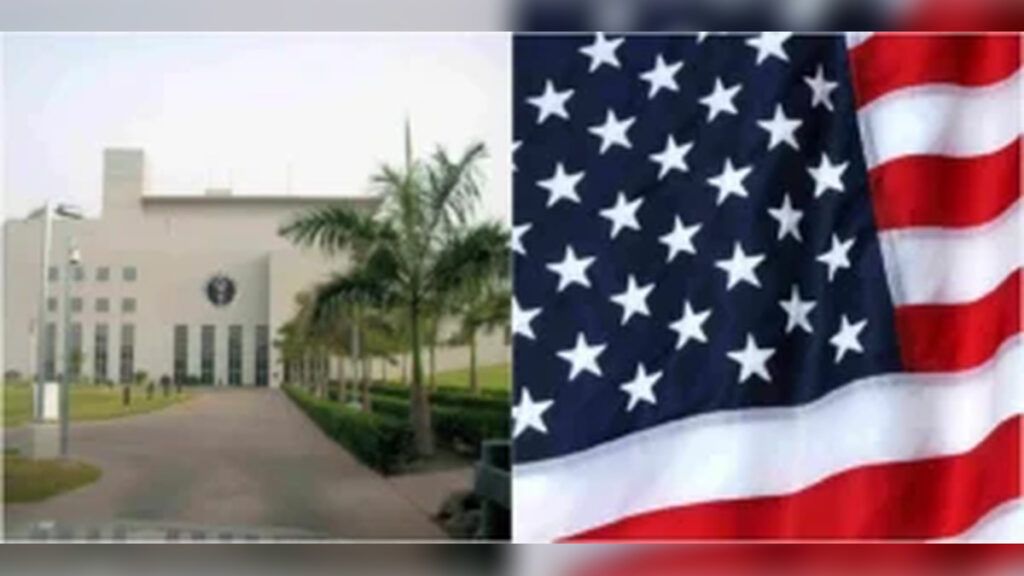
The United States House of Representatives has voted to reduce financial assistance to Nigeria by 50 percent, linking the release of the withheld funds to measurable improvements in the protection of Christian communities affected by religious violence.
The decision forms part of the National Security, Department of State, and Related Programs (NSRP) Appropriations Bill, which sets U.S. foreign funding priorities and introduces new conditions for American assistance to Nigeria.
Funding Conditional on Government Action
Under the legislation, half of the U.S. assistance allocated to Nigeria will remain unavailable until the U.S. Secretary of State certifies that the Nigerian government has taken concrete and verifiable steps to protect Christians facing religiously motivated attacks.
Lawmakers said future assistance would depend not only on security improvements but also on Nigeria’s efforts to facilitate the safe return of internally displaced persons (IDPs) to their ancestral communities.
Congress Cites Ongoing Religious Violence
The committee behind the legislation expressed concern over continued violence across parts of Nigeria, pointing specifically to the Palm Sunday massacre as evidence that attacks against Christian communities remain a serious issue.
Members of Congress also urged Nigerian authorities to ensure that those responsible for violent attacks are identified, prosecuted and held accountable.
$2 Million Allocated to Address Middle Belt Violence
While reducing overall assistance, the House approved an additional $2 million under the International Narcotics Control and Law Enforcement account to support atrocity prevention initiatives.
Part of the funding is specifically designated to address insecurity in Nigeria’s Middle Belt, including attacks attributed by the committee to Fulani ethnic militias.
The region has experienced years of deadly violence, displacement and communal conflict.
Safe Return of Displaced Persons Becomes Key Requirement
The legislation directs the U.S. Secretary of State to evaluate whether the Nigerian government is actively helping displaced families return safely to their original communities.



That assessment will become part of the certification process determining whether the suspended aid can eventually be released.
Lawmakers also instructed the State Department to provide Congress with regular updates on progress made in restoring security and supporting displaced populations.
State Department Ordered to Submit Detailed Reports
The bill requires the State Department to report to Congress within 45 to 60 days on efforts aimed at ending targeted attacks against Christians in Nigeria.
Those reports must also examine measures being taken to improve accountability for violations of religious freedom and evaluate the effectiveness of U.S. diplomatic engagement on the issue.
In addition, officials have been directed to examine how Nigeria’s blasphemy laws affect religious freedom in the country’s annual International Religious Freedom Report.
Support for Security Sector Reform
Beyond conditioning financial assistance, the House committee encouraged stronger cooperation between the United States and Nigerian security agencies.
Lawmakers recommended expanding partnerships designed to improve the professionalism, operational capacity and accountability of law enforcement institutions at both federal and state levels as part of broader efforts to prevent atrocities and strengthen public security.
Humanitarian Assistance Remains Part of the Package
Despite the reduction in government assistance, the legislation maintains support for vulnerable religious minorities and victims of genocide, crimes against humanity and ethnic cleansing.
The committee also emphasized the importance of helping displaced communities rebuild their livelihoods once they are able to return to their places of origin.
Broader Foreign Policy Priorities Included in the Bill
The appropriations measure extends beyond Nigeria, proposing several changes to U.S. foreign assistance programs worldwide.
Among its provisions are restrictions on funding for what lawmakers described as “irresponsible migration,” the elimination of funding for the U.S. Agency for Global Media, and reduced global health spending under the “America First Global Health Strategy,” which encourages greater financial responsibility from partner countries.
The legislation also allocates $6.75 billion to the Foreign Military Financing Program while maintaining several long-standing pro-life funding restrictions.
Lawmakers Defend Tougher Conditions
Congressman Riley M. Moore, who championed the Nigeria-related provisions, said the legislation reflects America’s commitment to supporting persecuted Christians around the world.
He argued that the measure sends a clear signal that U.S. assistance should be tied to meaningful action against religious violence while also promoting stronger policing, greater accountability and the safe return of displaced people.
Fellow Congressman Greg Steube echoed those views during debate on the House floor, arguing that Nigeria’s government has failed to adequately address persistent violence.
He maintained that conditioning aid is necessary to ensure accountability and encourage stronger action to protect vulnerable communities.

