
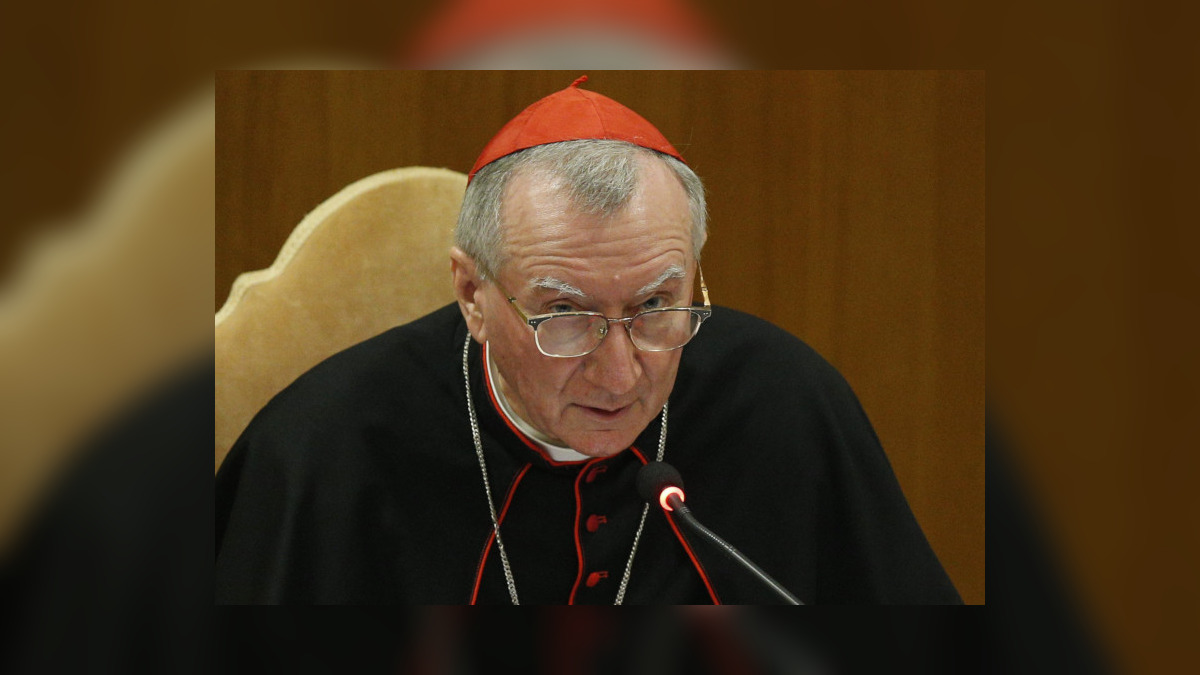
The Holy See has urged governments to rethink how they approach national security, arguing that the right of countries to defend themselves should not become a justification for unchecked military expansion.
Cardinal Pietro Parolin, the Vatican secretary of state, delivered the message during the opening of the 81st session of the United Nations General Assembly in New York on September 26.
Addressing representatives of member states, Parolin linked the debate over military security to the wider need to rebuild international trust, strengthen diplomacy and protect civilians amid continuing conflicts and rapid technological change.
Self-Defence Must Not Become Permanent Rearmament
Parolin acknowledged that nations have a legitimate right to provide for their own defence.
But he warned that this principle should not develop into a cycle of increasingly large military arsenals.
He argued that genuine peace requires countries to pursue disarmament collectively, rather than treating continual military expansion as the primary foundation of security.
The Vatican’s position is particularly concerned with weapons capable of causing catastrophic destruction, including nuclear weapons and increasingly autonomous weapons systems.
Diplomacy Placed at the Centre of Conflict Resolution
Much of Parolin’s address focused on diplomacy as an alternative to relying primarily on military power.
Citing Pope Leo XIV’s 2026 encyclical Magnifica Humanitas, the cardinal called for a move away from what the document describes as a “culture of power” toward a culture in which negotiation and dialogue become standard methods for addressing international disputes.
The Vatican secretary of state argued that international institutions can only function effectively when countries trust one another and remain committed to international law.
He also called for renewed multilateral cooperation in confronting conflicts, humanitarian crises and technological threats.
Nuclear Weapons Remain a Central Concern
Nuclear disarmament remains a major part of the Holy See’s position on international security.

In Magnifica Humanitas, Pope Leo XIV warned that renewed attention to nuclear arsenals and the development of weapons designed for potentially more limited use could make nuclear conflict appear increasingly conceivable.
The encyclical also criticised the idea that nuclear deterrence should automatically be regarded as indispensable to national security and highlighted the difficulties created by the weakening of arms-control agreements.
In his UN address, Parolin carried that position into the broader discussion about international security, arguing that long-term stability should not depend solely on military deterrence or dominance.
Autonomous Weapons Raise New Questions
The Vatican’s concerns extend beyond conventional and nuclear weapons.
Parolin warned about the growing role of artificial intelligence and autonomous systems in warfare, stressing that decisions involving lethal force should remain subject to meaningful human control.
The Holy See’s UN statement called for international rules capable of preventing a technological arms race and ensuring that civilians remain protected.
This reflects concerns already outlined by Pope Leo XIV, whose encyclical argues that increasingly autonomous weapons can make warfare easier to initiate while reducing direct human control over the use of force.
Civilians and Humanitarian Law
Parolin also placed civilian protection at the centre of the Holy See’s approach to armed conflict.
He called for respect for international humanitarian law and highlighted the effects of ongoing wars on civilians, refugees and people forcibly displaced from their homes.
The Vatican statement addressed conflicts including Ukraine, violence affecting Palestinian civilians, Sudan and the humanitarian situation facing the Rohingya.
Parolin argued that the international community should pursue ceasefires and negotiations rather than allow conflicts to become prolonged.
A Broader Definition of Security
The cardinal’s speech also challenged the idea that national security should be measured primarily by military strength.
He argued that a different approach could place greater emphasis on human life, dignity, international cooperation and responsibility toward future generations.
The Holy See maintains that security should encompass more than deterrence and weapons, particularly as countries confront food insecurity, migration, environmental pressures and rapid technological development.
Parolin said international cooperation remains necessary even amid the current crisis of multilateral institutions.
The Vatican’s Message to the UN
Parolin’s appearance at the General Assembly ultimately presented disarmament as part of a broader effort to restore confidence between nations.
The Holy See is calling for governments to maintain the right to legitimate defence while resisting a cycle in which security concerns continually produce larger arsenals.
For the Vatican, diplomacy, international law, civilian protection and responsible technological development are intended to provide alternatives to a security model centred primarily on military power.
The message comes as Pope Leo XIV’s wider programme continues to emphasise nuclear disarmament, responsible use of artificial intelligence and negotiations as central elements of the Holy See’s approach to international peace.

