
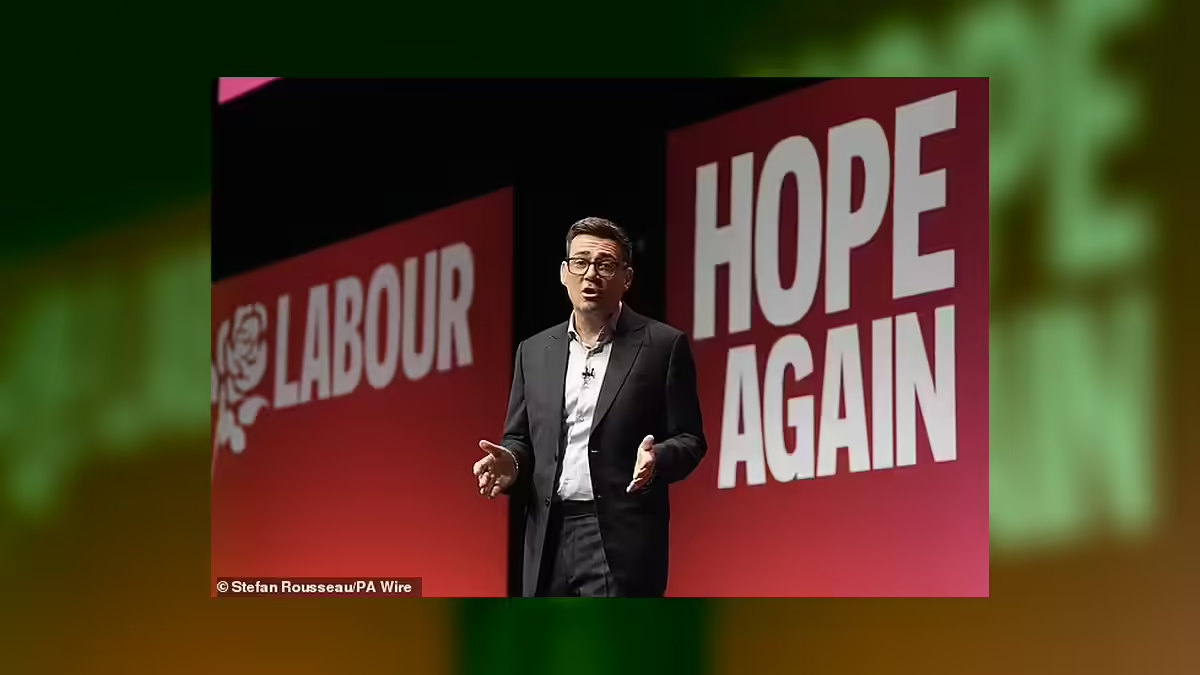
Prime Minister Andy Burnham has used his first Labour Party conference speech as leader to outline a sweeping programme of changes to the British state, including a new national social care service, changes to the state pension system and greater public involvement in essential utilities.
Speaking in Liverpool on Tuesday, Burnham said Britain needed a different direction after years of deindustrialisation, privatisation, austerity and the consequences of Brexit.
His programme is intended to form part of Labour’s longer-term political offer, with several of the most significant changes not due to take effect until after the next general election.
State Pension System Set for Major Change
One of the most contentious announcements was Burnham’s decision to change the state pension triple lock from 2030.
The current system increases pensions annually by whichever is highest among inflation, average earnings growth or 2.5 per cent. Burnham said that arrangement would remain in place for the rest of the current parliamentary term.
From April 2030, however, he proposed removing the earnings element. Pensions would continue to rise annually by at least inflation or 2.5 per cent, while the government would seek to ensure their value remains linked to average earnings over time.
Burnham said the change would generate savings that could help establish the proposed National Care Service.
Social Care Becomes the Centrepiece
The biggest element of Burnham’s programme is a proposed NHS-style social care system that would be free at the point of need.
The prime minister said the service would be introduced in the next Parliament and would be funded without borrowing. He has previously described his ambition as creating a universal system in which everyone contributes and everyone is covered.
The proposal has a strong personal dimension for Burnham. His father, Roy, recently died after living with Alzheimer’s, and Burnham became visibly emotional while discussing his experience of the care system.
He said his proposed reforms were partly intended as a tribute to his father and to those who provide care.
Funding Questions Remain
The proposed care service could require substantial additional public spending. Estimates cited before the speech have put the potential annual cost at up to £18 billion, although the precise design and funding mechanism remain to be settled.
Burnham acknowledged that the changes would be difficult and said the government would have to operate within its fiscal rules.
The pension changes are expected to provide part of the funding, but the precise financial effect will depend on the final policy design and economic conditions.
Burnham also said pensioners dependent solely on the state pension would not be brought into income tax during the current parliamentary term.
Public Ownership Returns to the Agenda
Burnham also announced plans to challenge restrictions on public ownership of water companies.



He argued that essential services including water, energy, transport, housing and care should have greater public control.
His wider programme includes a proposed government-backed body called GB Grid, which would invest in Britain’s electricity network and compete with privately owned companies. The plan is part of Labour’s broader effort to increase public involvement in energy infrastructure.
The government has also outlined measures affecting social housing, including plans to change the Right to Buy rules for newly built council homes.
Electoral Reform Becomes a Labour Commitment
Another major announcement concerned Britain’s voting system.
Burnham said Labour would contest the next general election with a manifesto commitment to change the electoral system so that votes more directly influence parliamentary representation.
He has criticised the existing first-past-the-post system and proposed a commission to examine alternatives. The exact model of any replacement system has yet to be determined.
The issue could become a significant constitutional debate ahead of the next election.
Brexit and Britain’s Relationship With Europe
Burnham also criticised the UK’s decision to leave the European Union and said the government would seek a new long-term relationship with the bloc.
He argued that Brexit had caused more harm than good and indicated that Labour would examine opportunities for closer cooperation with Europe.
The government has not announced a policy to rejoin the EU, however, and Burnham’s remarks focused on exploring future relations rather than reversing Brexit immediately.
Opposition and Union Criticism
The pension proposal has already triggered criticism from political opponents and trade union figures.
Conservative leader Kemi Badenoch argued that the changes would not address Britain’s wider economic challenges and questioned whether the savings would be sufficient to finance the proposed care system without additional tax increases.
Unite general secretary Sharon Graham has also criticised the prospect of changing the triple lock, arguing that reducing pension growth would place an unfair burden on older people.
Earlier reporting described the proposal as particularly contentious within Labour, where concerns have been raised about its potential political consequences.
Burnham Rejects Calls for Straight Welfare Cuts
While proposing changes to pensions, Burnham resisted calls for straightforward reductions in other areas of welfare spending.
Instead, he argued that government could reduce welfare costs by tackling problems such as high housing and energy bills and by helping more people enter employment.
His approach is based on the argument that investment in housing, energy and employment can eventually reduce pressure on the welfare budget.
A Ten-Year Programme
Burnham presented his proposals as part of a decade-long attempt to reshape Britain’s economy and public services rather than a collection of measures that could be implemented immediately.
He acknowledged that the government’s ability to spend is constrained by its fiscal rules and the wider economic environment.
That caution comes as the government faces pressure from inflation, slower growth and rising debt costs ahead of the October 28 Budget.
Burnham nevertheless argued that the country needed a clearer long-term direction, promising to publish a broader plan later this year.
A Different Direction for Labour
The speech marked a significant attempt by Burnham to define the political direction of his government around greater public provision, increased state involvement in essential infrastructure and major reform of social care.
The most immediate political dispute is likely to centre on the pension changes, while the longer-term debate will involve whether the proposed National Care Service can be designed and funded without placing unsustainable pressure on public finances.
Burnham acknowledged that not everyone would support his proposals but argued that the country needed a more open debate about the choices required to reform its public services.
The next stage will be turning the broad commitments announced in Liverpool into detailed legislation, funding plans and a manifesto ahead of the next general election.

