
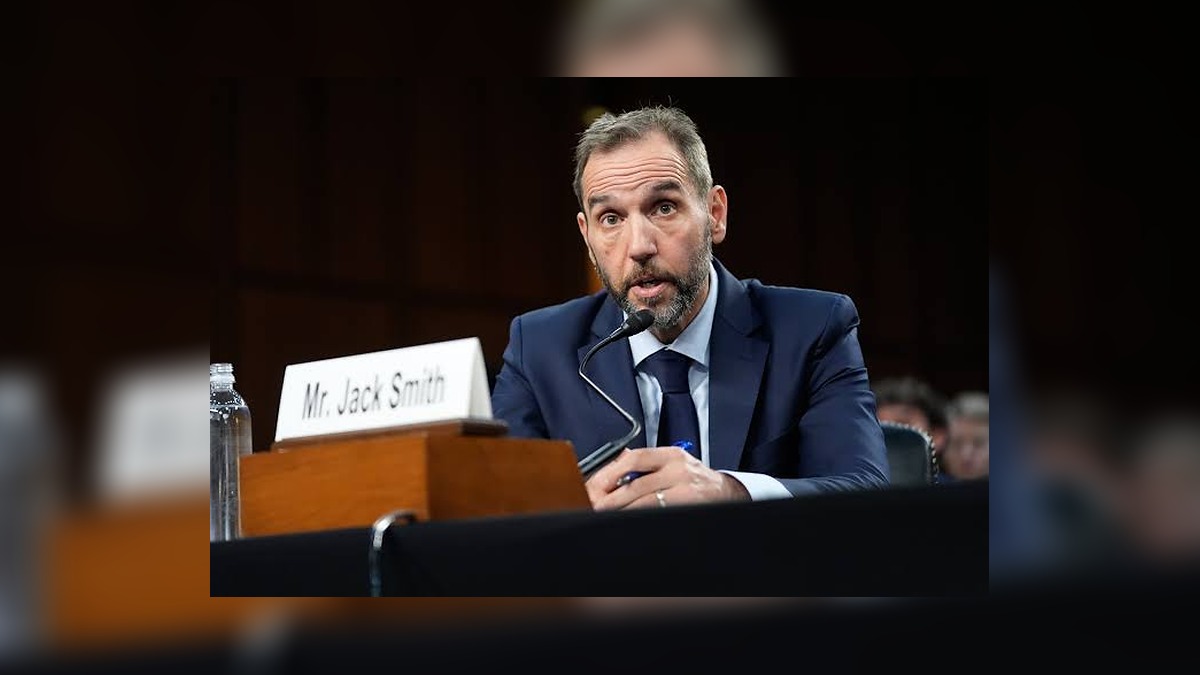
Former special counsel Jack Smith acknowledged during a Senate Judiciary Committee hearing Tuesday that his investigative team obtained financial information connected to political donors as part of its investigation into Donald Trump and the events surrounding the 2020 election.
The disclosure came after Chairman Chuck Grassley pressed Smith over newly released records that, according to the committee, contain at least 4,782 personal checks linked to donors in all 50 states.
The checks reportedly cover donations made between September 2019 and August 2023, meaning the records span several years and extend beyond the immediate aftermath of the 2020 presidential election and the Jan. 6, 2021, Capitol attack.
Grassley Demands a Direct Answer
During the hearing, Grassley repeatedly asked Smith whether his office had taken possession of donor information that included financial details.
Smith initially responded by explaining the purpose of his investigation, saying it was focused on matters within his mandate, including whether individuals or entities had violated federal law in efforts to interfere with the peaceful transfer of presidential power.
Grassley returned to the specific question, asking Smith to answer whether his operation had obtained donor data and financial information.
Smith then answered yes.
He said he could not recall every subpoena issued by his office but maintained that investigators obtained records because they were conducting a criminal investigation and had a responsibility to gather relevant facts.
Records Include Donors Across the Country
Grassley said the records involved Americans from every state and included relatively small contributions.
According to the material released through the committee’s oversight, some of the checks were for only a few dollars. Just The News reported that Grassley cited checks ranging from about $5 to $10 among the records and said the collection included donors from every state represented by members of the Judiciary Committee.
The Senate Judiciary Committee has been conducting an extended examination of Arctic Frost, an investigation that preceded and contributed to Smith’s later federal election case against Trump. The committee says its oversight has uncovered subpoenas involving Republican organizations, elected officials and other individuals.




Concerns Over Sensitive Banking Information
The records have prompted questions about the type of personal information investigators obtained.
Grassley said the checks could contain information such as donors’ home addresses, bank account numbers, routing information and signatures.
He also argued that Smith’s public report did not provide a detailed account of the donor information gathered during the investigation.
The disclosure has therefore shifted part of the congressional debate away from the evidence collected concerning Trump and toward the breadth of information investigators obtained from people who were not themselves the principal subjects of the investigation.
Arctic Frost Has Already Drawn Broader Scrutiny
The donor records are the latest development in a congressional investigation that has uncovered other categories of information sought by investigators.
Senate Judiciary Committee records show that Smith’s team issued subpoenas involving members of Congress and hundreds of organisations and individuals. The committee has also previously disclosed records concerning congressional phone data and other communications obtained during the investigation.
In July, the committee said Smith’s investigative team had obtained text messages involving 44 members of Congress. Earlier oversight disclosures also detailed efforts to obtain tolling information associated with Republican lawmakers.
These disclosures have become a central focus of Grassley’s continuing investigation into how Arctic Frost was conducted and how its investigative material was subsequently used.
Smith Defends the Purpose of the Investigation
Smith has maintained that his investigators were pursuing potential federal crimes rather than targeting people because of their political affiliation.
At Tuesday’s hearing, he defended the broader investigation by pointing to the seriousness of allegations surrounding attempts to interfere with the transfer of presidential power after the 2020 election.
The former special counsel has also defended subpoenas for congressional records, saying investigators believed information connected to lawmakers and Trump allies could be relevant to understanding events surrounding the Jan. 6 certification process.
Republican lawmakers have disputed that justification and have continued to question whether investigative authorities were used too broadly.
Congress Continues to Investigate the Investigation
The dispute over the donor records is unfolding as congressional oversight of Arctic Frost continues.
Grassley and other lawmakers have been seeking additional documents from the Justice Department, FBI, telecommunications companies and other organisations in an effort to establish the full scope of the investigation. The Senate Judiciary Committee’s official Arctic Frost archive lists numerous document requests and disclosures dating back to 2025.
The latest hearing therefore added another element to an already expansive congressional inquiry: not only what information investigators collected about Trump and his political allies, but also how much financial information from ordinary political donors entered the investigative record.
The significance of the 4,782 checks, including how each was obtained and how the information was used or retained, remains part of the broader congressional examination of the investigation.

