
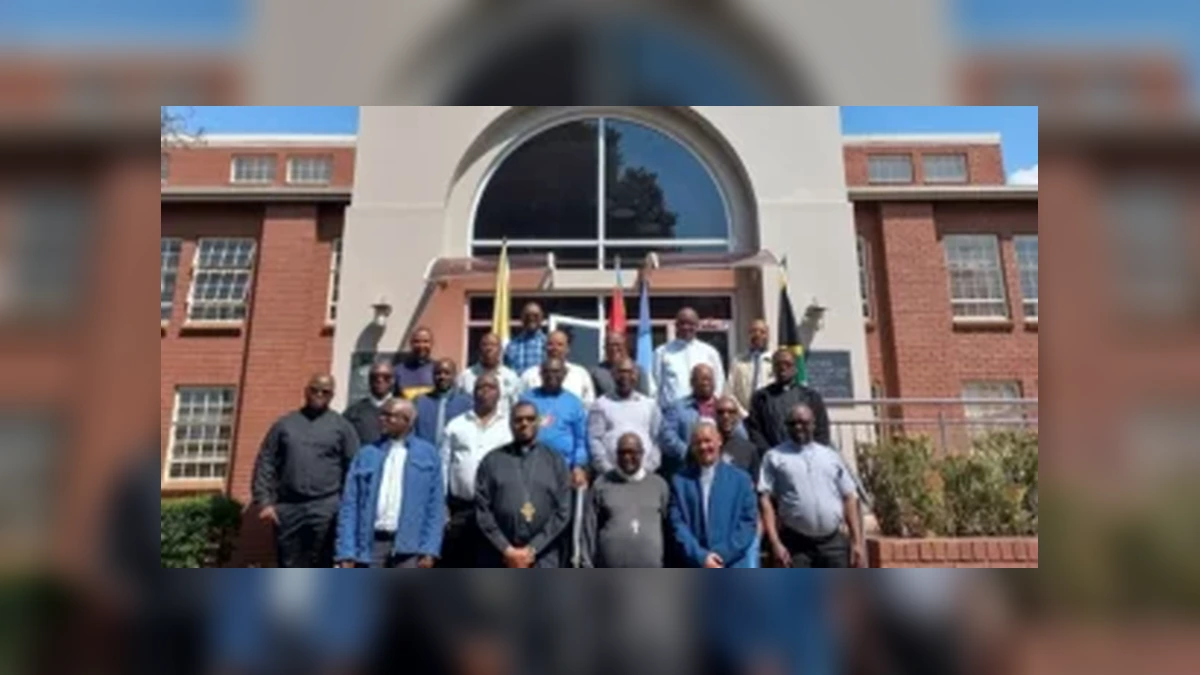
The newly established Council of Priests (COP) of the Southern African Catholic Bishops’ Conference is seeking to strengthen cooperation between priests and bishops while giving clergy a greater role in addressing challenges facing the priesthood.
The council’s approach was highlighted during its first strategic planning meeting, held from September 9 to 11 in South Africa.
Father Alex Beukes, the COP vice chairperson, told ACI Africa that the new structure was created in response to concerns that the previous arrangement did not provide enough collaboration between bishops and priests.
COP replaces an earlier priests’ council structure
Beukes said the decision to establish COP followed a recognition that the former Southern African Council of Priests had limitations when it came to cooperation between clergy and bishops.
According to him, priests previously gathered for meetings but did not always have sufficient opportunities to discuss issues affecting their ministry across individual dioceses.
The new council was established by the bishops as a collaborative and synodal body intended to provide a forum where priests can share experiences, raise concerns and work alongside bishops on issues affecting the priesthood.
Synodality becomes a key part of the council’s work
Beukes said the COP structure is designed around collaborative ministry, allowing priests and bishops to work together on challenges affecting the Church in southern Africa.
The first strategic planning meeting brought together representatives from dioceses and archdioceses across South Africa and Eswatini, including clergy involved in diocesan, religious and missionary ministries.
The broad representation allowed participants to compare experiences and discuss concerns affecting priests in different parts of the region.
Priests given greater access to bishops
A key feature of the new structure is the involvement of chairpersons of priests’ councils from different dioceses.
Beukes said the arrangement allows these representatives to engage with bishops, vicars general and other members involved in diocesan councils of priests.
This, he explained, creates a channel through which concerns raised by priests can be communicated and followed up at diocesan level.



The structure is also expected to help strengthen the implementation of the wider synodal process within individual dioceses.
Strategic priorities mapped out for 2026 to 2029
The meeting was held under the theme, “Strengthening Priestly Communion, Stewardship, and Mission for a Sustainable Church.”
Participants used the gathering to identify strategic priorities for the 2026–2029 period while examining issues affecting the lives and ministries of priests.
Beukes said several of the priorities had already been raised by priests during a general meeting, giving the COP an opportunity to begin addressing concerns identified by the clergy themselves.
Financial pressures emerge as a major concern
Finances were among the first issues discussed during the strategic planning process.
Beukes said participants examined how financial conditions have changed over time and the effects those changes are having on parishes and priests working within them.
The discussions were intended to produce practical information that could be taken back to parish councils and diocesan structures.
According to Beukes, the council’s priorities are designed to address issues that can be discussed and acted upon at both parish and diocesan levels.
Clergy raise healthcare and self-care concerns
The meeting also provided an opportunity for priests to discuss practical issues affecting their wellbeing and ministry.
Father Sandile Mswane of the Diocese of Manzini in Eswatini highlighted finances, parish revenue, changes within the Church, healthcare and self-care among the subjects discussed.
He described the meeting as an “eye-opener” and said the information gathered could be shared with priests in his diocese.
Retirement and mental stress also feature in discussions
Father Albert Post of the Diocese of The Hague pointed to financial pressures, retirement policies and mental stress as issues requiring attention.
His concerns reflected the broader discussions about the practical challenges facing priests as the Church responds to changing circumstances.
Meanwhile, Father Lawrence Kamala of the Diocese of Port Elizabeth said the meeting demonstrated the importance of strengthening relationships between bishops and priests as well as bonds among priests themselves.
New structure aims to give priests a stronger voice
The COP’s first strategic planning meeting represents an early step in establishing how the new council will operate and what issues it will prioritise over the next three years.
Its leadership says the structure is intended to move beyond meetings and discussions by creating stronger channels for collaboration, communication and follow-up.
With representatives from dioceses and archdioceses contributing their experiences, the council is positioning synodal dialogue as a practical part of addressing the realities of priestly ministry across southern Africa.
The emphasis on collaboration, financial stewardship, wellbeing and stronger relationships between clergy and bishops is expected to shape the council’s work through 2029.

