
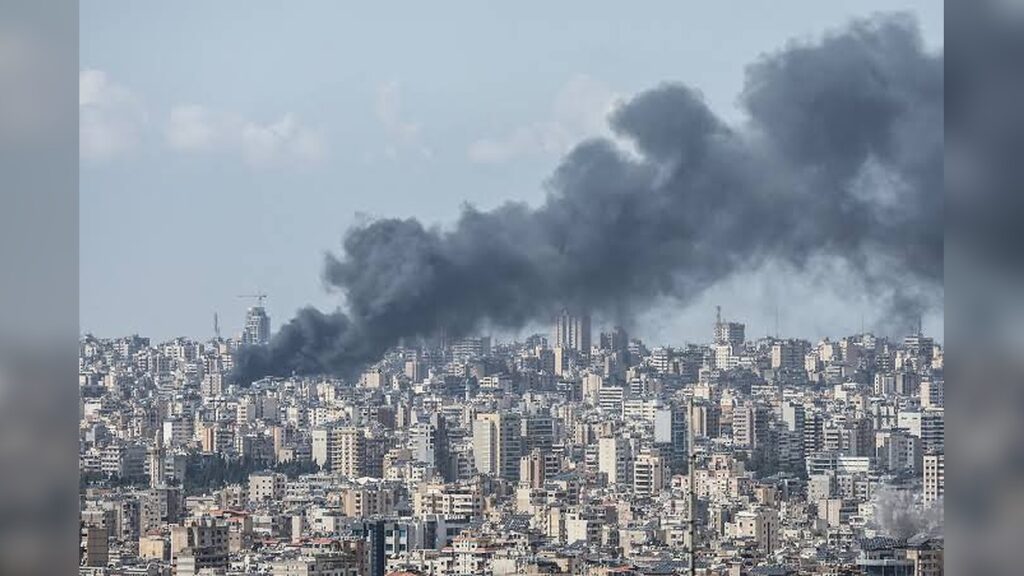
The military confrontation between the United States and Iran has entered its eighth straight day, with both countries continuing to exchange attacks across multiple locations in the Middle East.
The latest escalation follows an Iranian strike on a military installation in Jordan that killed two American soldiers, while another service member remains missing.
The continued hostilities have widened concerns over regional security, with fresh attacks, missile interceptions, and threats to international shipping adding to the growing instability.
Fatal Attack on US Base Raises Stakes
The latest round of violence came after an Iranian attack targeted a US military base in Jordan.
The strike claimed the lives of two American troops, prompting a forceful response from Washington.
US Defence Secretary Pete Hegseth paid tribute to the fallen soldiers, describing them as heroes whose sacrifice would strengthen America’s determination.
The deaths bring the total number of US military personnel killed during the conflict to 16 after an American Navy pilot who disappeared earlier this month was officially declared dead.
Verified footage from inside the Jordanian military facility showed multiple explosions following the attack.
Fresh US Airstrikes Target Iranian Military Capabilities
Following the deadly attack in Jordan, the US military launched another wave of strikes against Iranian positions, marking its eighth consecutive night of operations.
According to American officials, the attacks were aimed at reducing Iran’s capacity to threaten commercial shipping through the Strait of Hormuz while also retaliating against forces linked to the Islamic Revolutionary Guard Corps (IRGC), which Washington says was responsible for the Jordan attack.
The US maintained that its operations have focused solely on military-related targets and logistics infrastructure.
Iran Reports Attacks on Nuclear Facility and Strategic Locations
Iranian media reported that overnight US strikes hit several locations inside the country, including an under-construction nuclear power facility in the south-western city of Darkhoveyn.
Reports also indicated that Qeshm Island was struck during the same series of attacks, although Iranian authorities have yet to provide detailed assessments of the damage.
Iran’s health ministry says at least 50 people have died and more than 500 others have been injured in US strikes carried out over the past three weeks.




Jordan Intercepts Incoming Missiles
As tensions spread across the region, Jordan’s military intercepted three Iranian missiles on Sunday after intelligence suggested the port city of Aqaba could become a target.
State media reported that while three missiles were destroyed in the air, a fourth landed harmlessly in an isolated area without causing casualties or damage.
The missile launches further heightened concerns that neighbouring countries could become increasingly involved in the expanding conflict.
Israel Responds to Missile Activity Near Border
Israel also responded to the latest missile activity after projectiles were launched toward Jordan.
The Israeli military said interceptor systems were activated to prevent missile debris from falling inside Israeli territory.
Fragments from the interception were later found near the southern city of Eilat, close to Israel’s border with Jordan, but authorities confirmed there were no injuries or property damage.
Strait of Hormuz Remains Flashpoint
The strategic Strait of Hormuz continues to be one of the most dangerous areas in the conflict.
Iran’s Revolutionary Guard claimed that two vessels ignored Iranian warnings against passing through the waterway and were subsequently involved in what it described as an “accident.”
The IRGC warned that ships associated with the United States or using routes it considers unsafe risk facing similar incidents.
Meanwhile, the US military said its ongoing campaign is specifically intended to weaken Iran’s ability to threaten international commercial shipping through the vital oil transit route.
Civilian Infrastructure Also Comes Under Fire
The conflict has increasingly affected civilian infrastructure across the Gulf region.
Kuwaiti authorities confirmed that a power generation and water desalination facility was struck for the second time in two days, causing another fire at the site.
The Gulf Cooperation Council had earlier condemned Iran for attacking civilian infrastructure after the facility was first hit.
Iran, however, said its operations in Kuwait targeted an air base and military depot used by US forces.
Earlier this week, Tehran also accused the United States of striking bridges and a transportation station inside Iran.
Washington insisted those attacks were directed only at military infrastructure.
Under international humanitarian law, deliberate attacks on civilians are prohibited, although civilian facilities may lose legal protection if they are being used for military purposes.
Ceasefire Agreement Completely Unravels
The latest violence comes after hopes for peace collapsed just weeks after Washington and Tehran reached a preliminary ceasefire agreement in June.
The truce effectively ended when US President Donald Trump announced on 8 July that the agreement was no longer in force.
Iran’s Supreme Leader Mojtaba Khamenei blamed the renewed fighting on what he described as repeated American violations of the agreement, arguing that the US had demonstrated its commitments could not be trusted.
Regional Tensions Show No Signs of Easing
With missile exchanges continuing, critical infrastructure increasingly becoming targets, and the Strait of Hormuz remaining under threat, fears are growing that the conflict could spread even further across the Middle East.
As both Washington and Tehran continue military operations while exchanging accusations over attacks on civilian and strategic facilities, prospects for a renewed ceasefire appear increasingly remote.

