
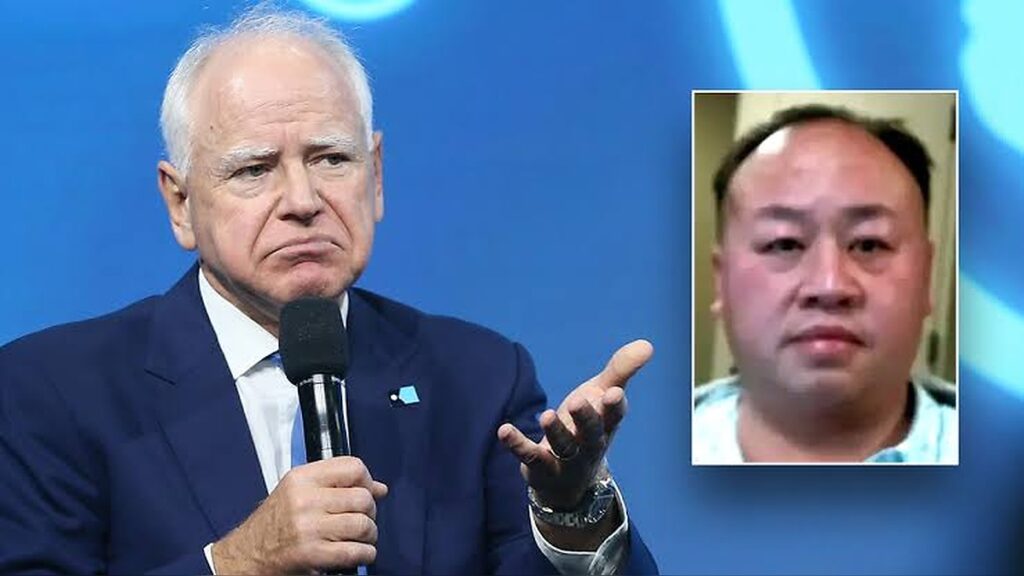
Minnesota Governor Tim Walz is standing by his decision to support a pardon for a Laotian man convicted of sexually abusing a child, even after the Trump administration revoked the man’s legal status and deported him from the United States.
The case has reignited a fierce national debate over criminal justice, immigration enforcement and the limits of rehabilitation.
Convicted Offender Removed From the United States
Tou Lue Vang, 42, was deported to Laos after U.S. Secretary of State Marco Rubio terminated his legal status. The Trump administration announced the removal on Friday, saying Vang would no longer pose any threat to American communities.
Vang had originally entered the United States through California in 1994 and obtained legal status during the Clinton administration.
However, following his conviction for sexually abusing a young girl in Minnesota, federal authorities determined that he had lost that legal protection and placed him under a final order of removal.
Walz Says the Pardon Was Not About Immigration
Despite criticism, Walz insisted the pardon was unrelated to immigration policy.
Speaking this week, the governor questioned whether deporting Vang actually improved public safety or benefited the victim and those affected by the crime.
Walz argued that while the offenses were undeniably horrific, society should also consider whether individuals deserve to be permanently defined by the worst actions of their lives.
He emphasized that the Board of Pardons had rejected other clemency requests involving applicants with immigration issues, suggesting Vang’s case was evaluated on its own merits.
Board of Pardons Approved Clemency
The pardon was granted on June 10 by the Minnesota Board of Pardons, which consists of Governor Walz, Attorney General Keith Ellison and Minnesota Supreme Court Chief Justice Natalie Hudson.




Before the final decision, the Minnesota Clemency Review Commission recommended that Vang receive a pardon.
Walz also pointed to the reported support of the victim for the pardon as one factor considered during the review process.
A spokesperson for Attorney General Ellison later clarified that the pardon did not prevent federal immigration authorities from pursuing deportation.
Details of the Criminal Case
According to court records cited by federal officials, Vang repeatedly sexually assaulted a 10-year-old girl in St. Paul between 2002 and 2004.
The abuse reportedly began while the victim was in the fourth grade.
His conviction ultimately triggered the loss of his legal immigration status, making him subject to removal proceedings under federal immigration law.
Trump Administration Defends Deportation
Rubio praised the decision to revoke Vang’s legal status, arguing that convicted foreign sex offenders should not remain in the United States.
He said Americans should never have to worry about dangerous offenders remaining in the country and maintained that Vang’s deportation permanently eliminated any future threat he could pose to U.S. families.
The administration presented the case as an example of its broader commitment to strict immigration enforcement against non-citizens convicted of serious crimes.
Republicans Condemn Minnesota Leaders
Republican lawmakers and Trump administration officials sharply criticized Walz’s support for the pardon, arguing that state leaders showed misplaced sympathy toward someone convicted of one of the most serious criminal offenses.
Lauren Bis, acting assistant secretary at the Department of Homeland Security, described the decision as unacceptable, accusing Minnesota Democrats of protecting criminal immigrants instead of prioritizing public safety.
Conservatives have cited the deportation as evidence that aggressive federal immigration enforcement remains necessary, particularly in cases involving violent or sexual offenses.
Broader Debate Over Justice and Public Safety
The controversy has become another point of conflict between the Trump administration and Democratic-led states over immigration and criminal justice policies.
Walz has framed the issue around rehabilitation, family stability and the belief that people should not be judged solely by their worst mistakes after serving their sentences.
His critics reject that argument in this case, insisting that someone convicted of sexually abusing a child should not have been considered for a pardon regardless of rehabilitation.
With both sides presenting sharply different views, the case has evolved beyond one individual’s legal status into a wider political battle over accountability, second chances and the role of immigration enforcement in protecting public safety.

