
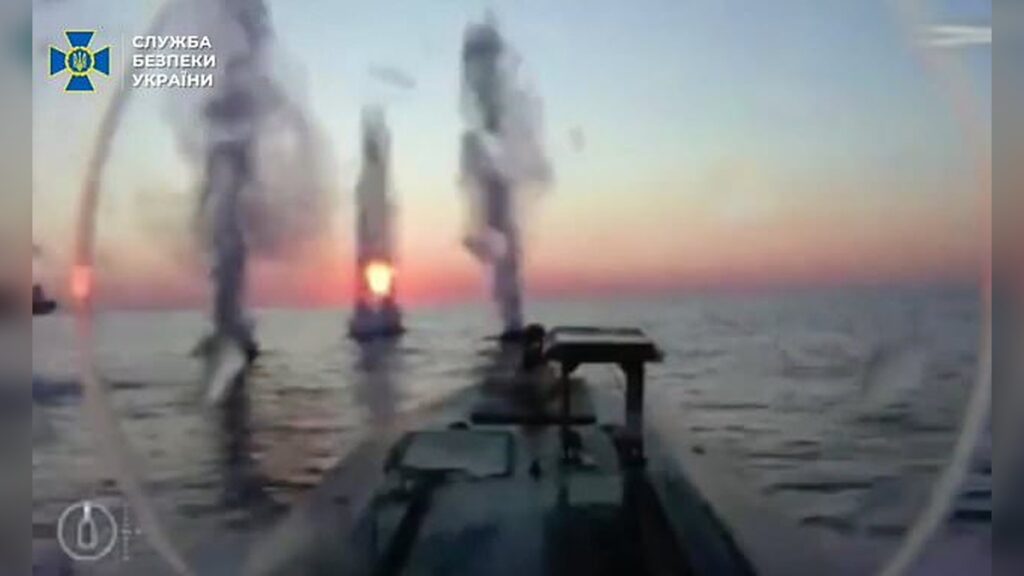
Ukraine has intensified its campaign against Russian maritime logistics, claiming to have struck 116 vessels linked to Moscow’s so-called “shadow fleet” during a nine-day drone offensive centered on the Sea of Azov.
The operation marks one of Kyiv’s most ambitious efforts to disrupt Russian supply lines supporting occupied Crimea and southern Ukraine.
The latest reported attack took place on July 14, when explosions were seen over the Sea of Azov as Ukrainian drones targeted Russian tankers operating in the area.
Ukrainian officials say the campaign is designed to weaken Russia’s ability to transport fuel and military supplies across occupied territory.
Drone Force Commander Claims Growing Success
Major Robert “Magyar” Brovdi, who leads Ukraine’s drone forces, announced the results of the operation on July 15, stating that 116 vessels—including tankers and cargo ships—had been successfully hit over the previous nine days.
According to Brovdi, the strategy is intended to steadily erode Russia’s maritime transport network by damaging ships that support military operations and fuel deliveries to Crimea.
He described the campaign as evidence that Russia’s shadow fleet is steadily deteriorating under sustained Ukrainian pressure.
Sea of Azov Remains a Critical Strategic Waterway
The Sea of Azov occupies a strategically important position between southern Russia, Russian-occupied Ukrainian territory and the Crimean Peninsula.
It serves as a vital route for fuel shipments, agricultural exports and logistical support for Russian forces.
Ukraine has repeatedly accused Russia of using the waterway to transport grain taken from occupied Ukrainian territories, while Moscow relies on the route to move supplies into Crimea and maintain military operations across the region.
Long-Range FP-2 Drones Drive the Campaign
Military sources attribute the success of the offensive to Ukraine’s long-range FP-2 drones, which reportedly carry relatively small explosive payloads but can travel more than 250 miles to reach targets.
Launching from mobile positions inside Ukrainian territory, the drones fly across occupied areas before approaching the Sea of Azov at extremely low altitude to reduce the chances of radar detection.
Instead of attempting to sink ships outright, operators reportedly focus on disabling bridges and navigation systems, leaving vessels stranded and forcing Russia to dispatch tugboats for recovery.




Ukrainian planners believe this approach increases pressure on Russian logistics by creating additional rescue operations while conserving drone resources.
Coordinated Strategy Weakens Russian Defences
Analysts say the maritime campaign has benefited from several overlapping factors.
Earlier Ukrainian attacks against Russian air defence systems and oil infrastructure are believed to have diverted military resources, reducing Moscow’s ability to defend shipping routes.
At the same time, improvements in drone technology and what Ukrainian sources describe as Russian strategic miscalculations have allowed increasingly effective operations deep inside contested areas.
Kyiv’s broader objective is reportedly to push Russia toward land-based transport routes, which remain vulnerable to precision drone strikes.
Shipping Disruptions Raise Export Concerns
Industry sources reported that several grain vessels were struck on July 13 and 14, with some catching fire during the attacks.
One source claimed that the remaining vessels in the Sea of Azov were increasingly exposed, describing them as highly vulnerable targets.
Commercial shipping has also faced disruption.
Reports indicate that vessels have struggled to enter or leave the Sea of Azov through the Kerch Strait and the Azov-Don shipping channel, creating uncertainty for grain and fuel transportation.
The campaign could also affect Russia’s ability to move petroleum products and agricultural exports through Black Sea ports, including Novorossiysk.
Insurance and Logistics Challenges Add Pressure
The offensive has compounded existing logistical difficulties for Russia.
According to reports, Russian insurers have withdrawn war-risk coverage for tankers operating in affected waters, while proposals for state-backed insurance guarantees have reportedly stalled due to budget concerns.
Russian authorities have acknowledged that agricultural exports may need to be redirected through alternative routes if maritime disruptions continue, reflecting growing concerns over the reliability of shipping corridors in the region.
Moscow Condemns Attacks as Terrorism
Russia has strongly condemned the expanding drone campaign.
Foreign Minister Sergei Lavrov accused Ukraine of carrying out acts of terrorism, arguing that the attacks serve only to inflict damage and intimidate rather than secure military objectives.
Ukraine rejects those accusations, insisting that its forces target only military assets or infrastructure supporting Russia’s war effort.
A Ukrainian military source said civilian cargoes are not deliberate targets and accused Moscow of using claims involving commercial vessels to justify continued strikes against Ukrainian civilian infrastructure.
Wider Black Sea Conflict Continues to Escalate
The maritime offensive comes as both countries intensify operations across the Black Sea region.
Russia has increased attacks on Ukrainian port infrastructure in recent months, with Ukrainian officials warning that repeated strikes on ports in the Odesa region could significantly reduce the country’s grain export capacity.
As the conflict increasingly extends beyond the battlefield into shipping lanes and commercial logistics, both sides continue to target infrastructure they view as essential to sustaining military and economic operations, further raising the stakes for trade and security throughout the Black Sea basin.
