
The South African government is calling on public institutions and private companies to expand employment opportunities for persons with disabilities and improve workplace accessibility.
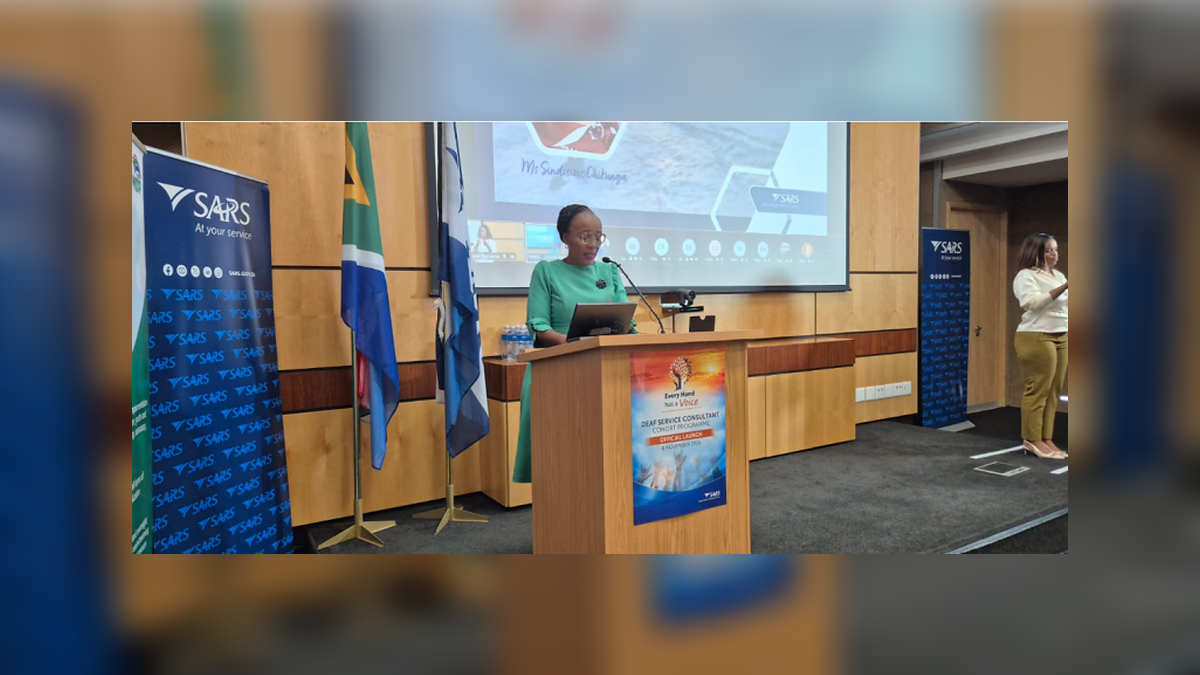
Minister in the Presidency for Women, Youth and Persons with Disabilities, Sindisiwe Chikunga, made the appeal on Friday during the launch of the South African Revenue Service (SARS) Deaf Accessibility and Cohort Programme in Pretoria.
Chikunga praised SARS for introducing measures aimed at improving communication access, skills development and service delivery for deaf people.
She said the programme demonstrates how organisations can put disability inclusion into practice through accessible communication, employment opportunities, training and stronger institutional capacity.
Disability Rights Awareness Month Marks Programme Launch
The launch took place during Disability Rights Awareness Month, which runs from 3 November to 3 December. The period concludes with the International Day of Persons with Disabilities on 3 December.
This year’s campaign is being held under the theme, “Creating Strategic Multi-Sectoral Partnerships for a Disability-Inclusive Society.”
Chikunga said disability inclusion is a constitutional responsibility supported by South Africa’s legal framework and international commitments, including the United Nations Convention on the Rights of Persons with Disabilities and the African Disability Protocol.
She called for stronger cooperation between government, businesses and civil society to remove barriers that limit the participation of persons with disabilities in economic and social activities.
Minister Highlights Barriers in Education and Employment
Chikunga said efforts to create inclusive workplaces must be accompanied by improvements in the education system, warning that obstacles faced by learners with disabilities often continue into their working lives.
Among the challenges she identified were inaccessible school buildings, inadequate assistive devices, a shortage of qualified South African Sign Language teachers and interpreters, and insufficient training for teachers supporting learners with disabilities.
She also highlighted the role of technology, including artificial intelligence, automated captioning, sign language recognition and speech-to-text tools, in improving access to education and employment.
However, she said investment in equipment, internet connectivity and training would be necessary to ensure these technologies are accessible to learners across different communities.
SARS and Government Encouraged to Expand Partnerships
The Minister proposed that her department and SARS work together to establish a dedicated employment pathway for persons with disabilities, building on the experience of the newly launched programme.
She also called for partnerships between special schools and State-Owned Enterprises (SOEs), with companies using their Corporate Social Investment (CSI) budgets to improve school infrastructure and educational resources.
Chikunga said the department wants to bring together SOE chief executives, Sector Education and Training Authorities (SETAs) and industry associations to commit part of their CSI funding to improving conditions at special schools and expanding opportunities for young people with disabilities.
She also called on SARS to support the initiative, noting its ability to bring together stakeholders across the public finance sector.
Employment Equity Target Set at 5% for 2026/27
Chikunga said the National Development Plan aims for persons with disabilities to account for 7% of the workforce by 2030.
Cabinet has approved an annual increase of one percentage point in employment equity representation, with a target of 5% for the 2026/27 financial year.
The Minister said her department had already achieved representation of 5.56%.
She warned that government departments and private organisations should no longer approach employment equity simply as a regulatory requirement.



Chikunga said organisations that continued to make commitments without taking meaningful action would be publicly identified and criticised.
Database to Support Recruitment of Qualified Candidates
The department is working with organisations representing persons with disabilities to establish a database of suitably qualified candidates.
The proposed database is intended to help government departments and public entities identify and recruit people with disabilities for available positions.
Chikunga also encouraged government institutions, businesses and members of the public to purchase goods and services from Supported Employment Enterprises. These state-owned businesses provide employment opportunities for persons with disabilities.
The Minister delivered her address under the theme, “Every Hand has a Voice – Shaping an Inclusive Future.”
The South African government is calling on public institutions and private companies to expand employment opportunities for persons with disabilities and improve workplace accessibility.
Minister in the Presidency for Women, Youth and Persons with Disabilities, Sindisiwe Chikunga, made the appeal on Friday during the launch of the South African Revenue Service (SARS) Deaf Accessibility and Cohort Programme in Pretoria.
Chikunga praised SARS for introducing measures aimed at improving communication access, skills development and service delivery for deaf people.
She said the programme demonstrates how organisations can put disability inclusion into practice through accessible communication, employment opportunities, training and stronger institutional capacity.
Disability Rights Awareness Month Marks Programme Launch
The launch took place during Disability Rights Awareness Month, which runs from 3 November to 3 December. The period concludes with the International Day of Persons with Disabilities on 3 December.
This year’s campaign is being held under the theme, “Creating Strategic Multi-Sectoral Partnerships for a Disability-Inclusive Society.”
Chikunga said disability inclusion is a constitutional responsibility supported by South Africa’s legal framework and international commitments, including the United Nations Convention on the Rights of Persons with Disabilities and the African Disability Protocol.
She called for stronger cooperation between government, businesses and civil society to remove barriers that limit the participation of persons with disabilities in economic and social activities.
Minister Highlights Barriers in Education and Employment
Chikunga said efforts to create inclusive workplaces must be accompanied by improvements in the education system, warning that obstacles faced by learners with disabilities often continue into their working lives.
Among the challenges she identified were inaccessible school buildings, inadequate assistive devices, a shortage of qualified South African Sign Language teachers and interpreters, and insufficient training for teachers supporting learners with disabilities.
She also highlighted the role of technology, including artificial intelligence, automated captioning, sign language recognition and speech-to-text tools, in improving access to education and employment.
However, she said investment in equipment, internet connectivity and training would be necessary to ensure these technologies are accessible to learners across different communities.
SARS and Government Encouraged to Expand Partnerships
The Minister proposed that her department and SARS work together to establish a dedicated employment pathway for persons with disabilities, building on the experience of the newly launched programme.
She also called for partnerships between special schools and State-Owned Enterprises (SOEs), with companies using their Corporate Social Investment (CSI) budgets to improve school infrastructure and educational resources.
Chikunga said the department wants to bring together SOE chief executives, Sector Education and Training Authorities (SETAs) and industry associations to commit part of their CSI funding to improving conditions at special schools and expanding opportunities for young people with disabilities.
She also called on SARS to support the initiative, noting its ability to bring together stakeholders across the public finance sector.
Employment Equity Target Set at 5% for 2026/27
Chikunga said the National Development Plan aims for persons with disabilities to account for 7% of the workforce by 2030.
Cabinet has approved an annual increase of one percentage point in employment equity representation, with a target of 5% for the 2026/27 financial year.
The Minister said her department had already achieved representation of 5.56%.
She warned that government departments and private organisations should no longer approach employment equity simply as a regulatory requirement.
Chikunga said organisations that continued to make commitments without taking meaningful action would be publicly identified and criticised.
Database to Support Recruitment of Qualified Candidates
The department is working with organisations representing persons with disabilities to establish a database of suitably qualified candidates.
The proposed database is intended to help government departments and public entities identify and recruit people with disabilities for available positions.
Chikunga also encouraged government institutions, businesses and members of the public to purchase goods and services from Supported Employment Enterprises. These state-owned businesses provide employment opportunities for persons with disabilities.
The Minister delivered her address under the theme, “Every Hand has a Voice – Shaping an Inclusive Future.”
