
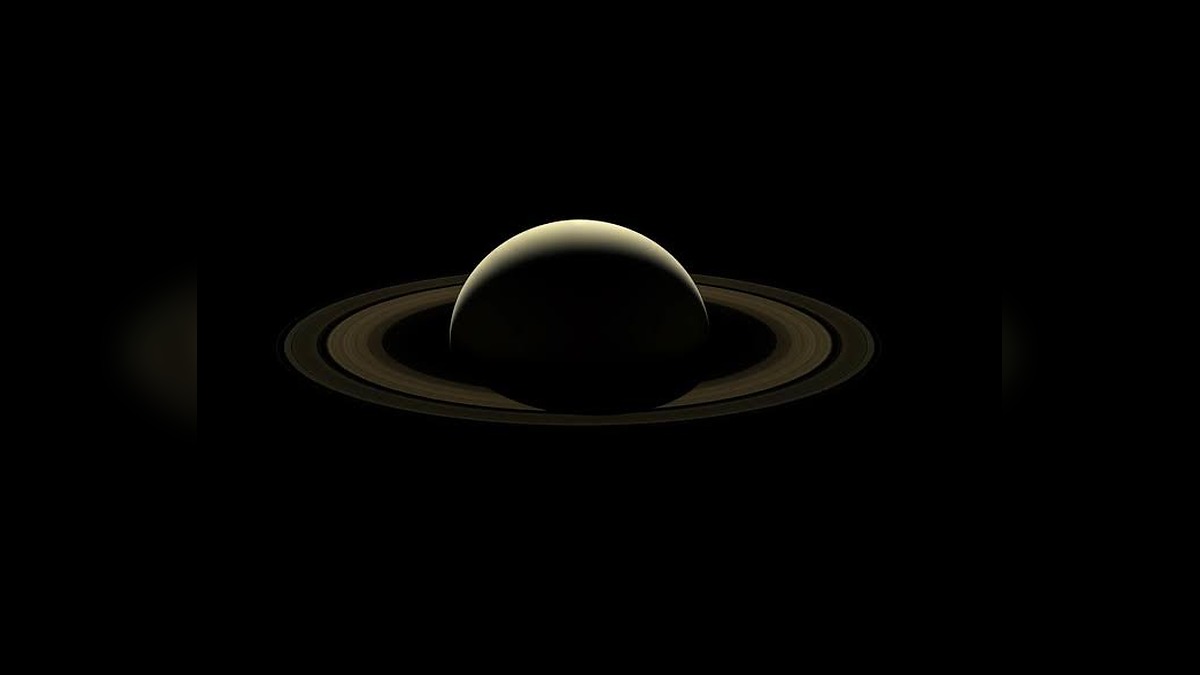
Stargazers across South Africa will have a chance to get a good view of Saturn this weekend as the planet reaches opposition on Sunday, 4 October 2026.
Opposition occurs when Earth passes between the Sun and Saturn, placing the planet on the opposite side of the sky from the Sun. This alignment makes Saturn especially favourable for observation because it rises around sunset, remains visible through most of the night and reaches its highest position around midnight.
The event is also included by NASA among the notable astronomical events of 2026.
Best Time to Spot Saturn in South Africa
The exact opposition will occur at 11:52 UTC on 4 October, corresponding to 13:52 South African Standard Time.
However, South Africans do not need to be watching the sky at that precise time. Saturn will be below the horizon for much of the country during the afternoon, making Sunday evening after sunset a much better opportunity for observation.
The planet will also remain well positioned for several nights around the opposition, meaning cloudy weather or other interruptions on Sunday do not necessarily mean missing the event.
After sunset, observers should look towards the eastern sky, where Saturn will rise before gradually moving across the night sky.
Saturn Will Be Visible for Much of the Night
As the evening progresses, Saturn will climb higher above the horizon and become particularly well positioned around midnight, when it reaches its highest point in the sky.
Unlike some short-lived astronomical events, Saturn’s opposition is not something that disappears within minutes. The alignment marks the peak of a broader period during which the planet is especially suitable for evening and nighttime observation.
A location away from bright city lights can improve the experience, although Saturn is bright enough to be seen without specialised equipment.




What Saturn Looks Like to the Naked Eye
Without a telescope, Saturn will appear as a bright, steady yellowish or creamy-coloured point of light.
It will not resemble the detailed images captured by spacecraft and powerful observatories. Although Saturn is enormous, its great distance from Earth means that its disc is too small for the unaided human eye to resolve.
One way to distinguish the planet from many stars is its relatively steady appearance. Planets generally twinkle less noticeably than stars because of the way their light reaches Earth’s atmosphere.
During the 2026 opposition, Saturn is expected to shine at approximately magnitude 0.3, while its apparent disc will measure close to 20 arcseconds.
A Telescope Reveals Saturn’s Famous Rings
The planet’s rings cannot be seen with the naked eye, despite Saturn itself being readily visible.
However, observers do not need an expensive professional telescope to see them. A relatively small telescope with an aperture of around 60–80 mm, combined with approximately 50× magnification, should be capable of revealing Saturn’s ring system.
Under favourable atmospheric conditions and with larger equipment, stargazers may also be able to make out finer details, including the Cassini Division — the dark gap separating Saturn’s prominent A and B rings.
Saturn’s Rings Are Opening Up Again
This year’s opposition offers another reason for astronomy enthusiasts to turn their telescopes towards Saturn.
The planet’s rings were presented almost edge-on to Earth in 2025, making them appear extremely narrow. Around the time of the ring-plane crossing, they could even appear to almost vanish when viewed from Earth.
By the October 2026 opposition, the geometry has changed. Saturn’s rings will be tilted by approximately 7–8 degrees, allowing them to appear more clearly through a telescope.
Although they remain much narrower than the dramatic ring system seen in many photographs, the rings should be considerably easier to identify than they were during the edge-on period.
Saturn’s Rings Will Continue Changing
The changing appearance of Saturn’s rings is part of a longer astronomical cycle.
Their angle as viewed from Earth will continue to increase over the coming years, gradually making the rings appear more open. They are expected to reach their widest presentation around 2031–2032.
For South African skywatchers, however, the October 2026 opposition provides an immediate opportunity to observe Saturn as its rings begin opening up again — with the planet remaining visible for much of the night.

