
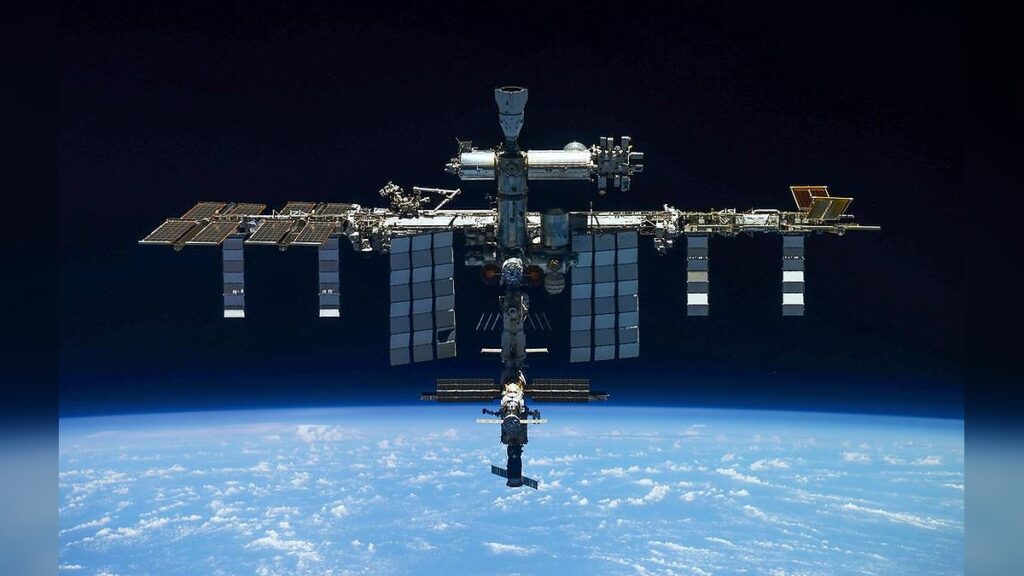
Roscosmos and NASA are working out how responsibilities will be divided when the International Space Station (ISS) eventually reaches the end of its operational life, with discussions focused on the station’s controlled deorbiting after 2030.
Roscosmos CEO Dmitry Bakanov told TASS that the two space agencies are currently negotiating which country will be responsible for specific parts of the process.
ISS operations extended through 2030
The discussions follow an agreement to extend the ISS mission beyond its previously planned 2028 end date. According to Bakanov, the station is now expected to remain in operation until 2030, giving Russia and the United States additional time to coordinate its eventual retirement.
“Regarding how we will deorbit the ISS,” Bakanov said, the sides are discussing “who will take responsibility for which segment or section.”




He indicated that the negotiations are not being treated as an immediate deadline, saying the two countries have roughly a year and a half of additional time to settle the outstanding arrangements.
No urgency over deorbiting talks
Bakanov said there is currently no need to accelerate the negotiations, stressing that sufficient time remains to determine the technical and operational responsibilities for bringing the massive orbital complex out of service.
The ISS will require a carefully coordinated process when its mission ends because of its size and the need to ensure that its descent through Earth’s atmosphere is controlled and safely managed.
No immediate meeting planned
Bakanov also said that a face-to-face meeting with NASA’s administrator has not been discussed for the near future, suggesting that the current discussions can continue through existing channels without an imminent high-level meeting.
The two agencies have continued technical coordination despite broader tensions in relations between Russia and the United States.
Cooperation expected beyond ISS retirement
In July, Bakanov announced that Roscosmos and NASA had agreed to keep the ISS operating until 2030. At the time, he also said the two sides would continue exchanging technical information and coordinating activities involving their respective orbital programs even after the ISS is eventually retired.
The planned extension provides the agencies with additional time not only to maintain the station but also to prepare for the complex final stage of its nearly three-decade history in orbit.
