
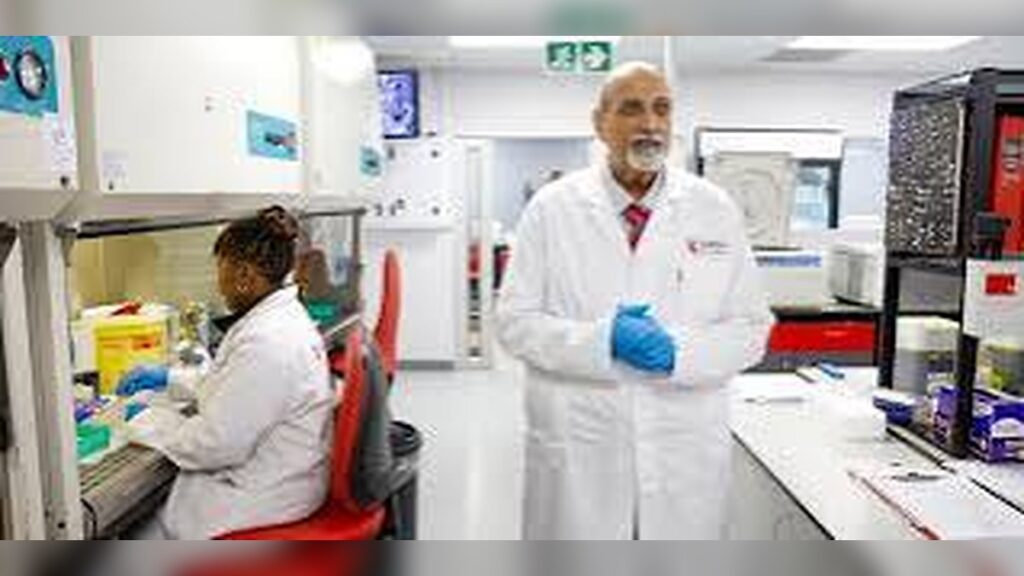
Explaining scientific discoveries in plain language is only one part of a science communicator’s job.
According to Dr Anton Binneman, science communication is equally about helping people understand how science influences their daily lives, encouraging meaningful discussions, and empowering communities to engage with scientific issues that affect them.
Speaking to SAnews, Binneman explained that effective science communication goes beyond translating technical terms.
It requires understanding what different audiences already know, the concerns they have, the languages they speak, and the communication channels they trust.
Science, he said, becomes truly valuable when people can relate it to their own experiences.
National Science Month Marks a New Chapter
South Africa is commemorating its first-ever National Science Month after expanding what was previously known as National Science Week.
The initiative, launched by Deputy Minister of Science, Technology and Innovation Dr Nomalungelo Gina earlier this month, reflects the government’s commitment to making science more visible and accessible across the country.
Binneman noted that extending the celebration from one week to an entire month creates more opportunities for universities, schools, businesses, government departments and community organisations to participate.
The programme features exhibitions, public lectures, school activities, science tours and discussions covering subjects such as climate change, healthcare, technology, indigenous knowledge and space science.
Encouraging the Public to Take Part
While the month-long initiative is still in its early stages, Binneman said the response has been promising.
Organisations throughout South Africa’s National System of Innovation are already hosting events, while ordinary citizens are being encouraged to start their own science conversations within their communities.
He stressed that the real measure of success is not simply the number of activities organised but whether more people begin to see science as something that belongs to everyone rather than an exclusive field reserved for experts.
Breaking Common Myths About Science
Binneman believes one of the biggest misunderstandings about science is the perception that it only happens inside laboratories or universities.




In reality, science shapes everyday decisions involving food, healthcare, agriculture, transport, construction and communication.
He also challenged the belief that science always produces absolute answers.
Scientific knowledge evolves as new evidence becomes available, making revision and debate essential parts of the scientific process rather than signs of weakness.
Another misconception is that scientific thinking depends solely on academic ability.
Instead, curiosity, questioning, careful observation and a willingness to examine evidence are qualities that anyone can develop.
South Africa’s Global Scientific Contributions
According to Binneman, many South Africans may not realise the country’s significant contribution to global scientific research.
He pointed to internationally recognised work in astronomy, biodiversity, health sciences, climate research, nuclear science and space weather.
Major facilities including MeerKAT, the Southern African Large Telescope, iThemba LABS and the South African National Space Agency’s Space Weather Centre demonstrate that South Africa is helping generate scientific knowledge with worldwide impact rather than simply adopting discoveries made elsewhere.
Communication Requires Listening as Well as Explaining
Making scientific information understandable without sacrificing accuracy remains one of the profession’s greatest challenges.
Binneman said communicators must strike a careful balance between simplifying complex concepts and preserving important scientific details.
He reflected on his experience working with communities affected by the Square Kilometre Array project in the Northern Cape, where local concerns extended beyond science to issues such as land use, employment and development.
That experience reinforced the importance of listening, acknowledging different perspectives and creating genuine dialogue instead of simply presenting scientific facts.
Science and Human Experience Go Hand in Hand
Binneman said his work has taught him that evidence alone does not determine how people understand scientific information.
History, culture, trust, personal experience and identity all influence public perceptions.
Rather than viewing uncertainty as a weakness, he believes it should be embraced as an opportunity for further learning and better decision-making based on the best available evidence.
Building the Next Generation of Science Communicators
Looking ahead, Binneman believes South Africa needs more trained science communicators with expertise in journalism, public engagement, multilingual communication, ethics and digital media.
Although universities and the National Research Foundation support specialised qualifications, he said practical experience, mentorship and closer collaboration between scientists and communicators are equally important.
He also called for greater investment in communication in indigenous languages, arguing that scientific knowledge should be accessible to all South Africans, regardless of the language they speak.
Making Science Relevant to Every Citizen
Binneman concluded that publicly funded scientific research should always be communicated back to the people in ways that explain both its value and its limitations.
Strong science communication, he argued, is essential for countering misinformation, strengthening trust in public institutions and helping citizens understand how science influences public policy and everyday life.

