
The proportion of Nigerians under the age of 35 contesting elections has continued to fall despite the introduction of the Not Too Young to Run law, according to Yiaga Africa.
The organisation’s Executive Director, Dr Samson Itodo, said youth representation among election candidates declined from 38 per cent in the 2019 general elections to approximately 28 per cent in 2023.
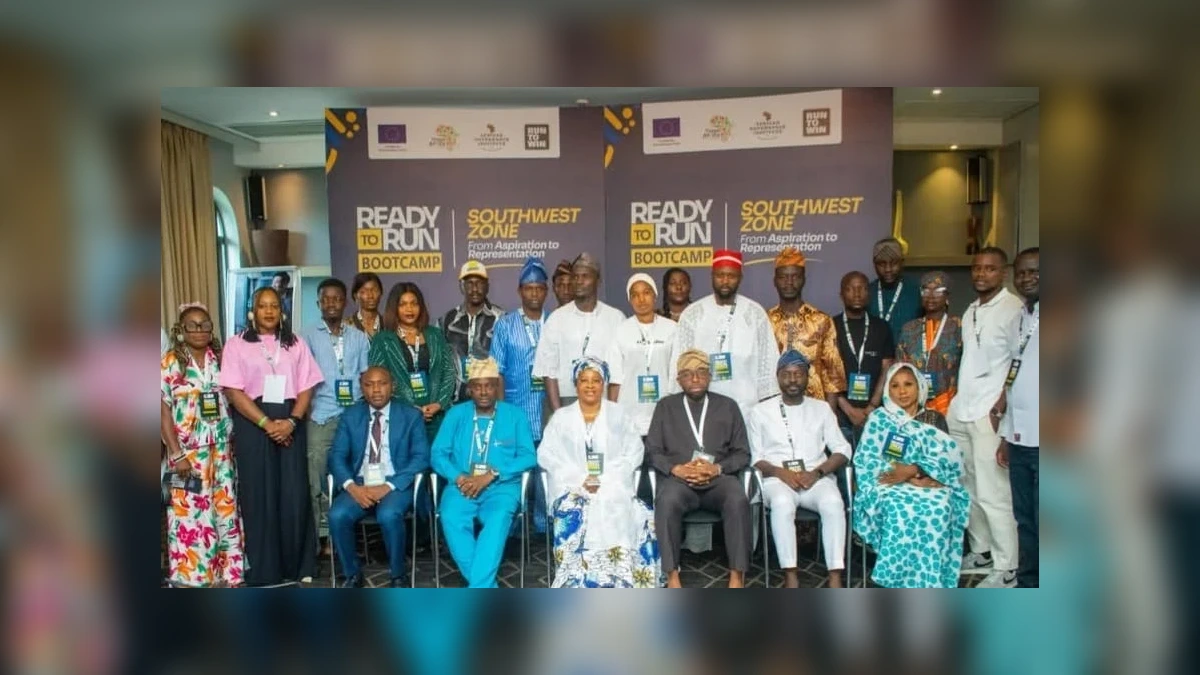
He disclosed this through Yiaga Africa’s Programme Coordinator, Ibrahim Faruk, during a Ready To Run Bootcamp for young political candidates in Lagos on Friday.
The programme, funded by the European Union, was organised under the theme, “Ready to Run Bootcamp: From Aspiration to Representation”.
High Campaign Costs and Party Structures Limit Youth Participation
Itodo attributed the decline in youth participation to the high costs of nomination forms and election campaigns, as well as the influence of established political interests within party structures.
He said control of party primaries and existing political arrangements had made it difficult for younger aspirants to secure tickets.
The Not Too Young to Run legislation was passed in 2018 and signed into law by former President Muhammadu Buhari. It lowered the age requirements for certain elective offices ahead of the 2019 general elections.
Itodo said Yiaga Africa was using its Ready to Run initiative to challenge the perception that young Nigerians were not prepared to contest political positions.
He said the organisation was also involved in electoral reform advocacy, including efforts to reduce nomination fees and encourage political parties to adopt more democratic and inclusive processes.
According to him, some advocacy efforts have produced results, while others have provided lessons for future campaigns.
Yiaga Africa intends to continue pushing for an electoral system that is more accessible to young candidates, less expensive and more inclusive.
INEC Urged to Ensure Credible 2027 Elections
Itodo called on the Independent National Electoral Commission (INEC) and other electoral stakeholders to ensure that the forthcoming elections are credible, secure and properly organised.
He also encouraged young Nigerians to collect their Permanent Voter Cards and participate in the democratic process as voters, candidates or election agents.
He urged them to take part peacefully rather than remain outside the electoral process.




Political Experience and Networks Remain Important for Young Candidates
The Founder of the African Governance Institute for Development, Seyi Adisa, said younger candidates face additional difficulties when seeking elective positions because elections require financial resources and social capital.
He noted that older politicians generally have more experience and established networks, but said younger aspirants could still win with effective strategies, alliances and support systems.
Adisa added that although some established political parties have strong internal structures, they can accommodate young candidates who demonstrate competence, bring value and secure backing from party members and their communities.
He said the Not Too Young to Run law had reduced age restrictions, but progress in increasing youth representation had been slower than expected.
According to Adisa, young candidates continue to face cultural, financial and structural barriers, while their ability to win elections depends on more than simply deciding to contest.
He said candidates must demonstrate their contributions, maintain strong party relationships and gain community support rather than rely solely on their age or personal finances.
Candidates Advised to Understand Electoral Laws
Dr Samuel Oguche, a facilitator at the bootcamp and Senior Executive Fellow at the National Institute for Legislative and Democratic Studies, said aspiring politicians must comply with the laws governing elections.
He explained that electoral participation is regulated by the Constitution, the Electoral Act, INEC regulations and guidelines, political party rules and judicial authorities.
Oguche said candidates must understand and follow these requirements throughout the electoral process, including the pre-election period, election day and post-election proceedings.
He stressed that while political ambition should be encouraged, candidates must respect the rule of law for democracy to function properly.
Lagos Candidate Highlights Financial and Personal Challenges
Oladipupo Ogunseye, the African Democratic Congress (ADC) candidate for the House of Representatives seat in Mushin II, Lagos State, said young people face significant obstacles when attempting to enter elective politics.
Ogunseye, who said he began participating in politics at 18, explained that contesting elections requires financial resources, mental and emotional commitment, experience and the ability to build relationships.
He noted that these demands discourage many young Nigerians from seeking political office, although younger people remain involved in party membership and youth group activities.
Ogunseye said he did not always present himself primarily as a young candidate because the label could sometimes be perceived as a disadvantage among voters.
He argued that reducing the barriers to entering politics would allow more young people to contest elections and demonstrate their ability to succeed in public office.
He added that greater youth participation could provide examples of successful young politicians and encourage further representation.
Yiaga Africa Bootcamp Prepares Aspirants for 2027 Elections
The Ready To Run Bootcamp brought together aspiring politicians aged 35 and below for training ahead of Nigeria’s 2027 general elections.
The initiative is designed to strengthen participants’ political knowledge, confidence and practical skills as they prepare to pursue elective positions.
Sessions covered campaign strategy, political participation and the workings of Nigeria’s electoral environment.
Through the programme, Yiaga Africa aims to equip young candidates with the knowledge and tools needed to navigate the process of seeking political office.
