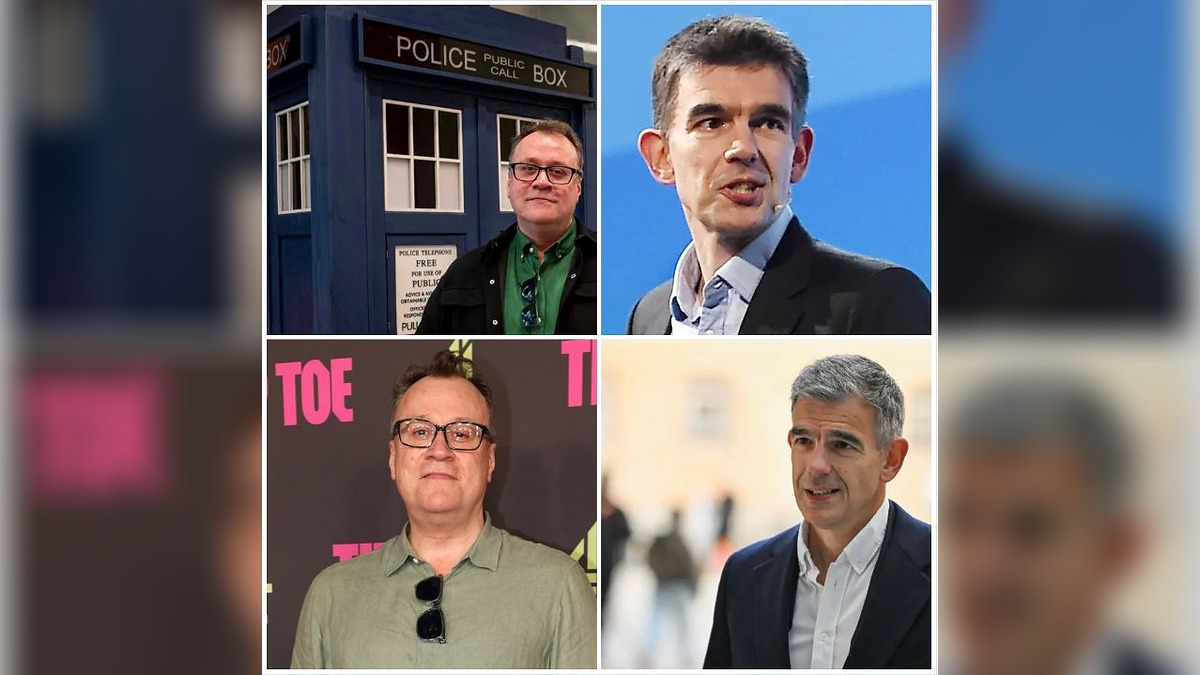
Veteran television writer Russell T Davies has criticised BBC director general Matt Brittin after the broadcaster’s new chief praised the quality of an unofficial, AI-generated episode of Doctor Who.
Brittin sparked debate in September when he told a Royal Television Society conference that he had been sent a 50-minute episode of the science-fiction series created using artificial intelligence, describing it as “pretty good”.
Davies, who has played a major role in shaping modern British television and reviving Doctor Who, said the remarks were poorly judged, particularly at a time when writers and artists are increasingly concerned about AI’s potential impact on their livelihoods.
Speaking on BBC Radio 4’s The Media Show, Davies said the comment was clumsy in an industry where creative professionals could be among the first to suffer the consequences of technological change.
Davies Warns BBC Boss to Think Carefully Before Speaking About AI
Davies also suggested that Brittin’s background outside television may have contributed to the controversy, noting that the director general had joined the BBC after a career at Google.
He said Brittin had not worked in television for very long and suggested he might be more cautious about expressing such opinions in the future.
Davies added that his own inbox had quickly filled with messages following the director general’s comments, prompting him to wonder how much criticism Brittin had received himself.
The remarks highlight the growing tension between technological innovation and the concerns of people whose work depends on human creativity, particularly in the television and film industries.
Matt Brittin Defends His Comments on Artificial Intelligence
Brittin addressed the backlash during a staff meeting last week, explaining that his intention had been to demonstrate how quickly AI technology was advancing rather than suggest that human creativity was becoming less important.
He acknowledged that his comments had caused controversy, joking that he had “got into trouble” over the episode.
The BBC chief nevertheless insisted that people would remain central to the creative process, arguing that technology should enhance human work rather than replace it.
He said he believed in human creativity enhanced by whatever tools were available and stressed that human-led production would continue to sit at the heart of the BBC’s mission.
Russell T Davies Questions Why Writers Would Use AI to Produce First Drafts
Beyond the dispute involving Brittin, Davies expressed wider concerns about the growing use of artificial intelligence in television writing.
He said he had heard accounts of writers using AI prompts to produce the first drafts of scripts, a practice he found difficult to understand.
Davies questioned what writers were being paid to do if they relied on artificial intelligence to complete such a fundamental part of their work.
The acclaimed screenwriter said he did not use AI to write his own scripts, adding that he was deeply concerned the technology could begin replacing professional writers. He warned that this might already be happening in some circumstances.
His comments reflect broader concerns across the creative industries about whether AI-generated material could undermine employment opportunities, reduce the value of original work or change how television programmes are developed.



Davies’ Career Has Helped Shape British Television
Davies is one of the United Kingdom’s most influential television writers, with a career spanning children’s television, comedy, drama and science fiction.
His notable projects include Queer as Folk, It’s a Sin, Years and Years and the more recent drama Tip Toe.
However, his most prominent contribution has arguably been his work on Doctor Who, the long-running BBC science-fiction series that has attracted generations of viewers.
In 2005, Davies helped bring the programme back to television after a 16-year absence. He secured the revival after pitching the idea to the BBC’s then-head of drama at a party in Manchester.
He returned to lead the show again in 2023, overseeing another chapter in the Doctor’s adventures, although he confirmed earlier this year that he would be stepping away from the programme.
Why Davies Says Doctor Who Is One of Television’s Hardest Shows to Make
Despite his long association with the series, Davies acknowledged that producing Doctor Who could be an exceptionally demanding experience.
He recalled periods when he dreaded visiting the set because of the complexity and expense of the production, including elaborate special effects, explosions and performers undergoing extensive prosthetic transformations.
According to Davies, the scale of the technical demands made Doctor Who more difficult to produce than other television programmes.
The show’s production challenges come as its future has faced uncertainty, with the BBC cancelling a planned Christmas special and Disney+ no longer co-financing the series.
New Doctor Who Series Promised Despite Funding Uncertainty
Despite the changes surrounding the programme, Davies offered reassurance to fans by confirming that another series was planned.
Although he will not be involved in the next instalment, he indicated that production would move forward with a new Doctor and a new companion.
Davies said viewers could expect to see production activity in the summer of next year, pointing towards a fresh chapter for the long-running franchise.
The announcement offers a positive sign for the series following questions about its financing and future direction, although the details of the next production were not fully outlined in the interview.
From BBC Children’s Television to a Career in Drama
Davies also reflected on the early stages of his career, revealing that he secured his first television job at the age of 22, working in BBC children’s television for £50 a day.
He described the experience as excellent training, saying it provided a valuable foundation for his later work as a writer and producer.
He subsequently developed his skills during the heyday of Granada Television, when Coronation Street attracted audiences of between 18 million and 20 million viewers.
His career has since established him as a major figure in British entertainment, known for combining social issues, human relationships and compelling drama.
This Morning Phone-Ins Provide Unexpected Story Ideas
Davies also revealed that some of his writing inspiration comes from everyday conversations rather than conventional research.
He said he records phone-in segments from ITV’s This Morning and listens to them in the evenings, believing that they offer a revealing glimpse into ordinary people’s lives.
According to Davies, the calls occasionally produce extraordinary personal stories or genuinely funny situations that could inspire future scripts.
One example that particularly appealed to him involved a woman whose mother-in-law insisted on wearing white to her wedding.
Davies said the conflict between the two women presented a compelling dramatic situation that he hoped to turn into a script one day.
Davies’ Interview Set to Air on BBC Radio 4
The full interview with Davies is scheduled for broadcast on The Media Show on Wednesday at 4.15pm on BBC Radio 4 and BBC Sounds.
His comments are likely to add to the continuing debate about artificial intelligence in television, particularly as broadcasters and production companies consider how the technology could change creative work.
For Davies, the central issue remains the role of writers and other creative professionals in an industry increasingly confronted by rapidly developing technology.
