
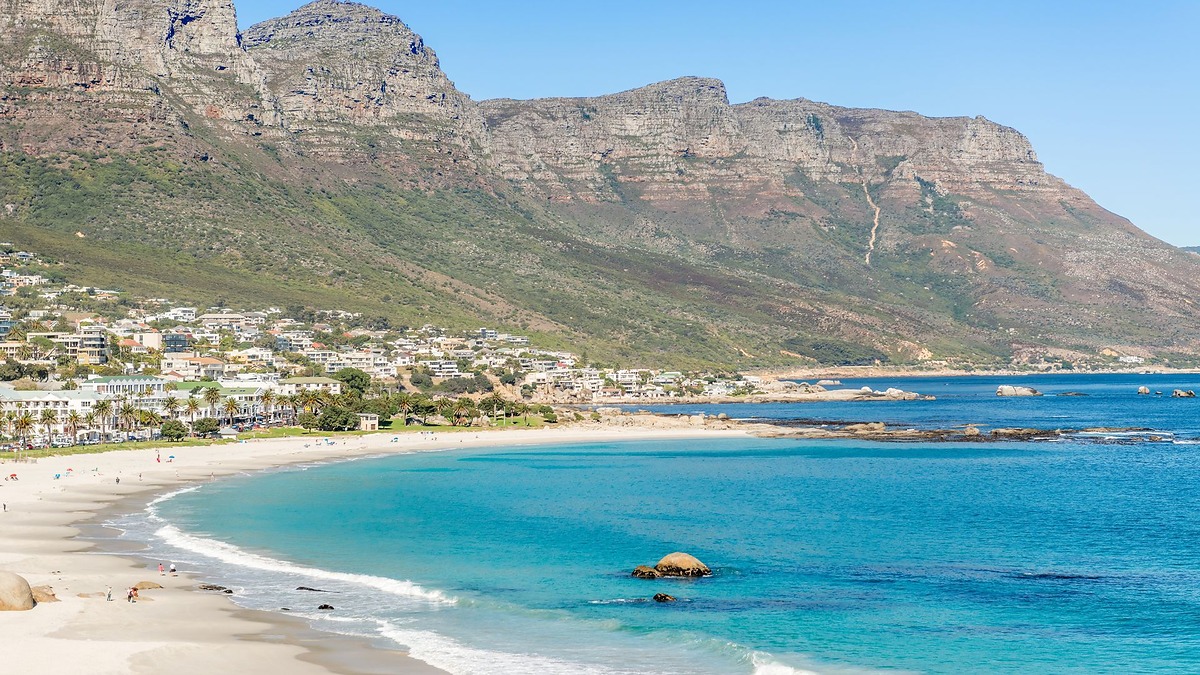
Cape Town’s eight fully accredited Blue Flag beaches have retained their status for the 2026–2027 season, offering residents and holidaymakers recognised standards for beach safety, water quality and environmental management ahead of the summer holidays.
The announcement was made at the Blue Flag and Green Coast Awards ceremony held at Grotto Blue Flag Beach in Hermanus on Thursday, 8 October.
The City of Cape Town also confirmed that four additional beaches have been named Blue Flag pilot sites, placing them on a pathway towards full accreditation if they meet the programme’s requirements.
The latest results mean Cape Town has maintained eight fully accredited Blue Flag beaches for five consecutive seasons, extending its participation in the international programme to 25 years.
The Eight Cape Town Beaches With Blue Flag Status
According to the City, the following beaches have retained full Blue Flag recognition for the coming season:
- Bikini Beach
- Camps Bay Beach
- Clifton 4th Beach
- Fish Hoek Beach
- Llandudno Beach
- Melkbosstrand
- Muizenberg Beach
- Silwerstroomstrand
The recognition is intended to reflect compliance with established standards covering environmental management, public facilities, beach safety and water quality.
The awards are particularly relevant as Cape Town prepares for its busy summer period, when local beaches attract large numbers of residents and visitors.
Four More Beaches Begin the Journey Towards Full Status
Four other Cape Town beaches have been selected as Blue Flag pilot sites, meaning they must continue working towards the standards required for full recognition.
The pilot beaches are:
- Chapman’s Peak in Hout Bay
- Big Bay
- Strand
- Strandfontein
According to the Wildlife and Environment Society of South Africa (WESSA), pilot sites have two seasons to address any shortcomings identified during the assessment process.
Their inclusion provides an opportunity to improve beach management and facilities while working towards the full award.
Nationally, WESSA awarded full Blue Flag status to 50 beaches for the 2026–2027 season, with another 20 beaches receiving pilot status.
What Blue Flag Recognition Means for Beachgoers
Blue Flag is an international environmental and tourism award covering beaches, marinas and sustainable boating tourism operators.
To qualify, beaches must satisfy a range of criteria relating to water quality, safety arrangements, environmental management, public education and available facilities.




In South Africa, WESSA administers the programme, while an international jury makes the final decisions on accreditation.
Water quality is a particularly important part of the assessment. Beaches undergo regular testing through independent, accredited laboratories, and their status is subject to compliance with the programme’s requirements.
If water quality results fall outside the permitted limits, the Blue Flag must be lowered until the relevant standards are met again.
The award therefore provides a recognised framework for monitoring beach conditions, although visitors should still check the latest local advisories before swimming.
City Credits Year-Round Work Behind Beach Standards
Francine Higham, the City of Cape Town’s mayoral committee member for community services and health, said the results recognised the ongoing work required to maintain the beaches.
She said the eight fully accredited sites and four pilot beaches reflected efforts to prepare coastal areas for residents and visitors throughout the year.
Higham also encouraged the public to help keep beaches clean, safe and accessible, stressing the importance of shared responsibility in protecting these popular public spaces.
Maintaining the standards requires more than preparing beaches for the holiday season, with ongoing attention needed for facilities, environmental protection and visitor safety.
New Amphibious Wheelchairs Aim to Improve Beach Accessibility
Cape Town is also preparing to make the seaside more accessible to people with mobility impairments.
The City said several beaches, including most of its Blue Flag sites, would have new amphibious wheelchairs available during the season.
These specialised wheelchairs are designed to travel over sand and enter the water, helping people who may otherwise struggle to access the shoreline.
The initiative is intended to make beach visits more inclusive, allowing more people to enjoy the ocean and participate in coastal activities.
Water Quality Debate Continues Around Cape Town’s Coastline
Despite the Blue Flag announcements, questions about marine pollution and the safety of coastal waters remain part of the public debate.
Professor Leslie Petrik, an environmental chemist at the University of the Western Cape, previously raised concerns about partially treated effluent and raw sewage entering Cape Town’s marine environment, including areas near Blue Flag beaches.
The City has challenged aspects of the concerns surrounding its marine outfalls and has published water-quality monitoring results to support its position.
In August, the municipality reported that 98.6 per cent of 513 seawater samples collected near its marine sewage outfalls between April and June met the applicable water-quality guidelines.
The City said conditions around the Camps Bay, Green Point and Hout Bay outfalls were generally stable and remained safe, while emphasising that monitoring would continue.
The reported results relate specifically to the samples and period assessed. They should not be interpreted as a guarantee that every beach is safe at all times, as water conditions can change.
How to Check Beach Water Quality Before Swimming
The City of Cape Town makes its coastal water-quality results available through a public dashboard, enabling beachgoers to review monitoring information before heading into the water.
Checking the latest results and any local swimming advisories can help visitors make informed decisions, particularly when concerns about pollution have been raised.
Blue Flag status provides an important indication that a beach is subject to established environmental and safety requirements, but it does not remove the need for continued monitoring or individual caution.
With eight beaches retaining full accreditation and four more working towards the same recognition, Cape Town is heading into the 2026–2027 summer season with a continued focus on coastal standards, accessibility and environmental management.
