
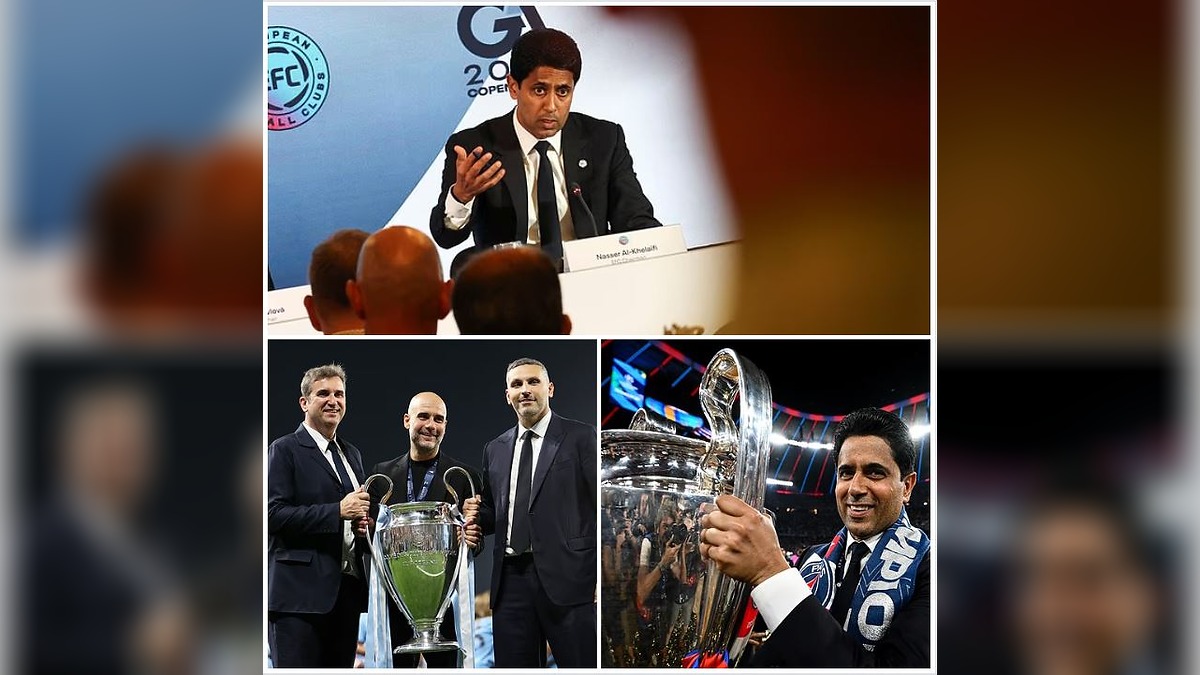
Manchester City’s financial misconduct verdict has cast a fresh shadow over the club’s Abu Dhabi ownership, with its upcoming Champions League meeting against Paris Saint-Germain carrying significance beyond the football pitch.
The two clubs are backed by wealthy Gulf states with a long history of geopolitical rivalry. City’s owners are associated with Abu Dhabi in the United Arab Emirates, while PSG is owned by Qatar Sports Investments, making encounters between the teams a high-profile extension of the competition between the two countries.
Although PSG officials have avoided publicly celebrating City’s legal troubles, the latest developments have renewed scrutiny of the contrasting ways the clubs have responded to financial regulations and football authorities.
City’s conviction on serious financial charges has also revived questions about the club’s relationship with governing bodies, particularly when compared with PSG’s decision to accept earlier sanctions and remain engaged with European football institutions.
Old Political Rivalries Resurface Ahead of Champions League Clash
The competition between Abu Dhabi and Qatar predates their involvement in elite European football.
Qatar is considerably smaller than Abu Dhabi but has pursued an independent regional and international identity. It declined to become part of the United Arab Emirates when the federation was established in 1971, a decision that reportedly frustrated Abu Dhabi.
When Abu Dhabi acquired Manchester City, its leadership presented the investment as an opportunity to demonstrate the emirate’s ambition and sophistication to a global audience.
In a 2009 interview with The Guardian, City chairman Khaldoon al-Mubarak described the purchase as a way of showing the world what Abu Dhabi represented.
Qatar subsequently expanded its own football ambitions through PSG, which it acquired in 2011, appointing businessman Nasser Al-Khelaifi as president.
The result was an increasingly visible rivalry between the two Gulf-backed clubs, with their financial power, international influence and Champions League ambitions becoming symbols of a broader regional contest.
Leaked Emails Linked City Executive to Anti-Qatar Campaign
The rivalry has previously extended beyond football.
An investigation published by the Mail on Sunday 11 years ago, led by journalist David Rose, reported that Simon Pearce, an Abu Dhabi executive who had served on Manchester City’s board since 2008, was involved in efforts to damage Qatar’s reputation in Britain.
According to the investigation, a London lobbying firm, Quiller Consultants, was receiving £60,000 a month under a contract to place negative stories about Qatar in the British press.
After a report portraying Qatar as a haven for terrorists appeared, Pearce reportedly emailed a United Arab Emirates security official with the subject line “Boom!” He described the story as the latest result of their efforts and suggested it could significantly influence British perceptions of Qatar.
The episode gained additional significance following the diplomatic crisis that began in 2017, when the UAE and several other Arab countries imposed a blockade on Qatar. The restrictions remained in place until 2021.
Although relations between the Gulf states have since improved, the episode remains part of the background to the rivalry between their football investments.
Manchester City and PSG Took Different Approaches to Financial Sanctions
Both Manchester City and PSG have faced scrutiny over financial arrangements that regulators considered problematic, including sponsorship agreements linked to their respective Gulf backers.
However, the clubs’ responses to sanctions have differed substantially.
PSG accepted a financial settlement and spending restrictions imposed by UEFA, while City pursued a more confrontational approach towards football authorities.
The contrast has been explored in State of Play, a book by journalist Miguel Delaney examining the influence of wealth and power in modern football.
Delaney describes City as increasingly convinced that it was being treated unfairly by European football officials, with the club’s response characterised by a level of aggression that went beyond PSG’s approach.




The leaked Football Leaks correspondence that contributed to scrutiny of City also included exchanges suggesting that some executives were seeking ways to work around financial rules.
In one email cited in the report, Pearce reportedly responded, “Of course, we can do what we want,” during a discussion about changing payment dates to cover the £10 million cost of dismissing manager Roberto Mancini in 2013.
The correspondence has reinforced questions about the club’s attitude towards financial regulation, although individual emails should be considered within the wider evidential record behind the verdict.
Sponsorship Deals Raised Questions About Gulf Football Spending
The financial arrangements used by both clubs attracted attention because of the scale of their sponsorship agreements.
PSG received a reported deal worth more than £180 million from the Qatar Tourism Authority, despite the organisation having an annual promotional budget of approximately £38 million.
Manchester City’s Etihad sponsorship agreement was reportedly worth £400 million, a figure described in the source report as unprecedented in sporting sponsorship at the time.
Such agreements became central to wider arguments about whether state-linked commercial partnerships accurately reflected the market value of a club’s sponsorship rights.
The dispute was not simply about whether wealthy owners could invest heavily in football. It concerned whether the money entering clubs was being recorded and valued in ways consistent with the financial regulations designed to protect competitive balance.
The controversy has also highlighted the challenges faced by governing bodies when assessing commercial agreements involving entities connected to a club’s owners.
PSG Turned Financial Disputes Into Greater Influence in European Football
While Manchester City concentrated on its legal battle, PSG continued to build its influence within European football.
Al-Khelaifi accepted UEFA’s sanctions and later became one of the most influential figures in the sport, taking a leading role in the organisation now known as European Football Clubs.
PSG also strengthened its position on the pitch. Under manager Luis Enrique, the club developed into one of Europe’s leading sides and arrived at the latest Champions League meeting as back-to-back champions, according to the source report.
Manchester City, meanwhile, had failed to progress beyond the last 16 in the preceding two Champions League campaigns.
The contrasting fortunes have added another dimension to the rivalry: while City’s ownership has been forced to confront the reputational consequences of its financial case, PSG has expanded its sporting and institutional influence.
Nevertheless, PSG’s history of financial scrutiny means it cannot credibly present itself as entirely free from controversy.
PSG’s Leadership Avoids Public Celebration of City’s Troubles
Despite the obvious rivalry, PSG’s leadership has been cautious about commenting on City’s predicament.
Al-Khelaifi’s role within European football organisations requires him to maintain relationships across the sport, including with Manchester City executives.
He has spoken positively about City chief executive Ferran Soriano, who also holds a position within the European Football Clubs leadership structure.
Sources cited in the report suggest that PSG understands the risks of publicly celebrating City’s problems. The Paris club has itself faced criticism over its financial arrangements and therefore has little reason to claim a moral advantage.
That caution has helped explain why PSG officials have not openly indulged in the kind of public triumphalism that might be expected from a direct rival.
Behind the scenes, however, the verdict has inevitably revived discussion about the different approaches adopted by the two clubs and their owners.
Guardiola’s Presence Cannot Erase the Reputational Damage
Manchester City manager Pep Guardiola remains central to the club’s response to the controversy, with his presence at the Champions League match forming part of a broader effort to maintain the team’s public image.
The club has continued to compete at the highest level, but the financial verdict has created a reputational challenge that sporting achievements alone may not resolve.
The source report also points to the contrasting public images of the two Gulf states. Abu Dhabi has faced renewed criticism in the wake of the case, while Qatar has received international attention for its diplomatic efforts to mediate between Iran and the United States.
City chairman Al-Mubarak was reportedly absent from the club’s recent visit to Liverpool, where supporters made their feelings about the financial case clear.
The situation has revived questions about the image Abu Dhabi sought to project through its investment in Manchester City and whether the club’s legal troubles have undermined that ambition.
Manchester City and PSG Rivalry Enters an Uncertain New Chapter
The Champions League meeting between City and PSG now carries the weight of a rivalry shaped by football, money, politics and competing ambitions for international influence.
For years, City’s rise and its Champions League triumph in 2023 gave Abu Dhabi a powerful sporting symbol, while Qatar continued investing in PSG in pursuit of the same European success.
The latest financial verdict has altered the balance of perception between the clubs, even as PSG remains careful not to overstate its own position.
With both sides carrying their own histories of financial scrutiny, neither can claim an entirely unblemished record. Yet the contrast in their responses to regulators has become a defining feature of the rivalry.
The latest encounter may be decided on the pitch, but its wider significance will be shaped by the continuing questions over financial accountability, Gulf-state influence and the reputations of two of football’s most powerful ownership groups.

