
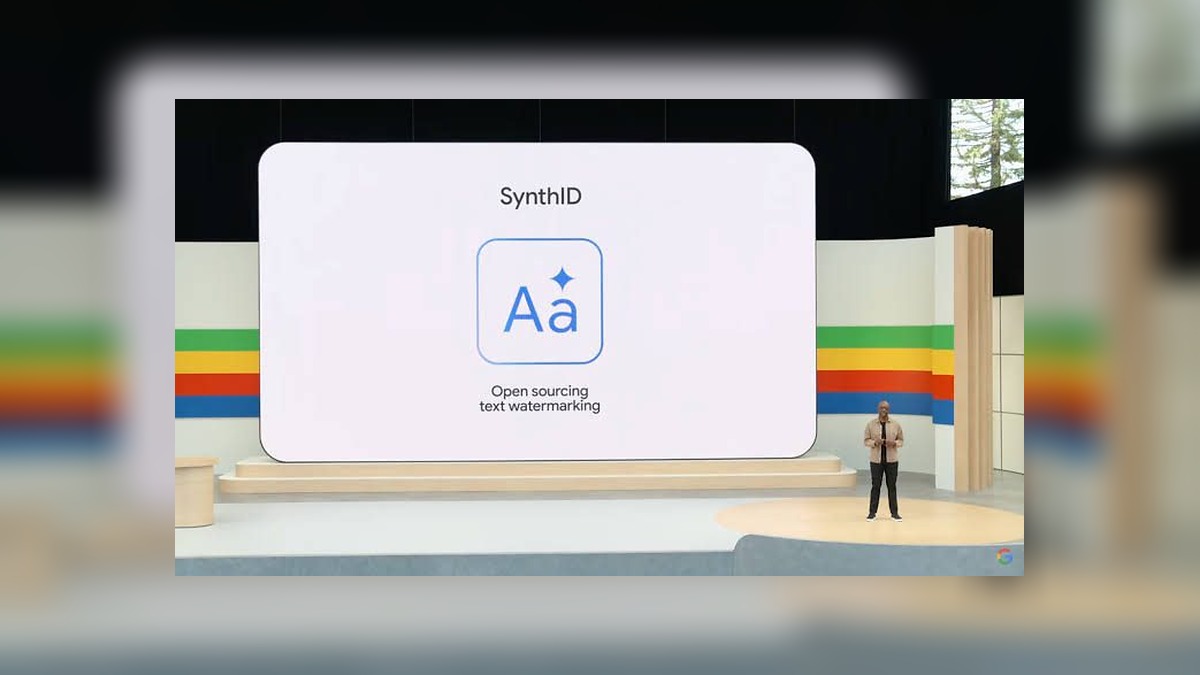
Nigerians can now use Google’s SynthID Detector to examine suspicious images, videos and audio clips for signs that they were created with artificial intelligence.
Google announced on October 7 that it was expanding the tool globally in English after initially making an early version available to media professionals and researchers. The system is designed to identify invisible watermarks embedded in AI-generated media by Google and participating technology partners.
New Tool Could Become Important During Election Season
The public launch comes as Nigeria moves closer to the 2027 general elections, when political claims and campaign material are expected to circulate widely across social media and other digital platforms.
INEC has officially scheduled the presidential and National Assembly elections for February 20, 2027, followed by the governorship and State House of Assembly elections on March 6, 2027.
Images, recordings and videos can play a major role in political communication, particularly when they are presented as evidence of statements, meetings or events involving candidates and political parties.
AI Could Make False Content Harder to Spot
Advances in generative AI have made it increasingly possible to produce realistic synthetic media that can be difficult to distinguish from authentic recordings.
That creates an additional challenge for internet users who encounter politically sensitive material online and need to determine whether it accurately represents a real person or event.
SynthID Detector gives users another verification option by checking uploaded files for compatible AI watermarks rather than attempting to make a universal judgement about whether every piece of media is genuine.
How SynthID Watermarking Works
SynthID embeds an invisible watermark into AI-generated content. The watermark is designed to remain detectable even though it cannot normally be seen or heard by someone viewing or listening to the original file.
Google introduced SynthID in 2023 and has since expanded the technology across images, video and audio. The company says more than 180 billion images and videos, as well as 240,000 years of audio content, have been watermarked with SynthID.




The technology is intended to provide information about the origin of media without visibly altering the content itself.
Detector Supports Google and Partner AI Systems
Google says the public detector can identify compatible content created using Google’s AI systems as well as those of participating partners.
The company specifically named OpenAI, NVIDIA and Kakao among the partners, while Apple is expected to join the system in the future.
This expands the potential usefulness of the detector beyond media produced exclusively through Google’s own AI platforms.
Tool Does Not Detect Every AI-Generated File
Despite its wider availability, SynthID Detector should not be treated as a universal test for AI-generated content.
Its detection capability depends on the presence of a compatible SynthID watermark. Media produced by an AI system that does not use SynthID or another compatible system may not produce a positive result.
As a result, a file that receives no SynthID indication should not automatically be treated as proof that the material was created by a person.
Users Still Need Other Verification Methods
For Nigerians checking potentially misleading content, the absence of a watermark should therefore be considered only one part of the verification process.
Users may still need to investigate where an image, video or audio recording originally came from, compare claims with reports from credible news organisations and look for independent evidence before accepting contentious material as authentic.
This is particularly relevant when digital content concerns political candidates, election-related incidents or claims that could influence public opinion.
Google Expands Its Wider Verification Efforts
SynthID Detector joins other verification features that Google has incorporated into Search, Gemini and Chrome.
Google said those existing tools collectively handle more than one million verification-related requests each day.
The company says the broader objective is to give people more context about the digital media they encounter and help them make better-informed decisions about what they see online.
2027 Election Campaign Will Test Digital Verification
With Nigeria’s next general elections approaching, the ability to scrutinise synthetic media could become an increasingly relevant part of online information literacy.
The presidential and National Assembly vote is scheduled for February 20, followed by the governorship and State Assembly elections on March 6.
The availability of SynthID Detector gives members of the public another tool for investigating suspicious media, but it does not replace traditional fact-checking. Determining whether a claim is true will still require attention to its source, context and supporting evidence.

