
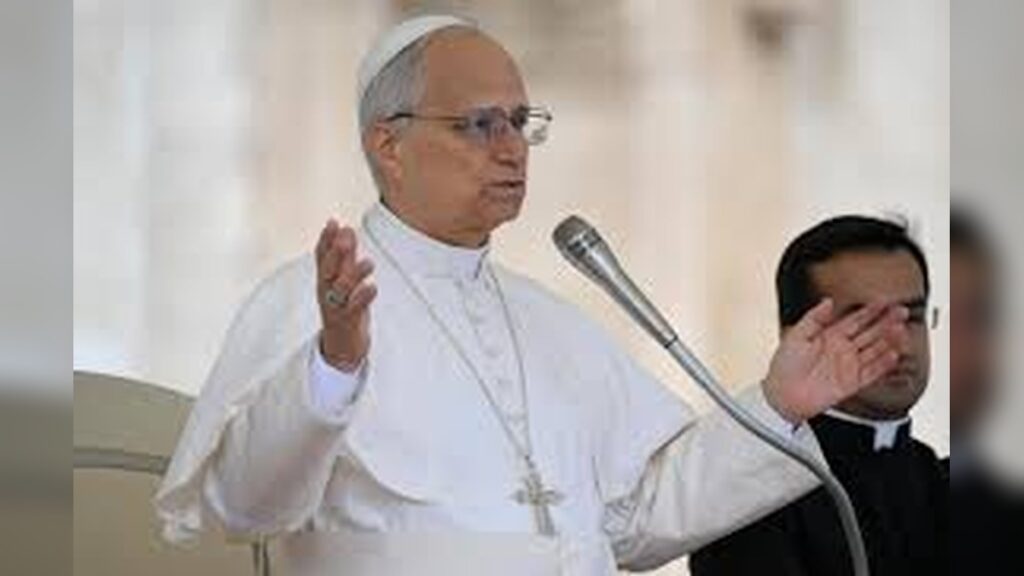
A major moment of global Catholic unity is set for May 30, as Pope Leo XIV invites Catholics around the world to join him in praying the rosary for peace.
The initiative is not just symbolic—it’s designed as a coordinated worldwide act of prayer linking shrines across multiple continents.
At the center of it all is a live prayer led by the Pope himself from the Lourdes Grotto inside the Vatican Gardens.
Vatican Gardens to Host Live Rosary Broadcast
The main event will take place at 7 p.m. Rome time, where Pope Leo XIV will lead the rosary from the Vatican Gardens Lourdes Grotto, a site often used for Marian devotion and papal prayer moments.
In the United States, Monsignor Walter R. Rossi, rector of the Basilica of the National Shrine of the Immaculate Conception in Washington, D.C., will join the prayer through a livestream scheduled for 1 p.m. Eastern Time.
The structure of the event is intentionally global, allowing Catholics in different time zones to participate simultaneously through coordinated broadcasts.
Shrines Around the World Join the Initiative
What makes this rosary particularly notable is its international reach.
Several major Marian shrines have aligned with the initiative, coordinated by the Dicastery for Evangelization.
Among them are well-known pilgrimage sites such as Fátima in Portugal, Lourdes in France, and Medjugorje in Bosnia and Herzegovina.
Others include Antipolo in the Philippines, Zarvanytsia in Ukraine, Annaya in Lebanon, and Loreto in Italy.
Each of these locations carries deep spiritual significance in Catholic tradition, often associated with peace messages, healing prayers, and Marian apparitions.
A Message Rooted in Peace and Conflict Concerns
The rosary initiative comes at a time when global conflicts continue to weigh heavily on international attention.




Pope Leo XIV has repeatedly called for peace since the beginning of his pontificate, referencing regions such as the Middle East, Ukraine, and parts of Africa.
During a recent Pentecost homily, he urged Catholics to pray for deliverance from war, describing peace not as something achieved through military strength, but through what he called “the omnipotence of love.”
That message has become a consistent theme in his public teachings, linking spiritual practice with global humanitarian concern.
Why the Rosary Still Matters in Modern Catholic Practice
The rosary remains one of the most widely practiced devotions in Catholicism, often used for meditation on the life of Christ and the intercession of the Virgin Mary.
Historically, popes have encouraged global rosary events during times of crisis, seeing it as a way to unify believers in prayer rather than political action.
In this case, the emphasis is on spiritual solidarity across borders rather than institutional intervention.
Religious scholars often note that large-scale coordinated prayers like this also reflect how modern technology—especially livestreaming—has transformed traditional worship into a global shared experience.
Impact and Consequences
The immediate impact of this initiative is the strengthening of global Catholic unity through synchronized prayer across continents.
By connecting major shrines and millions of believers in real time, the event reinforces a sense of shared spiritual identity.
It also highlights the Vatican’s continued focus on peace messaging during periods of international tension.
The visibility of Pope Leo XIV leading such a global prayer may amplify diplomatic and humanitarian conversations indirectly tied to ongoing conflicts.
On a cultural level, events like this can deepen participation in religious traditions among younger audiences who engage through digital platforms, livestreams, and social media.
At the same time, large-scale religious messaging on global issues can draw scrutiny from observers who debate the intersection of faith, politics, and international affairs.
What’s next?
Following the May 30 rosary, attention is likely to turn toward whether the Vatican expands similar coordinated prayer initiatives in the future.
Given the participation of major global shrines, there is potential for recurring international prayer events tied to specific global crises or liturgical seasons.
The Vatican may also continue enhancing digital participation tools, allowing broader global access to live religious events beyond traditional pilgrimage sites.
Summary
Pope Leo XIV will lead a worldwide rosary for peace on May 30, connecting Catholics across continents through live and synchronized prayer.
The initiative brings together major Marian shrines and emphasizes unity, spiritual reflection, and calls for peace in conflict-affected regions.
Bulleted Takeaways
- Pope Leo XIV will lead a global rosary for peace on May 30
- Main prayer will be broadcast from Vatican Gardens Lourdes Grotto
- Livestream will connect Vatican City and Washington, D.C. simultaneously
- Major shrines in Portugal, France, Ukraine, Lebanon, and more are participating
- Initiative is coordinated by the Dicastery for Evangelization
- Event emphasizes prayer for peace in conflict regions worldwide
- Pope has repeatedly called for peace since beginning his pontificate
- The rosary highlights growing use of livestreaming in global religious events

