
In Lahore and across Pakistan, Eid al-Adha has arrived with its usual sense of sacrifice and reflection.
But for Sultan Gill, the season carries a very different weight.
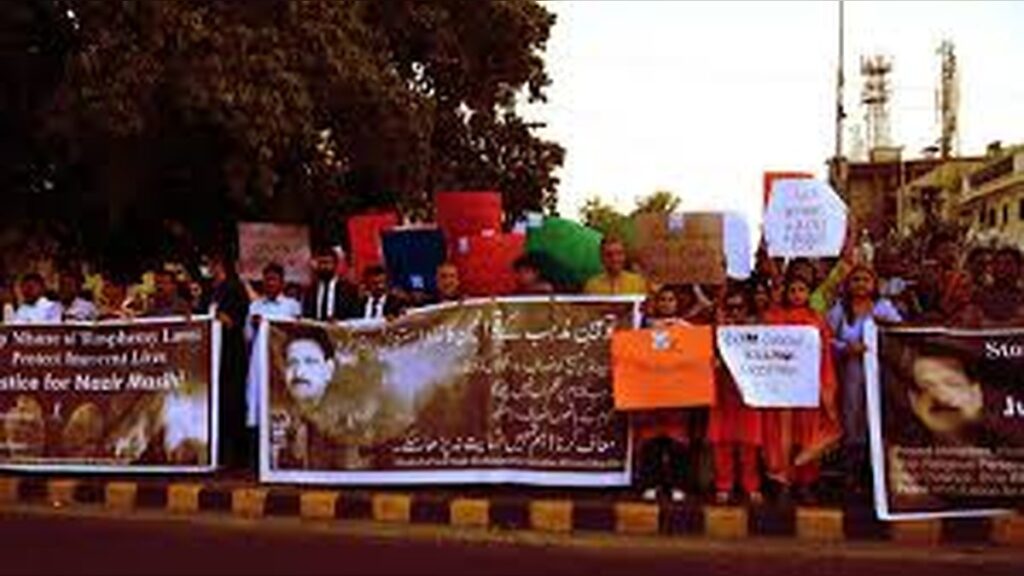
Instead of celebration, he is quietly preparing for the death anniversary of his father, Nazir (Lazar) Masih, who died after a brutal mob attack linked to blasphemy allegations in 2024.
The incident in Sargodha, Punjab province, has remained one of the more disturbing reminders of how quickly accusations can spiral into large-scale violence, leaving families displaced and communities fractured.
How the 2024 Sargodha Attack Unfolded
On May 25, 2024, tensions erupted in Mujahid Colony when allegations surfaced accusing Masih of desecrating pages of the Quran.
What followed was not a controlled police response, but a mass gathering that grew into an estimated crowd of nearly 2,000 people.
The mob stormed the family home and shoe factory owned by Masih’s family, destroying property and later setting parts of the business ablaze after announcements from a nearby mosque reportedly amplified the accusations.
Police were able to rescue nine family members, but Masih himself was caught and beaten with stones, bricks, and sticks.
He later died from his injuries on the night of June 2–3, 2024.
The violence did not remain confined to one neighbourhood; it sparked national outrage, especially among Christian communities, who organized protests demanding accountability.
Life After the Attack: Displacement and Daily Struggles
For Sultan Gill and his family, the aftermath has been defined less by justice and more by survival.
Their home and business in Sargodha remain abandoned, while the family has relocated and struggled to rebuild stability.
Gill says the emotional impact deepens during religious holidays, when reminders of loss feel sharper.
He also describes a severe financial collapse.
Two of his children had to leave school and begin working to help cover rent and daily expenses after the family lost its primary source of income.
Promises of compensation—reportedly around 1.2 million rupees (about $4,300)—have not materialised, despite repeated visits to local authorities and minority affairs officials.
Arrests Made, but Accountability Remains Elusive
Following the attack, authorities registered cases under anti-terrorism laws against roughly 450 unidentified suspects, while 25 individuals were initially arrested.




However, according to legal representatives supporting the family, all suspects were released within weeks.
Legal advocate Sunil Kaleem of the Organization for Legal Aid argues that the judicial process has struggled to deliver accountability, pointing to bail decisions and evidentiary challenges in mob violence cases.
He notes that in many similar incidents, courts often rely on benefit-of-the-doubt standards, making convictions rare.
This pattern has contributed to broader concerns from human rights groups and church leaders, who argue that Pakistan’s blasphemy-related cases often leave religious minorities vulnerable to vigilante violence and prolonged legal uncertainty.
Broader Context: Blasphemy Laws and Minority Vulnerability in Pakistan
Pakistan’s blasphemy laws have long been controversial, with critics saying they are sometimes misused or trigger mob violence even before legal verification of claims.
Advocacy groups, including the Center for Social Justice in Lahore, have documented multiple cases over decades where individuals from minority communities faced extrajudicial killings after accusations.
Church leaders also say the real issue goes beyond law enforcement—it includes education, social tolerance, and the spread of inflammatory messaging that can escalate local tensions within hours.
Church and Community Response in Sargodha
Despite the tragedy, local religious leaders and church institutions have continued providing support to the affected family.
Father David John of St. Francis Xavier Church in Sargodha said the National Commission for Justice and Peace, along with Catholic support networks, provided shelter and psychological assistance for nearly 20 months.
He also highlighted efforts by peace committees involving both Muslim and Christian community members, aimed at restoring calm after the violence.
Still, he stressed that long-term harmony requires sustained dialogue and consistent protection for minority communities, not just post-crisis interventions.
Renewed Calls for Reform and Prevention
Rights activist Ashiknaz Khokhar has warned that unresolved cases like this weaken public trust in institutions and increase fear among vulnerable groups.
He argues that preventive measures—not just reactive policing—are needed to avoid future outbreaks of mob violence.
These include stronger digital monitoring of hate speech, faster crowd-control responses, and reforms that strengthen judicial independence.
He also calls for educational reforms that encourage religious tolerance and civic responsibility, suggesting that legal punishment alone cannot address the root causes.
Impact and Consequences
The Sargodha case highlights a deeper structural problem: when mob violence goes unpunished or unresolved, it creates a cycle of fear and displacement for minority communities.
For families like the Masihs, the consequences are long-term—loss of livelihood, disrupted education, psychological trauma, and permanent relocation.
On a broader level, unresolved cases weaken trust in law enforcement and judicial systems, particularly among religious minorities who already feel vulnerable.
Internationally, such incidents also draw scrutiny from human rights organisations, affecting Pakistan’s reputation regarding religious freedom and rule of law.
What’s next?
The immediate future remains uncertain for the family, who are now considering selling their remaining properties after losing their business in Sargodha.
Meanwhile, legal advocates continue to push for appeals against bail decisions and renewed investigation into those involved in the mob attack.
Authorities in Punjab face growing pressure to demonstrate whether compensation promises will be fulfilled and whether accountability mechanisms can be strengthened.
Longer-term, attention is turning toward structural reforms—especially policing of large gatherings, regulation of inflammatory announcements, and stronger protections for minority communities.
Summary
Nearly two years after a violent mob attack in Sargodha, Pakistan, the family of Nazir (Lazar) Masih is still waiting for justice, compensation, and closure.
Despite arrests and legal cases, most suspects were released, and the family remains displaced and financially strained.
The case continues to fuel debate over blasphemy laws, minority protection, and the effectiveness of Pakistan’s justice system.
Bulleted Takeaways
- Mob attack in Sargodha, Pakistan, occurred on May 25, 2024
- Nearly 2,000 people allegedly participated in violence over blasphemy accusations
- Nazir (Lazar) Masih died from injuries on June 2–3, 2024
- Family home and shoe factory were destroyed and remain abandoned
- Nine family members were evacuated by police during the attack
- 25 arrests made, but suspects were later released within weeks
- Legal experts cite weak accountability and reliance on bail provisions
- Family has not received promised compensation for losses
- Church groups provided shelter and psychological support for about 20 months
- Rights activists call for stronger prevention, digital monitoring, and legal reforms

