
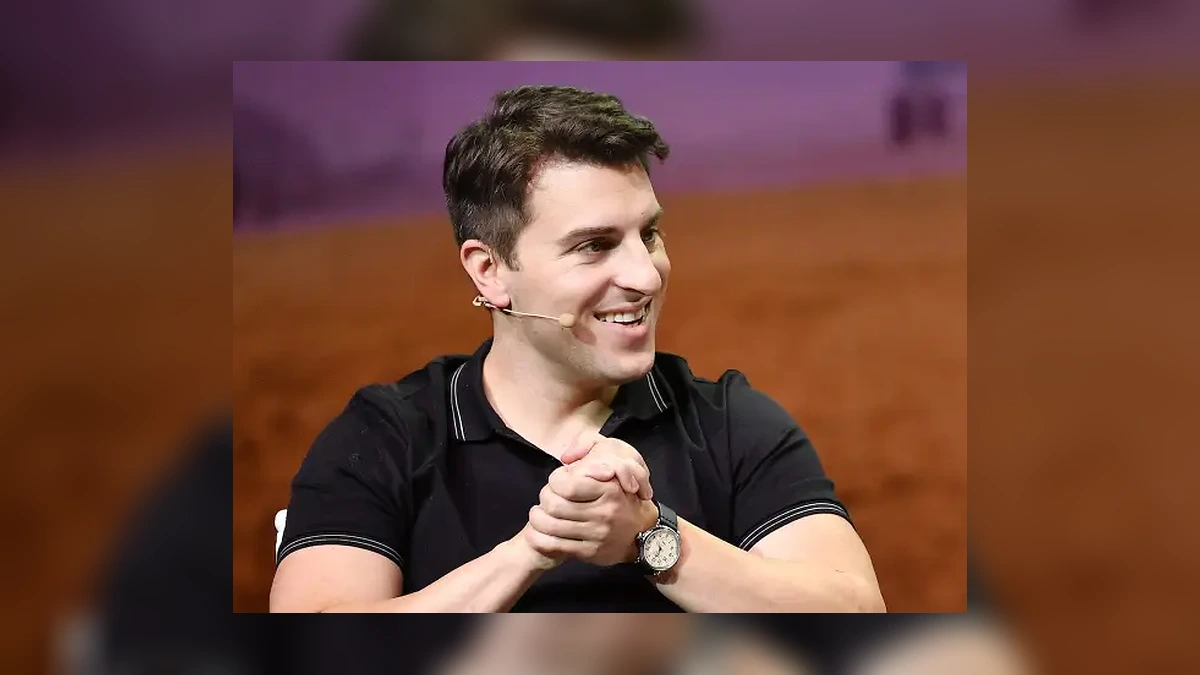
Airbnb chief executive Brian Chesky has revealed that he rarely writes emails, arguing that the traditional workplace communication tool is less effective than alternatives such as text messages, video calls and face-to-face conversations.
Unlike executives who start their days early to clear overflowing inboxes, Chesky says he struggles to remember the last time he personally drafted an email.
Speaking to Time, the billionaire executive explained that although he responds to emails sent to him, he seldom initiates conversations through the platform.
“I don’t know if I write an email a week,” Chesky said, adding that he replies to messages daily but rarely composes emails himself.
His approach challenges the conventional corporate habit of relying heavily on email to communicate instructions, resolve problems and coordinate teams.
Why the Airbnb Boss Prefers Text Messages to Emails
Chesky believes email creates unnecessary distance between colleagues, while text messages encourage quicker and more personal exchanges.
He explained that emails tend to revolve around a subject or task, whereas text messages are more directly connected to the person receiving them.
According to the Airbnb chief, messages sent by phone feel more immediate and contextual, making people more likely to respond quickly.
He also argued that email carries an inherent sense of work, while a text can feel like a more natural conversation.
For Chesky, that difference matters when trying to communicate with employees and resolve problems efficiently.
He said he would rather call someone, send a text or meet them in person than rely on an email chain when an issue needs attention.
The executive’s preferred communication methods follow a clear order: face-to-face conversations come first, followed by Zoom meetings, text messages and, finally, email.
Why Chesky Sometimes Texts Employees Outside Working Hours
Chesky’s communication style extends beyond his personal inbox. He has indicated that he is more likely to reach his employees through text messages, including the approximately 8,200 staff members referenced in the report.
The CEO acknowledged that he tries to avoid texting employees when he believes they are spending time with their families, unless a crisis requires immediate attention.
However, he also admitted that his own work and personal life are more blended than those of the average person.
Chesky defended the freedom of business leaders to establish their own working practices, arguing that every executive has the right to run a company according to their preferred approach.
That position highlights an ongoing debate in the workplace: whether faster communication improves productivity or simply makes employees feel permanently available to their employers.




While a text may be more convenient than an email for a busy executive, workers may still interpret an after-hours message as a request that requires their attention.
Other CEOs Also Expect Work to Continue Beyond Office Hours
Chesky is not the only business leader comfortable with a working life that extends into evenings, weekends and holidays.
Jonathan Recanati, founder and chief executive of London-based healthy fast-food chain Farmer J, previously told Fortune that he had never activated his out-of-office email reply, even during his honeymoon.
Anna Lundstrom, who leads Nespresso’s UK and Ireland business, has also described an approach in which employees can reach her through multiple communication platforms, including Microsoft Teams, email, WhatsApp and LinkedIn.
Lundstrom explained that she prefers to know about developments rather than risk missing important information. Her phone, she said, remains close at hand from the moment she wakes up.
These examples illustrate how some executives view constant accessibility as part of leadership, particularly when decisions or problems cannot always wait until the next working day.
However, the same expectations can create difficulties for employees who want a clearer separation between their jobs and their personal lives.
Uber CEO Says Weekend Emails Are Part of Working Hard
Uber chief executive Dara Khosrowshahi has taken an even more direct position on after-hours communication.
Speaking on the Diary of a CEO podcast, Khosrowshahi described weekend emails as part of working hard and said he expected employees to respond promptly, even when they were off duty.
He recalled following up when he did not receive a response on a Saturday, saying he might send another email on Sunday with a question mark to find out what was happening.
His approach reflects a demanding workplace philosophy in which responsiveness and commitment are expected to continue beyond conventional office hours.
For some businesses, this level of availability may help resolve urgent issues quickly. For employees, however, it can create uncertainty over whether personal time is genuinely protected.
The disagreement is particularly relevant as companies balance expectations around productivity with growing interest in employee wellbeing and sustainable working practices.
Research Warns That After-Hours Messages Could Drive Workers Away
Although some CEOs favour constant communication, research suggests that contacting employees outside working hours can have consequences for staff retention.
Research from recruitment platform Reed found that one in four millennial workers would consider quitting if their boss contacted them outside working hours.
The same research reported that 59% of people aged 18 to 34 would be willing to change jobs to protect their work-life balance.
The findings point to a potential conflict between leadership styles that prioritise immediate responses and employees who want their time away from work respected.
Even if a manager intends a text message to be quicker and less formal than an email, the employee may still feel pressure to reply immediately because the message comes from someone with authority over their career.
That distinction matters because the communication channel alone does not determine whether a message feels intrusive. The timing, urgency and expectations attached to it can be equally important.
Can Text Messages Improve Workplace Productivity Without Creating Pressure?
Chesky’s approach raises questions about whether companies should reconsider their dependence on email or focus instead on establishing clearer communication rules.
Text messages can make it easier to reach colleagues quickly, while video calls and in-person conversations may help teams resolve complicated issues without lengthy exchanges.
Email can still be useful for formal instructions, detailed records and information that does not require an immediate response.
The challenge for employers is deciding which method suits each situation while making sure employees understand when they are expected to be available.
For workers, the distinction between a convenient message and an unwanted interruption often comes down to whether they can ignore it until the next working day without facing consequences.
As executives such as Chesky continue to favour faster communication, the wider debate is unlikely to disappear. The question is no longer simply whether email is outdated, but how businesses can communicate efficiently without allowing work to occupy every part of an employee’s day.

