
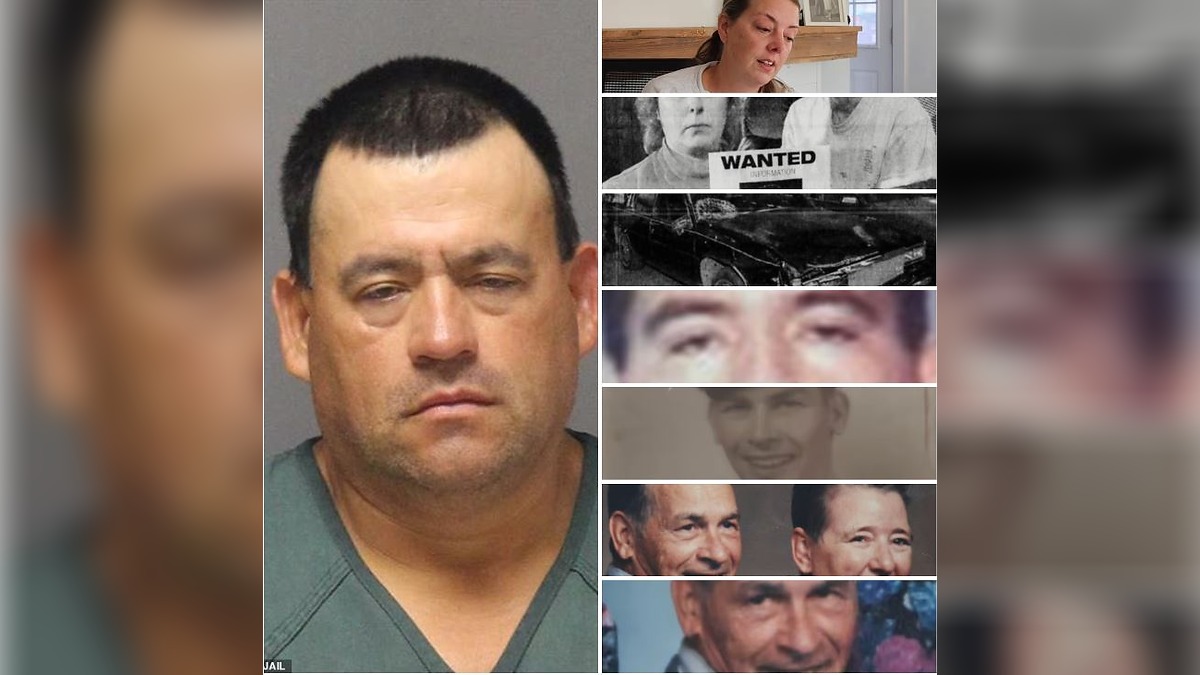
A nearly three-decade-old hit-and-run investigation has taken a major turn after a suspect was arrested following a tip from a viewer who recognised him while watching a rerun of America’s Most Wanted.
Leslie Ruby, a 64-year-old Korean War veteran and grandfather, was killed in Des Moines, Iowa, on September 29, 1997, after he was struck by a vehicle while riding his lawn mower home.
The suspect identified by investigators at the time, Gerardo Garcia-Michel, was eventually arrested in New Jersey nearly 29 years later.
Ruby Was Killed Outside His Own Home
Ruby had been mowing his daughter’s lawn when he began making his way home on his riding mower.
As he crossed the street near his house, he was struck by a large, dark-coloured vehicle that had no licence plates.
Neighbour Dan Anderson, who still lives beside Ruby’s former home, recalled the force of the collision, saying Ruby was carried roughly 150 feet before coming to a stop.
The driver did not remain at the scene and continued away without stopping to assist.
Police Quickly Developed a Suspect
Investigators worked to determine who had been behind the wheel, eventually identifying Garcia-Michel, who was 28 at the time, as a suspect.
Witnesses had been interviewed, but investigators struggled to obtain a detailed description of the driver.
A significant clue emerged when police discovered a damaged vehicle matching the description of the car involved. The vehicle had extensive damage to its bumper and windshield.
Investigators traced its purchase to Garcia-Michel, strengthening their suspicions that he was connected to the fatal collision.
California Lead Failed to Produce an Arrest
Police believed Garcia-Michel may have travelled to Southern California because he had relatives there.




However, that investigation failed to locate him.
With the case remaining unsolved, America’s Most Wanted featured Ruby’s death the following year in the hope that national exposure would generate information about the suspect’s whereabouts.
Several tips followed the broadcast, but none produced a breakthrough.
Rerun Leads to Breakthrough Decades Later
The case finally gained new momentum on August 4, 2026, when a man in New Jersey contacted Crime Stoppers after seeing a rerun of the old television programme.
The tipster said he recognised Garcia-Michel as his neighbour and provided investigators with a photograph.
Des Moines police compared the recent image with photographs of Garcia-Michel from the time of the 1997 investigation.
Sergeant Paul Parizek said the suspect had obviously aged, but investigators were sufficiently confident in the identification to contact authorities in New Jersey.
Suspect Arrested in New Jersey
Authorities in New Jersey subsequently investigated the lead and arrested Garcia-Michel on August 26, according to Ocean County Jail records.
He was charged as a fugitive from justice, while Des Moines police began working on the process of bringing him back to Iowa.
Police said Garcia-Michel had managed to avoid arrest for decades by making slight changes to his name and date of birth.
Ruby’s Family Waited Years for Answers
The arrest came too late for several members of Ruby’s immediate family.
His wife, Patricia, died three years after his death, before her husband’s alleged killer could be brought before the justice system. The couple had been only months away from celebrating their 40th wedding anniversary when Ruby was killed.
Their only daughter, Shirley, later died in 2013.
Ruby’s granddaughter, Shonna, said both her mother and grandmother would have wanted the family to see some form of justice in the case.
Granddaughter Says Family Can Finally Find Peace
Speaking in a video released by the Des Moines Police Department, Shonna became emotional as she reflected on the arrest nearly three decades after her grandfather’s death.
She said she believed her mother and grandmother would have been happy to see the case move forward and could finally have some peace knowing that investigators had never stopped pursuing answers.
For Parizek, the case demonstrates the importance of continuing to investigate unsolved crimes regardless of how much time has passed.
He said securing answers for victims’ families remains one of the department’s most important responsibilities, adding that it does not matter whether information arrives 29 minutes, 29 days or 29 years after a crime.

