
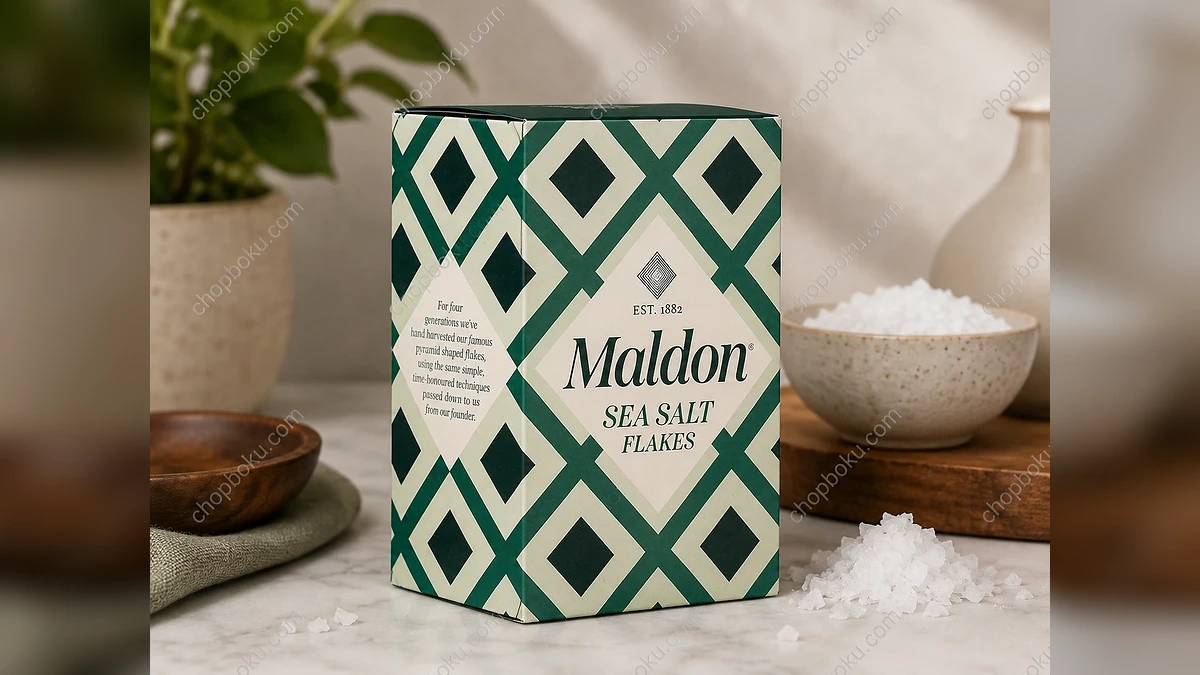
Maldon salt, a well-known British food product associated with the Essex town of Maldon, is made using rock salt mined in Germany, according to recent revelations.
The company uses a process described as a ‘salt-on-salt’ technique, in which German-mined salt is used to enrich Essex seawater with natural minerals before the product is manufactured.
Maldon salt is popular among chefs and food enthusiasts, particularly as a finishing garnish because of its distinctive crunchy, hollow crystals. A 250g pack typically sells for around £2.85.
The revelations have raised questions about the differences between premium salts and ordinary table salt, including whether more expensive varieties offer meaningful health benefits.
How Salt Is Produced and What It Contains
Salt is a naturally occurring mineral made primarily of sodium chloride. It is obtained either by evaporating seawater or extracting underground deposits of rock salt, known as halite.
Sea salt is produced when sunlight and wind evaporate seawater, leaving crystals that are harvested, washed, dried and processed. Rock salt is extracted from underground deposits, crushed, ground and purified before being prepared for consumption.
Although the two varieties are chemically similar, sea salt is commonly used in food, while rock salt also has industrial applications, including road de-icing.
A teaspoon of salt, weighing approximately 6g, contains about 2,325mg of sodium. It also provides small quantities of minerals, including calcium, potassium, magnesium and iron.
Sodium helps regulate fluid balance and nerve function. Calcium supports bones and teeth, potassium contributes to heart and muscle function, magnesium assists energy production and nervous system activity, while iron helps transport oxygen through the blood.
However, much of the naturally occurring mineral content is removed during the refining of ordinary table salt.
UK Adults Consume More Salt Than Recommended
The NHS advises adults to consume no more than 6g of salt daily, including amounts naturally present in food and salt added during cooking or at the table.
British adults consume an average of approximately 8.4g per day, around 40 per cent above the recommended maximum.
Health experts have warned that excessive sodium intake can increase blood pressure and contribute to cardiovascular problems.
Table Salt, Sea Salt and Other Varieties
Table salt is the most commonly consumed variety in the UK. It is generally mined from underground rock deposits and heavily refined to produce fine, white crystals.
Brands such as Saxa and Cerebos are widely available in supermarkets. A 750g pack typically costs less than £2.
Sea salt, by comparison, is produced through the evaporation of seawater. Its characteristics can vary depending on the water from which it is harvested.




Maldon is among the better-known flaky sea salts, with its larger, hollow crystals commonly used to finish dishes.
Kosher salt is another variety frequently used in recipes, particularly in the United States. It has larger crystals that make it easier to distribute over food and is generally obtained from land-based salt deposits.
Iodised salt is produced by adding small amounts of sodium iodide or potassium iodide to ordinary table salt. The added iodine supports thyroid function.
Other varieties include black salt, which is used in Indian and Southeast Asian cooking. Its colour comes from processing involving charcoal, herbs and spices.
Himalayan Pink Salt Contains Additional Minerals
Himalayan pink salt is mined at Pakistan’s Khewra Salt Mine, where deposits are expected to provide supplies for hundreds of years.
The salt is recognised by its pink colour and is often promoted for purported health and household benefits. Claims associated with Himalayan salt include air purification, detoxification and increased libido.
It contains more than 80 minerals, although most are present in very small quantities.
Nutritionist Jenna Hope said Himalayan salt could be a good option for cooking because it retains some of these minerals. However, she stressed that salt should not be treated as a significant source of nutrients.
Hope also highlighted the potential benefits of iodised salt for people following plant-based diets. Such diets may contain less iodine because they exclude foods such as fish, eggs, cow’s milk and yoghurt.
Iodine is important for thyroid function and cognitive health.
Cardiologist Warns Premium Salt Does Not Reduce Sodium Risks
Dr Oliver Guttmann, a consultant cardiologist at HCA Wellington Hospital in London, said the amount of salt consumed was more important for health than the particular variety chosen.
He explained that sea salt, rock salt and Himalayan pink salt contain broadly similar amounts of sodium chloride, meaning the cardiovascular risks associated with excessive consumption apply to all three.
He warned that people with high blood pressure or heart failure should not assume premium salts offer protection against the effects of sodium.
Excess sodium causes the body to retain water, which can increase blood pressure. The British Heart Foundation warns that hypertension raises the risk of heart attacks, heart failure, strokes and vascular dementia.
The World Health Organisation estimates that reducing adult salt consumption to below 5g per day could prevent approximately 2.5 million deaths worldwide each year.
Processed Foods Account for Much of Britain’s Salt Intake
Dr Guttmann said the relationship between high sodium consumption and elevated blood pressure was well established.
He identified hypertension as a major preventable risk factor for stroke, heart failure and coronary artery disease.
He also warned that many people consume excessive amounts of salt without realising it because much of their daily intake comes from processed and restaurant foods.
Bread, breakfast cereals and ready meals were among the products he identified as sources of hidden sodium.
Potassium-Enriched Salt Could Reduce Cardiovascular Risks
Research published earlier in the year suggested that replacing ordinary salt with low-sodium alternatives could prevent thousands of deaths and cases of disease in the UK.
Researchers estimated that almost 13,000 deaths annually could be avoided if more people switched to lower-sodium salt.
The study also suggested that potassium-enriched alternatives could prevent approximately 60,000 cases of cardiovascular and kidney disease each year.
These products replace some of the sodium chloride found in ordinary salt with potassium. They are available under supermarket own-brand labels and commercial brands such as LoSalt, which costs just over £1.
However, researchers cautioned that potassium-enriched salt is not suitable for everyone.
People with advanced kidney disease may face particular risks because damaged kidneys can struggle to remove excess potassium from the bloodstream. This can cause potassium levels to rise to dangerous concentrations.

