
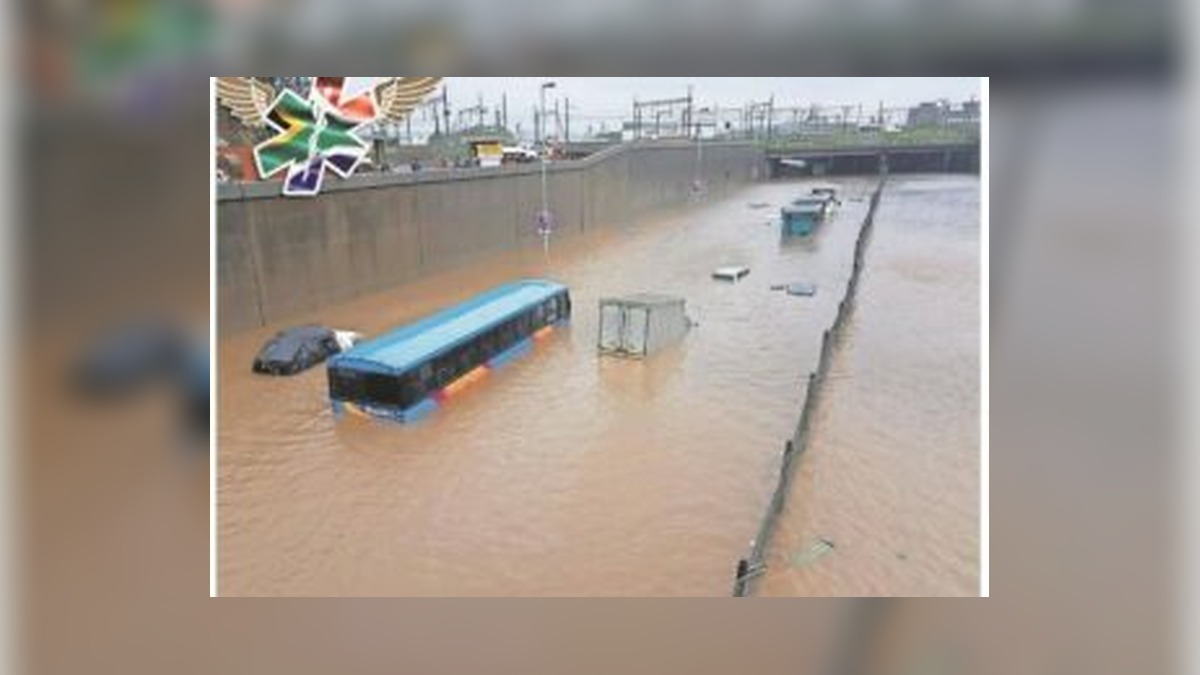
On 10 October 2017, Durban and other parts of KwaZulu-Natal were hit by a powerful storm that rapidly turned a day of heavy rain and strong winds into a major emergency.
Flash floods swept through communities, roads became impassable and homes and businesses were damaged. Hospitals were also affected, while severe conditions at the Port of Durban forced authorities to suspend vessel movements.
Emergency teams spent hours responding to calls for help as floodwaters rose across eThekwini.
Flash Floods Swamped Durban Communities
Some of the hardest-hit areas included Montclair, Isipingo, Umlazi and Amanzimtoti, where intense rainfall caused water levels to rise rapidly.
Motorists became trapped on flooded roads, while residents were forced to seek higher ground as water entered properties.
Strong winds added to the destruction, bringing down trees and damaging buildings in several locations.
As the situation worsened, disaster management teams were activated to assist affected communities.
Rescue Crews Face Dangerous Conditions
The scale of the flooding meant emergency crews had to carry out rescues across the city.
The National Sea Rescue Institute’s Durban station deployed rescue swimmers and a sea rescue vehicle to assist other emergency services.
Adults and children were among those rescued from homes and vehicles.
One particularly dramatic rescue involved a baby trapped inside a flooded home in Montclair. Rescuers managed to carry the infant to safety as floodwaters continued to rise.




Durban Harbour Hit by Violent Winds
The storm also created a dangerous situation at the Port of Durban.
According to the NSRI, winds reached speeds of up to 50 knots in some areas. Several boats and yachts broke loose from their moorings as conditions deteriorated.
The container vessel MSC Ines also drifted towards the harbour mouth.
The Transnet National Ports Authority subsequently suspended vessel movements after three vessels ran aground and other vessels broke their mooring lines.
Port terminal and rail operations were also brought to a halt while authorities dealt with the emergency.
Hospitals Were Among the Buildings Damaged
The storm’s impact extended to Durban’s healthcare facilities.
KwaZulu-Natal’s Department of Health initially reported damage at at least five hospitals: King Edward VIII Hospital, Addington Hospital, King Dinuzulu Hospital, Wentworth Hospital and Prince Mshiyeni Memorial Hospital.
Floodwater entered parts of some facilities, while powerful winds damaged roofs and windows.
Patients were moved away from affected sections where necessary as medical staff worked to maintain services during the disruption.
The Weather System Behind the Storm
The South African Weather Service identified an upper-air cut-off low as the system responsible for the extreme weather over KwaZulu-Natal.
Despite the severity of the conditions, SAWS chief forecaster Kevin Rae stressed at the time that the system was not a hurricane.
Cut-off lows can develop over southern Africa and produce periods of intense rainfall and severe thunderstorms.
The 10 October 2017 event demonstrated how quickly one of these systems can create dangerous conditions, particularly when heavy rainfall combines with strong winds and rapid flooding.
A Storm Durban Has Not Forgotten
Nearly nine years later, the October 2017 storm remains one of Durban’s notable severe-weather events.
From flooded neighbourhoods and dramatic rescues to disruption at the city’s major port and damage to hospitals, the storm affected almost every part of daily life in the areas it struck.
For many residents who experienced it firsthand, the sight of familiar roads transformed into rivers remains a lasting memory of just how quickly severe weather can change a city.

