
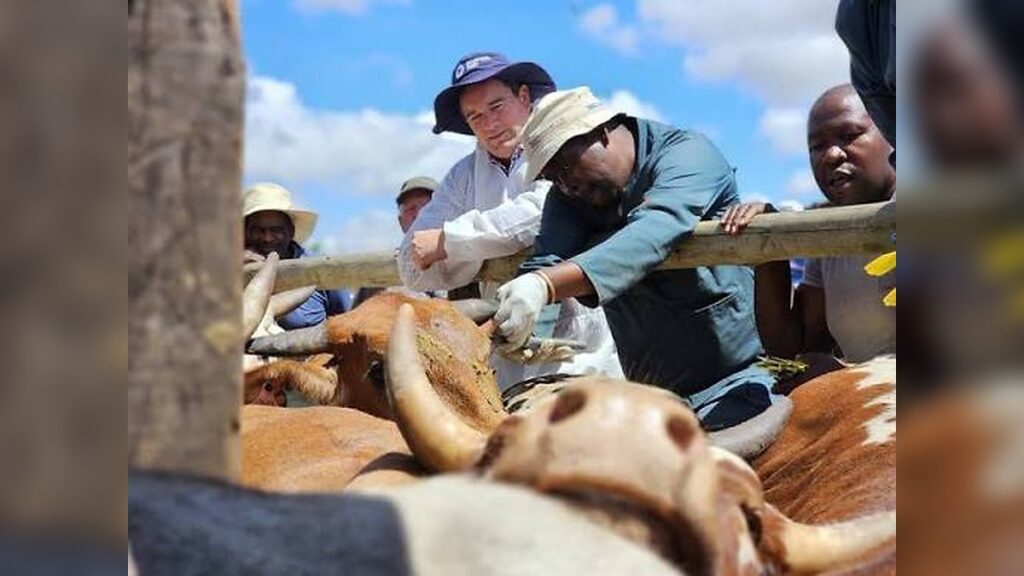
South Africa is preparing to implement a comprehensive new strategy for managing Foot and Mouth Disease (FMD), with Agriculture Minister John Steenhuisen approving a revised set of national control measures designed to strengthen biosecurity while reducing the economic burden on livestock producers.
The updated regulations, which will come into force once formally published in the Government Gazette, replace a collection of earlier directives, including the country’s 2019 FMD Contingency Plan and later amendments.
The result is a unified national framework intended to guide disease management from the moment an outbreak is detected through to the recovery phase.
Farmers to Benefit from Clearer Rules During Outbreaks
According to Steenhuisen, the revised approach aims to provide greater certainty for farmers facing disease outbreaks.
He said livestock producers need practical and science-based regulations that allow them to protect their businesses while complying with disease-control requirements.
The minister stressed that effective disease management should not unnecessarily undermine the livelihoods of farmers who depend on healthy livestock operations for their income and survival.
Balancing Disease Prevention and Economic Activity
Foot and Mouth Disease remains one of the livestock sector’s most serious threats, capable of disrupting production, restricting access to local and international markets, and causing substantial financial losses across rural economies.
To address these challenges, the new framework introduces risk-based recovery pathways that allow selected commercial activities to resume before quarantine periods have fully ended.
Under the revised system, animals may be transported to designated FMD abattoirs 16 days after a farm has been declared clinically free of the disease.
Additional slaughter opportunities, including facilities approved for exports, become available after 42 days.
Officials believe these provisions will help limit economic disruption while maintaining strict disease-control standards.
Vaccinated Animals Receive Greater Recognition
The updated regulations also provide clarity regarding the status of vaccinated livestock.
Animals that have been vaccinated but have never contracted the disease and are not subject to quarantine restrictions will continue to be classified as healthy.
As a result, they may be traded and moved under standard regulations, removing uncertainty that previously affected some producers and buyers.




Scientific Approach Replaces Blanket Disposal Rules
Another major change involves the management of agricultural products and materials associated with affected farms.
Instead of requiring broad disposal measures, products such as livestock feed, fodder and manure will now be managed according to scientifically established risk periods linked to the virus.
Authorities say this approach reflects current scientific knowledge and should significantly reduce unnecessary waste and financial losses.
Alternative Recovery Options Introduced for Affected Farms
The new framework offers farmers greater flexibility when recovering from outbreaks.
Previously, producers often faced the prospect of removing entire herds before quarantine restrictions could be lifted.
Under the revised rules, several alternative recovery pathways will be available.
Farmers may choose to restock with vaccinated animals or introduce livestock sourced from disease-free areas, among other approved options.
Steenhuisen noted that compulsory herd removal can be financially devastating, particularly for producers already operating under challenging economic conditions.
The new measures are intended to provide realistic and affordable alternatives without compromising animal health standards.
Tailored Measures for Communal and Peri-Urban Livestock Systems
For the first time, South Africa’s FMD policy includes dedicated provisions for communal and peri-urban livestock environments.
Authorities acknowledged that shared grazing land, multiple ownership arrangements and varying livestock movement patterns present unique challenges that differ from those faced by commercial farming operations.
The updated framework introduces customised quarantine and vaccination strategies designed specifically for these settings.
Partial Quarantine Option for Well-Managed Farms
The revised regulations also create opportunities for more targeted disease containment.
Farms with effective fencing and appropriate infrastructure will be allowed to isolate and manage outbreaks within affected sections of their properties rather than placing the entire operation under full quarantine.
This change is expected to help reduce unnecessary disruptions while maintaining strong disease-control measures.
Faster Veterinary Processes and Improved Administration
Administrative procedures have also been streamlined under the new framework.
Farmers seeking permission to move livestock-related products will benefit from clearer timelines for official responses, while new escalation mechanisms have been introduced to improve efficiency and reduce delays within the veterinary approval process.
Extensive Industry Consultation Shaped the Reforms
The measures were developed through collaboration between the Department of Agriculture, veterinary specialists, the Ministerial Task Team and the FMD Industry Coordination Council.
Government officials say the broad consultation process helped ensure that the final framework reflects both scientific expertise and the practical realities faced by livestock producers across the country.
Government to Review Effectiveness After One Year
Steenhuisen described the reforms as an important milestone in strengthening South Africa’s biosecurity system while supporting the long-term sustainability of the livestock sector.
He said the measures strike a balance between protecting animal health and limiting economic damage during outbreaks, while also incorporating the latest scientific evidence available.
The Department of Agriculture has committed to closely monitoring the implementation of the new framework and will conduct a formal review within 12 months to assess its effectiveness and identify any areas requiring further adjustment.

