
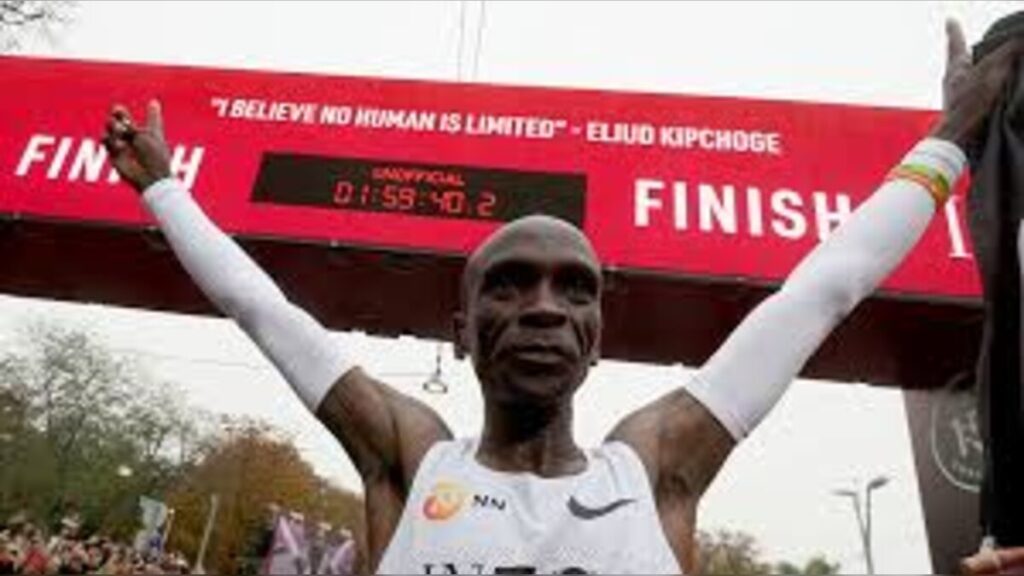
When he arrived back home, the atmosphere was nothing short of electric.
Crowds gathered, family members waited close, and supporters treated the moment like a national celebration rather than just an athletic achievement.
The man at the centre of it all—widely recognised as Eliud Kipchoge—had done something that many once thought physically impossible: completing a marathon in under two hours during a landmark elite race setup.
It wasn’t just a sporting result. It was the kind of moment that spills far beyond athletics, into national pride and global conversation.
The Run That Changed What People Thought Was Possible
The achievement came during a specially organised elite marathon event designed to push human limits.
While official marathon records remain separate due to conditions and regulations, the performance itself became a defining moment in modern distance running.
For years, scientists, coaches, and athletes debated whether the two-hour barrier could ever be broken under real-world conditions.
This run brought that question closer to reality than ever before.
It wasn’t luck or accident. It was precision—pace teams, technology support, and years of preparation all aligned for one historic attempt.
The Celebration Back Home Felt Personal
When Kipchoge returned, it wasn’t just fans who showed up.
His family was there too, turning the arrival into something deeply emotional rather than purely ceremonial.
People cheered, waved flags, and shouted his name like they had been waiting for this exact moment for years. In many ways, they had.
Homecomings like this are rare in sport.




Most athletes return quietly, but this one felt different—almost like the entire community had claimed a piece of the achievement for itself.
More Than a Runner: A Symbol of Endurance
Kipchoge’s reputation has grown far beyond medals and race wins.
Over time, he has become a symbol of discipline, consistency, and mental strength in long-distance running.
He is also known for dominating major marathon events globally, building a legacy that includes Olympic gold medals and multiple world marathon victories.
The sub-two-hour milestone, even in its specially structured form, added another layer to that legacy.
It pushed the conversation about human limits into a new space.
Why the Moment Still Matters in Athletics
Even though the run is not officially recorded as a standard world record due to controlled conditions, its influence on sport is undeniable.
It changed how athletes and coaches think about pacing, endurance, and preparation.
It also inspired new training methods and sparked debates about whether future marathons could ever see similar performances under open race conditions.
In many ways, it blurred the line between what is “possible in theory” and what might eventually become standard.
Impact and Consequences
The achievement strengthened Kipchoge’s global status as one of the greatest marathon runners of all time.
It also raised expectations for future distance runners, who now train in a world where breaking two hours no longer feels completely out of reach.
For athletics as a whole, it increased interest in marathon innovation, including pacing strategies and performance science.
At the same time, it also sparked ongoing debate about fairness and conditions—especially the difference between record-eligible races and specially engineered attempts.
What’s next?
For Kipchoge, attention naturally shifts to future marathon events and whether he will continue competing at the highest level or transition into more ambassadorial roles in sport.
For the wider running world, the focus is now on whether an official, record-eligible sub-two-hour marathon will ever happen under traditional race conditions.
Athletics organisations may also continue refining rules around pacing assistance and technology use as performances continue to evolve.
Summary
Eliud Kipchoge received a hero’s welcome after returning home following his historic sub-two-hour marathon performance in an elite, specially organised race.
While not an official record due to controlled conditions, the achievement remains one of the most significant milestones in long-distance running history and continues to influence how the sport evolves.
Bulleted Takeaways
- Eliud Kipchoge returned home to a hero’s welcome after his historic run
- He completed a marathon in under two hours during a specially organised elite event
- The achievement is not an official record due to controlled race conditions
- Supporters and family celebrated his arrival enthusiastically
- The run is widely viewed as a breakthrough moment in marathon history
- It reshaped global discussions about human endurance limits
- Kipchoge is already an Olympic champion and multiple marathon winner
- The event continues to influence training and pacing strategies in athletics
- Debate continues over whether a sub-two-hour official marathon is possible
- The moment further strengthened Kipchoge’s legacy as a distance running icon

