
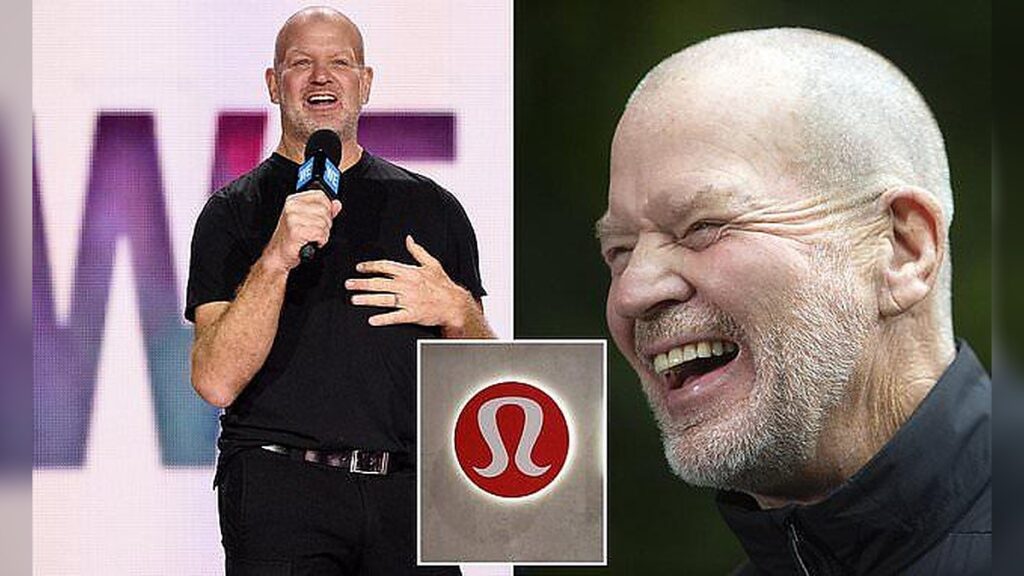
Lululemon founder Chip Wilson is facing renewed scrutiny over his long and often turbulent relationship with the athleticwear brand after news emerged that he has filed for divorce from his wife and business partner, Shannon “Summer” Wilson.
Wilson, 71, reportedly filed a family proceeding in the Supreme Court of British Columbia in April, although details of the case only became public this week following a Bloomberg report.
The couple have been married for about 20 years, and the circumstances surrounding their separation have not been publicly disclosed.
People familiar with the situation told Bloomberg that the couple had discussed their separation with friends.
The report also said they did not have a prenuptial agreement, leaving the eventual division of their substantial assets unclear.
Wilson’s fortune has been estimated at about $6.1 billion.
From Yoga Clothing Startup to Global Powerhouse
Wilson founded Lululemon in 1997, initially building the business around clothing designed largely for yoga and other athletic activities.
The first physical Lululemon store opened in Vancouver in 2000.
The company subsequently expanded into a global athleticwear powerhouse, becoming particularly well known for its leggings, yoga clothing and premium sportswear.
Although Wilson no longer runs the company, he remains a major shareholder.
Bloomberg reported that he owns roughly 8.6 percent of Lululemon, a holding worth close to $1 billion.
His wife reportedly owns approximately one percent of the company, valued at around $100 million.
A Founder Increasingly Defined by Controversy
Wilson’s relationship with Lululemon became increasingly strained after a series of comments generated widespread criticism.
One of the earliest controversies dates back to 2004, when Wilson was quoted by Canada’s National Post Business Magazine as saying he found it “funny” that Japanese people struggled to pronounce the letter “L” in Lululemon. ABC News later reported on the remarks.
Wilson subsequently disputed having made the comment.
In a 2015 New York Times profile, he denied ever saying it.
His Views on Birth Control Also Sparked Backlash
Another controversy emerged in 2009, when Wilson reportedly published a blog post containing his views about birth control, changing gender roles and divorce.
According to Business Insider, Wilson argued that the introduction of the birth-control pill contributed to major changes in relationships between men and women.




He also discussed the rise of women in the workplace and connected those social changes with broader developments in fashion, business and family life.
The post also controversially linked the rise of breast cancer during the 1990s to women smoking, taking birth-control pills and experiencing workplace stress.
Wilson ultimately connected those observations to the origins of Lululemon, arguing that changes in women’s education, athletics, yoga and attitudes toward clothing helped create the market for the company.
Leggings Comments Became a Defining Moment
The most damaging episode came in 2013, when Lululemon faced criticism from customers who complained that some of its leggings had become see-through.
During an appearance on Bloomberg TV’s Street Smart, Wilson suggested that the problem was partly related to customers’ bodies and how the fabric was being used.
His comments triggered a fierce backlash, particularly because critics interpreted them as blaming women for problems with the company’s products.
Wilson later issued an emotional apology in a video message, saying he was sorry for the repercussions of his actions and for the effect his remarks had on Lululemon employees.
“I take responsibility for all that has occurred,” he said at the time.
He Eventually Left Lululemon’s Board
The controversy contributed to Wilson stepping down as Lululemon’s chairman in 2013.
Two years later, in 2015, he left the company’s board completely.
Despite his departure, Wilson has remained financially tied to the business through his substantial shareholding.
In a 2015 interview with CBS This Morning, he claimed that his comments had cost Lululemon approximately $6 billion in market value.
His departure, however, did not mark the end of his controversial public statements.
Child Labor Comments Created Another Storm
Wilson generated further criticism in 2018 with the publication of his book Little Black Stretchy Pants, which chronicled his experiences building Lululemon.
In the book, Wilson expressed a controversial view of young people working, arguing that employment could provide valuable training and contrasting the experiences of children in North America with those in parts of Asia.
His remarks were interpreted by critics as being sympathetic to child labor, adding another controversy to the founder’s already complicated public image.
Wilson Later Turned His Criticism Toward Lululemon
Even after leaving the company, Wilson has continued to publicly criticize aspects of its direction.
During a 2024 interview with Forbes, he attacked Lululemon’s approach to diversity and inclusion and argued that the brand should not try to appeal to everyone.
Wilson said successful brands needed to establish a clear identity and suggested that Lululemon had become too concerned about potential media criticism.
He also recalled a slogan associated with his early vision for the company and discussed his belief that consumers concerned about health and obesity represented an important part of the brand’s original identity.
Lululemon Distances Itself From Its Founder
Lululemon has made clear that Wilson’s views should not be regarded as representative of the company.
A spokesperson said Wilson no longer speaks for Lululemon and that his comments do not reflect the company’s current beliefs or position.
The company also stressed that Wilson has not been involved in its operations since resigning from the board in 2015.
The distinction is significant as Lululemon has evolved considerably since Wilson’s tenure and expanded its customer base and international presence.
Divorce Comes During a Difficult Period for Lululemon
The divorce revelation arrives as Lululemon itself faces a challenging period in the stock market.
The company’s shares reportedly fell 17 percent last week, leaving the stock at its lowest level in approximately eight years.
The business is also preparing for a leadership change, with former Nike executive Heidi O’Neill scheduled to become chief executive on September 8.
Against that backdrop, the news of Wilson’s divorce has once again placed the billionaire founder at the centre of attention, bringing his personal affairs into the spotlight while his complicated legacy at the company is being revisited.
