
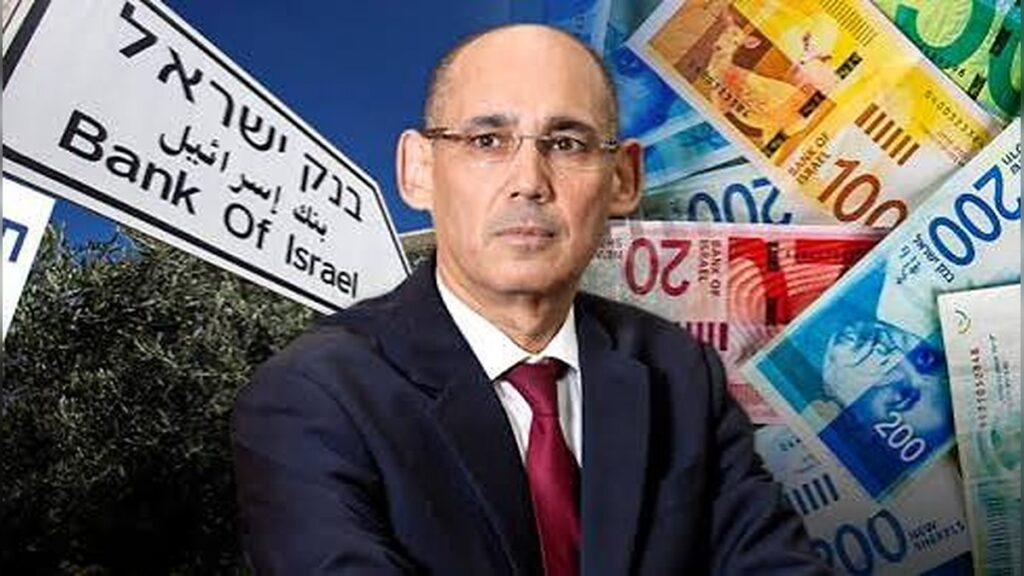
While many economies are grappling with rising inflation, elevated interest rates and slowing growth due to ongoing tensions in the Middle East, Israel is experiencing a notably different economic trend.
Recent data suggest that inflation is easing, the labor market remains resilient and monetary policy is shifting toward lower borrowing costs despite regional uncertainty.
These developments have strengthened confidence that Israel’s economy is proving more resilient than many had anticipated.
Inflation Falls to Multi-Year Low
Annual inflation has declined to its lowest level in approximately five years, providing relief to consumers and policymakers alike.
The moderation in price growth has created room for the Bank of Israel to continue easing monetary policy after maintaining relatively high interest rates during recent periods of economic uncertainty.
In July, the central bank lowered its benchmark interest rate by 25 basis points to 3.5%, reflecting growing confidence that inflationary pressures are becoming more manageable.
Official projections also suggest additional rate reductions could follow over the next year, with the average policy rate expected to reach around 3% by the second quarter of 2027.
Strong Shekel Helps Shield Consumers
A major factor supporting Israel’s inflation outlook has been the continued strength of the shekel.
As global energy and commodity prices remain under pressure from geopolitical tensions, the appreciation of Israel’s currency has helped offset higher import costs.
This has reduced the impact of international price increases on domestic consumers, limiting inflation despite external shocks affecting global markets.
The Bank of Israel has similarly acknowledged that the stronger currency has played a significant role in easing inflationary pressures.
Central Bank Returns to Currency Market
Although the shekel has remained strong, the Bank of Israel has resumed selective purchases of foreign currency to maintain orderly market conditions.
The central bank purchased approximately $801 million in foreign currency during May and another $1.03 billion in June.
Officials have described the interventions as discretionary rather than part of a large-scale currency support program, emphasizing that they are intended to reduce excessive market volatility when necessary.



The move also signals that policymakers remain prepared to intervene if financial markets become unstable.
Economic Forecasts Turn More Optimistic
The central bank has become increasingly optimistic about Israel’s medium-term economic prospects.
Growth expectations for 2026 have been revised upward from 3.8% to 4%, while the inflation forecast has been lowered from 2.2% to 1.8%.
Officials expect exports outside the diamond and startup sectors, as well as fixed investment, to expand by around 8% next year, suggesting the recovery could be driven by broader economic activity rather than government spending alone.
The improved outlook also reflects growing confidence that inflation risks are becoming more balanced after previously being viewed as predominantly upward.
Recovery Extends Beyond Headline Numbers
Recent economic indicators suggest activity has continued to strengthen despite disruptions earlier this year linked to regional conflict.
The Bank of Israel’s State-of-the-Economy Index recorded consecutive monthly gains through the second quarter, indicating that economic output has recovered beyond levels seen before the latest military escalation.
The data point to a shrinking output gap and improving business conditions across several sectors.
Labor Market Remains Exceptionally Strong
Employment conditions continue to support the broader economy.
Unemployment remains close to 3%, effectively representing full employment, while job vacancies have climbed to roughly 146,000.
The sustained demand for workers highlights ongoing business activity and reinforces expectations that domestic consumption will remain relatively stable.
Government finances have also exceeded expectations.
Stronger-than-anticipated tax revenues prompted the Bank of Israel to lower its projected budget deficit for 2026 from 5.3% to 4.9% of gross domestic product.
Meanwhile, the rolling 12-month fiscal deficit declined further to 3.3% of GDP, reflecting healthier public finances than previously forecast.
Challenges From Security Spending Persist
Despite the encouraging economic data, significant risks remain.
Israel continues to face substantial security expenditures linked to ongoing regional tensions.
Public debt is projected to rise to approximately 69% of GDP, while the government maintains a deficit target of 4.9% for 2026.
Analysts caution that any significant increase in defense spending could place additional pressure on public finances and potentially influence investor confidence as well as future monetary policy decisions.
Resilient Economy Continues to Surprise
Although geopolitical risks remain elevated, Israel’s economic performance has continued to outperform many expectations.
Supported by a strong currency, relatively low inflation, robust employment and stable financial institutions, the country has demonstrated an ability to withstand external shocks more effectively than many observers anticipated.
While challenges remain, recent economic indicators suggest Israel is entering its next phase of recovery from a considerably stronger position than regional headlines alone might imply.

