
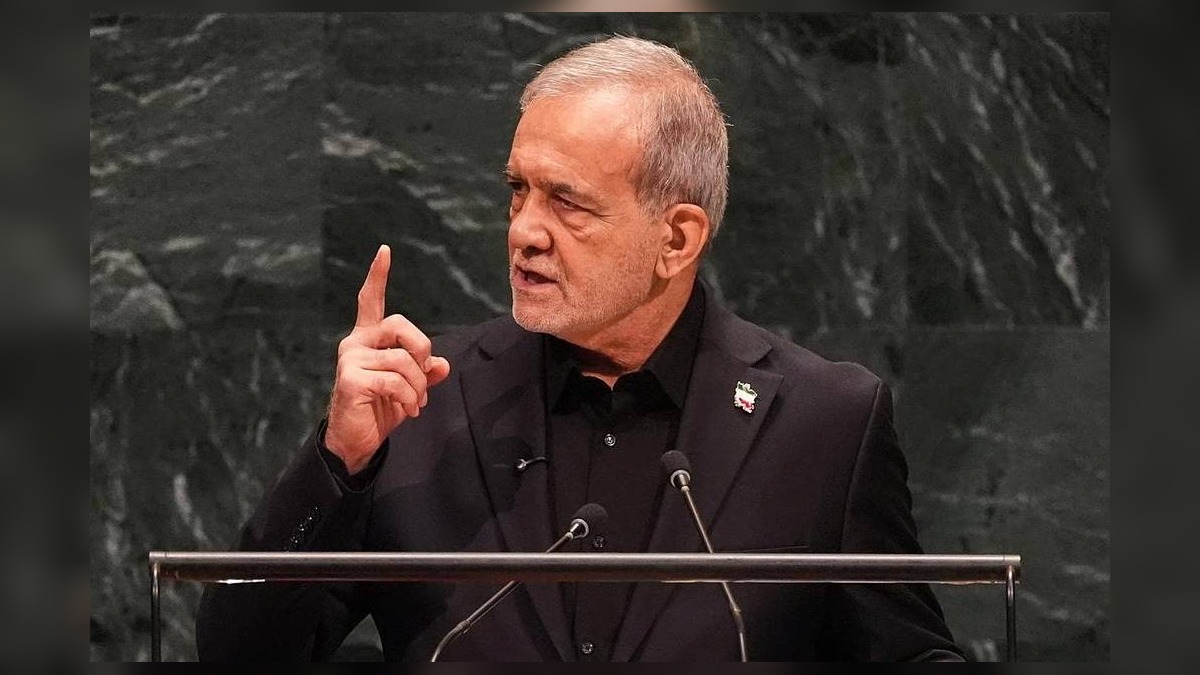
Iranian President Masoud Pezeshkian says Tehran no longer trusts negotiations with the United States, arguing that previous diplomatic efforts were followed by renewed military attacks and economic sanctions.
Speaking in an interview with Al Jazeera aired on September 26, Pezeshkian said Iran was uncertain about the foundation for any new agreement with Washington after repeated breakdowns in diplomacy. Qatar and Pakistan, he said, are continuing to act as intermediaries by carrying messages between the two governments.
Pezeshkian Says Tehran Has Lost Confidence in Washington
Pezeshkian directly questioned whether another round of negotiations could produce a lasting agreement.
“We have no trust in the American side and do not know on what basis an understanding can be reached with it,” the Iranian president told Al Jazeera.
His comments reflect the deep deterioration in relations between Tehran and Washington following months of negotiations, ceasefires, renewed military action and economic pressure.
Iran maintains that previous diplomatic efforts failed because agreements were followed by further attacks or sanctions.
Qatar and Pakistan Continue Carrying Messages
Despite Pezeshkian’s declaration of distrust, communication between Iran and the United States has not completely stopped.
The Iranian president said Qatar and Pakistan are transmitting messages between Tehran and Washington as mediators attempt to preserve a diplomatic channel.
Pakistan has played a significant role in previous negotiations between the two countries, while Qatar has also remained involved in attempts to reduce tensions.
The continued involvement of intermediaries suggests that both sides still have a mechanism for exchanging proposals even without sufficient trust for sustained direct negotiations.
Iran Points Back to June Memorandum
Pezeshkian said any renewed negotiations should be based on the memorandum of understanding reached between Iran and the United States in June.
The agreement was produced through mediation efforts involving Pakistan and was intended to provide a framework for de-escalation and further negotiations.
However, the arrangement subsequently unravelled as fighting resumed and relations between Washington and Tehran deteriorated again.
Pezeshkian said Washington now needs to make its position on that earlier agreement clear.
Tehran Awaits US Response to New Proposal
The Iranian president’s comments come as Tehran awaits Washington’s response to another proposal intended to end the fighting and reopen the Strait of Hormuz.




Iranian Foreign Minister Abbas Araghchi said Tehran’s proposed timetable could see initial steps completed within several days, followed by the reopening of the strategic waterway and negotiations with the United States on mutually agreed issues, including Iran’s nuclear programme.
Under the proposal described by Iranian officials, Washington would take measures including easing restrictions on Iranian oil exports, releasing frozen Iranian assets and ending its naval blockade of Iranian ports.
Iran, in return, would reopen the Strait of Hormuz to commercial shipping and move toward negotiations with Washington.
Strait of Hormuz Remains Central to Dispute
The Strait of Hormuz has become one of Tehran’s most significant points of leverage during the conflict.
The strategically important waterway normally carries a substantial share of internationally traded oil and gas, making disruptions there a concern far beyond Iran and the United States.
Pezeshkian rejected claims that Iran alone was responsible for the disruption, arguing that American actions had restricted Iranian access first.
He said the waterway could be reopened if negotiations succeeded in ending the conflict.
Iran Blames Repeated Attacks for Collapse in Trust
Tehran’s distrust is rooted in what Iranian officials describe as repeated failures of diplomatic arrangements.
Pakistan helped broker the June memorandum following earlier efforts to halt hostilities. But renewed fighting followed within weeks, with both Washington and Tehran accusing the other side of failing to comply with commitments.
Iranian officials have argued that US military actions and economic restrictions undermined the agreements, while Washington has separately accused Tehran of failing to meet its obligations.
Those competing accusations have made rebuilding sufficient trust for another durable agreement increasingly difficult.
Pezeshkian Says Negotiations Remain Better Than Force
Despite his criticism of Washington, Pezeshkian did not rule out diplomacy altogether.
The Iranian president argued that the crisis could ultimately be resolved through negotiations rather than continued military confrontation.
His position leaves Tehran attempting to balance two messages: that it has lost confidence in Washington’s reliability but remains prepared to consider an agreement if sufficient guarantees can be established.
Pakistan Faces Difficult Mediation Challenge
Pakistan’s continued involvement places Islamabad in a difficult diplomatic position.
It has repeatedly encouraged both countries to return to negotiations and helped produce the June framework. Yet previous ceasefire arrangements and diplomatic breakthroughs have repeatedly broken down.
Pakistani officials have maintained that dialogue remains the most viable path toward resolving the conflict, even as analysts have questioned how much leverage Islamabad can exercise over either Washington or Tehran.
Qatar is similarly continuing its mediation efforts as regional governments attempt to prevent further escalation.
Diplomatic Channel Survives Despite Deep Distrust
Pezeshkian’s latest remarks underline the contradiction now shaping relations between Iran and the United States.
Tehran says it no longer trusts Washington, yet Iranian proposals are still being transmitted to American officials through Qatar and Pakistan.
The June memorandum also remains a reference point for possible future negotiations despite the subsequent collapse of the arrangements surrounding it.
Whether those indirect diplomatic channels can produce another agreement now depends partly on Washington’s response to Tehran’s latest proposal and whether either side believes new commitments can survive beyond the negotiating table.
