
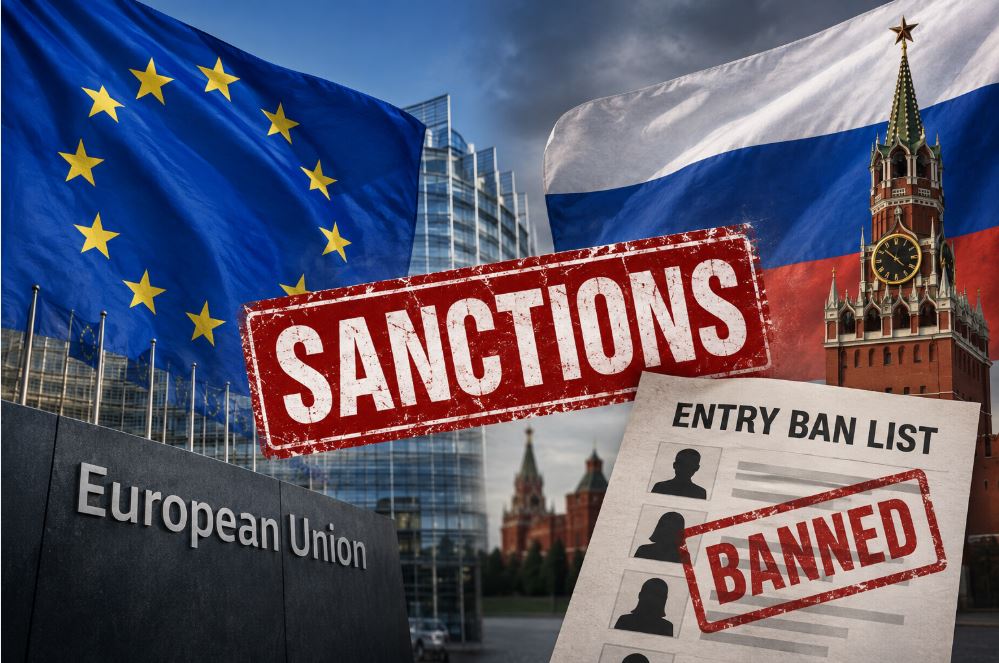
Russia has announced a significant expansion of restrictions on European officials and other individuals, escalating its retaliatory measures following the European Union’s adoption of its 21st package of sanctions against Moscow.
In a statement issued on September 18, the Russian Foreign Ministry said additional representatives of EU institutions, member states and several other European countries had been added to a list of people prohibited from entering Russia.
The ministry presented the decision as a direct response to measures approved by the Council of the European Union on July 23, which Moscow described as unilateral and unlawful under international law.
EU’s 21st Sanctions Package Targets Key Russian Sectors
The European Union says its latest sanctions were introduced in response to Russia’s war against Ukraine and are intended to increase economic pressure on Moscow.
According to the EU Council, the 21st package includes listings covering 48 individuals and 170 entities. It also expands restrictions targeting Russia’s financial system, energy revenues, military-industrial sector, cryptocurrency services and vessels associated with what the EU describes as Russia’s “shadow fleet.”
Among the measures are transaction bans involving another 33 Russian credit and financial institutions, restrictions involving 14 crypto-related service platforms outside the EU and measures affecting 41 additional vessels. The EU has said the sanctions are designed to weaken Russia’s ability to finance and sustain its military operations in Ukraine.
Moscow Broadens List of Europeans Barred From Russia
The Russian Foreign Ministry did not disclose the full number or identities of the newly affected individuals in the statement provided, but said the expanded entry restrictions cover officials and other figures it considers responsible for supporting Brussels’ policies against Russia.
Moscow said the restrictions were imposed under Russia’s federal legislation governing entry into and departure from the country.
According to the ministry, individuals connected with decisions to provide military assistance to Ukraine are among those affected. Moscow continues to refer to the Ukrainian government as the “Kiev regime,” terminology that reflects the Russian government’s characterization of Ukraine’s leadership.
Sanctions Officials and Supporters of Ukraine Targeted
Russia said its expanded blacklist also covers individuals it accuses of participating in decisions that undermine what Moscow regards as the territorial integrity of the Russian Federation.



That category is particularly significant because Russia claims sovereignty over Ukrainian territories it has declared annexed. The EU, Ukraine and much of the international community do not recognize those annexations and continue to regard the territories as part of Ukraine.
Officials involved in developing or imposing European sanctions against Russia have also been targeted by Moscow’s latest measures.
Maritime Restrictions and Russian Assets Enter Dispute
The Foreign Ministry said people accused of interfering with maritime shipping serving Russian interests are among those subjected to the entry ban.
Russia has additionally targeted individuals it says support the seizure of Russian state assets or the use of profits generated from frozen Russian holdings.
The question of immobilized Russian state assets has become another major source of confrontation between Moscow and European governments, with Russia repeatedly warning against confiscation or the use of proceeds from those assets.
Moscow Targets Politicians, Academics and Activists
The retaliatory measures extend beyond government officials.
According to the Russian Foreign Ministry, restrictions have also been imposed on European academics and people it described as “civil activists” who maintain what Moscow considers a hostile position toward Russia.
Members of national parliaments across the EU and lawmakers in the European Parliament who supported legislation or resolutions targeting Russia have also been included in the expanded restrictions.
Moscow further said individuals involved in what it characterized as the persecution of Russian citizens on fabricated grounds were affected.
Council of Europe Initiatives Also Draw Russian Response
Russia said its measures extend to people involved in creating what the Foreign Ministry described as “pseudo-legal” anti-Russian mechanisms within the Council of Europe.
Relations between Moscow and European institutions have deteriorated sharply since Russia’s full-scale invasion of Ukraine in February 2022, leading to successive rounds of sanctions and countermeasures.
The EU says it has now adopted 21 sanctions packages targeting Russia since the full-scale invasion, with the measures covering individuals, companies and important areas of the Russian economy.
Russia Warns Further EU Sanctions Will Trigger Retaliation
Despite the growing sanctions confrontation, Moscow said it would continue pursuing its existing foreign-policy objectives, including what it described as protecting Russia’s national interests and the rights and freedoms of Russian citizens.
The Foreign Ministry also reiterated Russia’s support for what it calls the development of a multipolar international system.
Moscow ended its statement with a warning that additional EU sanctions would result in further Russian countermeasures, signaling that the cycle of European restrictions and Russian retaliation is likely to continue as long as the broader confrontation over Ukraine persists.
