
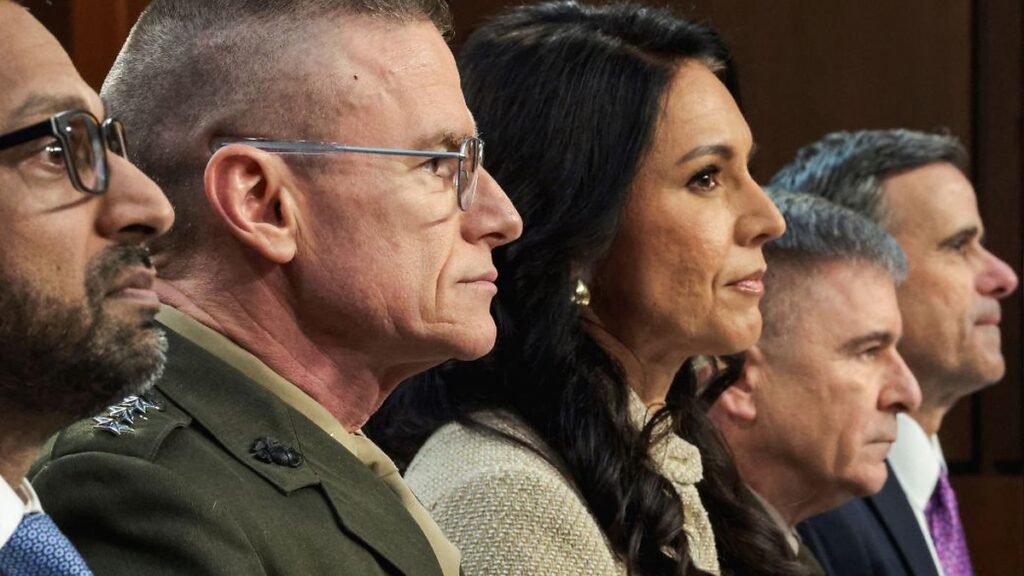
A new intelligence assessment has sparked sharp debate within the highest levels of the US government after CIA Director John Ratcliffe warned senior officials that Iran may not be fully committed to making concessions on its nuclear programme.
According to an Axios report citing three sources familiar with the discussions, the intelligence was presented during a series of high-level meetings in Washington, DC, ahead of President Donald Trump’s announcement of a tentative agreement framework with Tehran.
The warning has exposed deep divisions inside the administration over how to interpret Iran’s intentions and whether the proposed understanding can realistically prevent nuclear escalation.
Trump Briefed as Intelligence Contradicts Iranian Commitments
US President Donald Trump was among the officials briefed on the intelligence findings, which reportedly suggested inconsistencies between Iran’s internal discussions and what its diplomats communicated to American negotiators and third-party mediators.
Sources told Axios that Trump reviewed the intelligence alongside senior advisers in meetings leading up to the public announcement of the deal framework.
The materials allegedly raised concerns that Tehran’s private positions did not align with its declared commitments.
The situation has added complexity to ongoing negotiations, with officials questioning whether Iran is negotiating in good faith.
Split Emerges Among Top US Officials Over Nuclear Deal Viability
Within the administration, key figures have reportedly taken opposing positions on the agreement.
Secretary of State Marco Rubio and Secretary of Defense Pete Hegseth are said to have echoed Ratcliffe’s concerns, raising doubts about whether Iran would ultimately accept US nuclear demands.



Both officials reportedly questioned whether the memorandum of understanding provided sufficient guarantees to prevent nuclear escalation.
A source cited by Axios stated that the intelligence indicated Iranian intentions were “not in line with their commitments under the deal,” further intensifying internal skepticism.
Pro-Deal Camp Pushes Forward Despite Intelligence Concerns
While some officials raised alarms, others within the administration reportedly pushed strongly in favour of moving forward.
US Vice President JD Vance, along with envoys Steve Witkoff and Jared Kushner, are said to have supported advancing the agreement despite the intelligence warnings.
This internal split highlights competing strategic approaches within the White House—one prioritising caution based on intelligence assessments, and another focused on securing a diplomatic breakthrough with Tehran.
White House Defends Deal as Meeting All Nuclear Red Lines
Responding to questions from Axios, a White House official defended the proposed arrangement, insisting that the deal aligns with long-standing US conditions designed to prevent Iran from obtaining a nuclear weapon.
The official stressed that President Trump considered multiple viewpoints before making decisions, but ultimately retains final authority over the process.
“The deal meets all of the redlines that the administration has long articulated,” the official said, adding that the president remains the ultimate decision-maker.
Draft Terms Suggest Heavy Concessions and Future Uncertainty
Although the full 14-point agreement has not yet been released, sources familiar with the text described provisions that would require both sides to address stockpiles of enriched nuclear material and negotiate future enrichment limits under a broader framework.
According to Axios, the proposed arrangement may also allow Iran to retain more immediate benefits than it gives up unless a stricter final agreement is reached later.
In the event a final deal is concluded, the US would reportedly withdraw military personnel deployed in regional operations within 30 days and lift sanctions against Tehran according to an agreed timetable.
Uncertainty Looms Over Final Nuclear Agreement
Despite the reported progress, major questions remain about whether the emerging framework can withstand internal US divisions and conflicting intelligence assessments.
With negotiations still evolving, officials on both sides face growing pressure to reconcile diplomatic ambitions with security concerns that continue to cast doubt over Iran’s long-term nuclear intention.

