
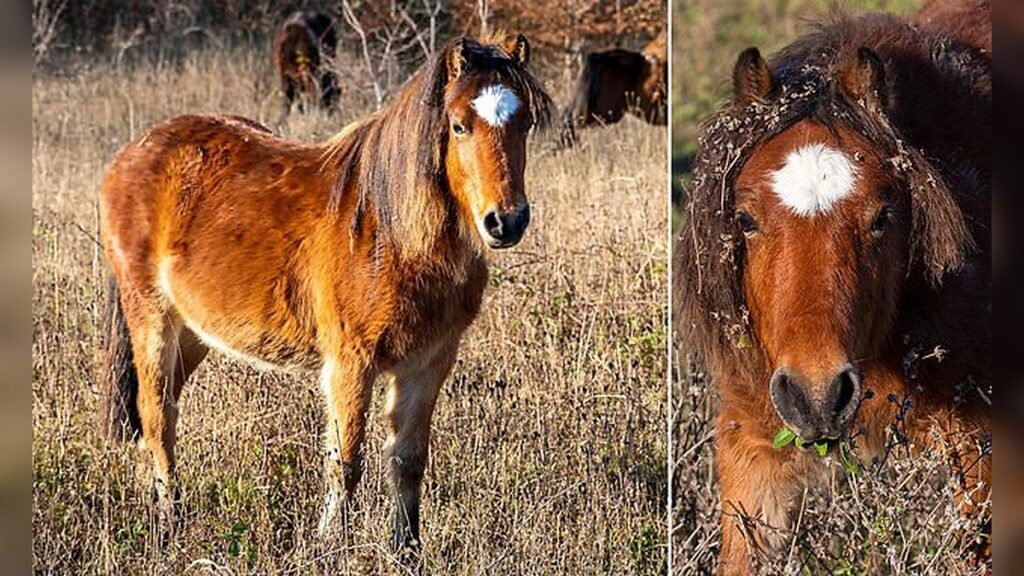
Concerns are mounting among conservationists and local campaigners that the semi-wild ponies of Dartmoor could be pushed towards extinction under new environmental grazing rules being introduced by the UK Government.
The ponies, which have roamed the moorland landscape for more than 3,500 years, are now caught in a policy debate over land use, biodiversity protection, and livestock management that critics say could have unintended and devastating consequences.
Once numbering around 30,000 across the moors, their population has fallen dramatically over the past seven decades to roughly 1,000, placing them under increasing conservation pressure.
Centuries-Old Herds Now on the Brink
The Dartmoor hill pony, a semi-feral breed deeply tied to the identity of Dartmoor, has already been placed on the watchlist of the Rare Breed Survival Trust following its sharp population decline.
Conservationists say the breed now represents one of England’s last remaining populations of semi-wild horses, making its survival a matter of national heritage as well as ecological concern.
However, campaigners warn that the species’ fragile recovery could be undone by new land management regulations, which they argue fail to distinguish between commercial livestock and the ponies that have long existed as part of the moor’s natural ecosystem.
New Grazing Rules Spark Controversy
At the centre of the dispute are revised grazing policies from the Department for Environment, Food and Rural Affairs and Natural England, which aim to reduce overgrazing on protected landscapes.
The reforms, developed under environmental stewardship schemes that have been in place since 1994, are intended to protect fragile moorland habitats by limiting livestock density and encouraging biodiversity recovery.
Under the latest proposals, commoners—local farmers and land managers responsible for animals grazing on Dartmoor—could be required to reduce livestock numbers by as much as 75 percent.
For the first time, campaigners say, Dartmoor’s semi-wild ponies may be included within those restrictions.
Fears Over Mass Cull and Competition for Grazing
Local advocates argue that the policy shift could force ponies into direct competition with commercial cattle and sheep for grazing land, making them more vulnerable to removal.




Some campaigners fear that up to 93 percent of the remaining pony population could be lost if they are prioritised for reduction alongside farm livestock.
There are also concerns that the annual October “drifts”—traditional round-ups used to gather ponies for health checks—could become a mechanism through which large-scale removals are carried out.
Campaigners Warn of Ecological and Cultural Loss
Charlotte Faulkner, chair of the Friends of the Dartmoor Hill Pony group, said the new rules represent a fundamental change in how the animals are treated under conservation policy.
She argued that previous environmental schemes had excluded ponies from grazing calculations, allowing them to exist alongside managed livestock without being targeted for reduction.
The updated approach, she warned, places them directly in harm’s way.
Faulkner also criticised what she described as conflicting policy signals, where the ponies are simultaneously recognised as endangered while being included in reduction targets.
She warned that it would be “deeply ironic” if efforts to restore biodiversity ended up eliminating one of the landscape’s most historically significant species.
Petition Grows Amid Claims of Policy Confusion
Public concern has grown quickly, with a petition launched by campaigner Sarah-Jane Norris attracting more than 17,000 signatures calling for the ponies to be protected.
Norris argued that while the intention behind the reforms is to improve biodiversity and restore moorland habitats, excluding the ponies from protection could have the opposite effect.
She also claimed that Natural England is making decisions that undermine its own conservation objectives, adding that the loss of ponies could damage the ecological balance of Dartmoor rather than improve it.
Wider Debate Over Grazing and Moorland Management
The controversy comes amid long-running debates over grazing pressure on upland ecosystems, with environmental groups frequently arguing that livestock numbers have contributed to declines in biodiversity.
In recent years, campaigners including TV presenter and conservationist Chris Packham have pushed for tighter regulation of grazing on Dartmoor, including legal challenges over whether livestock limits were being properly enforced.
In 2025, a High Court ruling found that local management authorities had failed to adequately assess grazing levels across the moor, intensifying scrutiny of how the landscape is regulated.
Government Responds to Growing Concerns
Responding to the backlash, a spokesperson for the Department for Environment, Food and Rural Affairs said the Government is working with local partners, including the Dartmoor Hill Pony Association, to ensure semi-wild pony populations are maintained for future generations.
Officials said the changes are part of broader efforts to balance environmental restoration with the long-term sustainability of traditional grazing practices across protected landscapes.
As negotiations continue, the future of Dartmoor’s ponies remains uncertain—caught between conservation policy, agricultural pressure, and growing public concern over the survival of one of Britain’s oldest semi-wild animal populations.
