
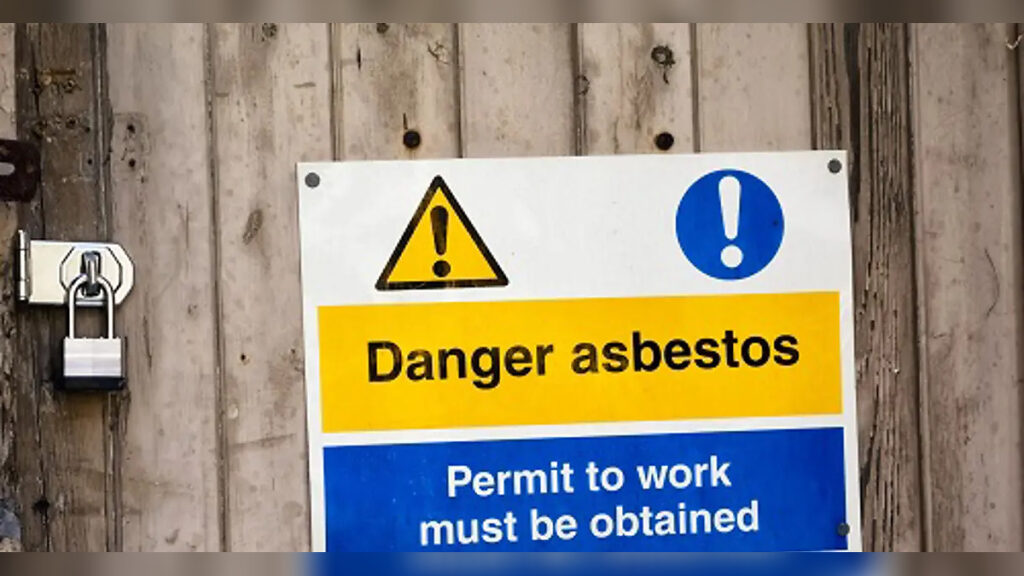
John Flavin spent decades pushing for safer conditions on British construction sites, becoming one of the key figures behind major workplace reforms.
From his early campaigning in the 1970s through to his leadership role as president of the Union of Construction, Allied Trades and Technicians (UCATT) in the 1990s, he helped reshape how the industry approached worker protection.
His career later moved into senior management within the construction sector, including an executive position at Laing O’Rourke.
Friends and family say his life’s work was driven by negotiation and reform rather than confrontation, with a focus on preventing the very hazards that would eventually take his life.
From Marathon Fitness to a Sudden Collapse
Despite his background in occupational safety, John’s health crisis came as a shock to his family in 2021.
At 77, he began experiencing severe symptoms, including coughing up blood, despite maintaining an active lifestyle and running marathons.
Initially dismissed as something minor due to his fitness and non-smoking history, his condition quickly escalated.
Emergency scans revealed a large tumour in his right lung, leading to a diagnosis of asbestos-related lung cancer.
Surgeons were able to remove part of his lung, but the disease progressed and he died the following year after a prolonged battle.
Asbestos Death Toll Debate Reopens
John Flavin’s case has become part of a wider controversy over how Britain records asbestos-related deaths.
The Health and Safety Executive (Health and Safety Executive) currently estimates around 2,500 deaths annually from mesothelioma and another 2,500 from asbestos-linked lung cancer, producing a widely cited 1:1 ratio.
However, new academic research suggests that this figure may significantly underestimate the true scale of fatalities.
Some specialists now argue that total asbestos-related deaths could be as high as 22,500 each year, nearly four times higher than official estimates.
White Asbestos Under Scrutiny
Much of the debate centres on chrysotile, commonly known as white asbestos, which has long been considered less dangerous than blue or brown variants.
White asbestos is still found in many buildings across the UK, including schools and hospitals.




Research led by Professor Daniel Murphy of the University of Glasgow challenges that assumption, suggesting white asbestos may be far more strongly linked to lung cancer than previously understood.
His work indicates that tumours caused by asbestos exposure are often indistinguishable from those caused by smoking, leading to misclassification in medical records.
Laboratory Findings That Challenge Old Assumptions
Professor Murphy’s experiments involved exposing mice to white asbestos fibres in a way that bypassed the lungs and directly targeted surrounding tissue.
The results showed that white asbestos shortened lifespan in a similar way to blue and brown fibres.
He argues that once trapped in lung tissue, white asbestos likely triggers chronic inflammation, potentially accelerating cancer development inside the lungs rather than only affecting the outer lung lining.
This challenges the traditional view that white asbestos is mainly linked to mesothelioma rather than lung cancer.
A Hidden Problem in Diagnosis
One of the central concerns raised by researchers is diagnostic confusion.
Because asbestos-related lung cancer resembles smoking-related cancer at a cellular level, many cases may be incorrectly attributed to tobacco use.
Campaigners argue that this misclassification could be significantly lowering recorded asbestos-related death figures, masking the true scale of industrial exposure from past decades.
Workers Who Were Never Protected
Testimony from former workers continues to highlight how widespread exposure once was.
John Flavin described handling raw asbestos materials during his teenage years, mixing asbestos powder by hand and working in dust-filled environments without any protective equipment or warnings.
Similar accounts have emerged from shipyard and construction workers who say asbestos was routinely used for insulation, often handled in confined spaces with no respiratory protection.
Families Left Facing Legal and Financial Struggles
Families affected by asbestos-related illness say the system of compensation and benefits does not always reflect the reality of exposure.
While some victims have received legal settlements through firms such as Irwin Mitchell and others, many cases remain difficult to prove, particularly when lung cancer is initially attributed to smoking.
In several instances, compensation has only been secured after detailed legal challenges established a link to workplace exposure.
Calls for Policy Reform Intensify
Campaigners, including groups such as Airtight On Asbestos, are urging the government to reassess its approach to asbestos management in public buildings.
Their central demand is a long-term, phased removal programme spanning several decades, beginning with schools and hospitals.
Currently, UK policy generally permits asbestos to remain in place if it is not visibly damaged or deteriorating, a position critics argue is increasingly unsafe given new scientific findings.
A Growing Dispute Over National Figures
Experts in occupational health, including Professor Jukka Takala of the International Commission on Occupational Health, argue that the UK is underestimating the role of asbestos in lung cancer deaths compared with international evidence.
Meanwhile, campaigners say consensus at recent industry conferences suggests the ratio of mesothelioma to asbestos-related lung cancer could be closer to 1:8 rather than 1:1, reinforcing calls for urgent review of official statistics.
A Legacy That Raises Hard Questions
For John Flavin’s family, the irony remains painful.
A man who spent his life fighting to protect workers ultimately died from the very hazards he worked to eliminate.
His daughter and other campaigners say his story reflects a wider national issue: thousands of deaths that may not be fully counted, and a system they believe still underestimates the long-term impact of asbestos exposure across Britain’s workplaces.
