
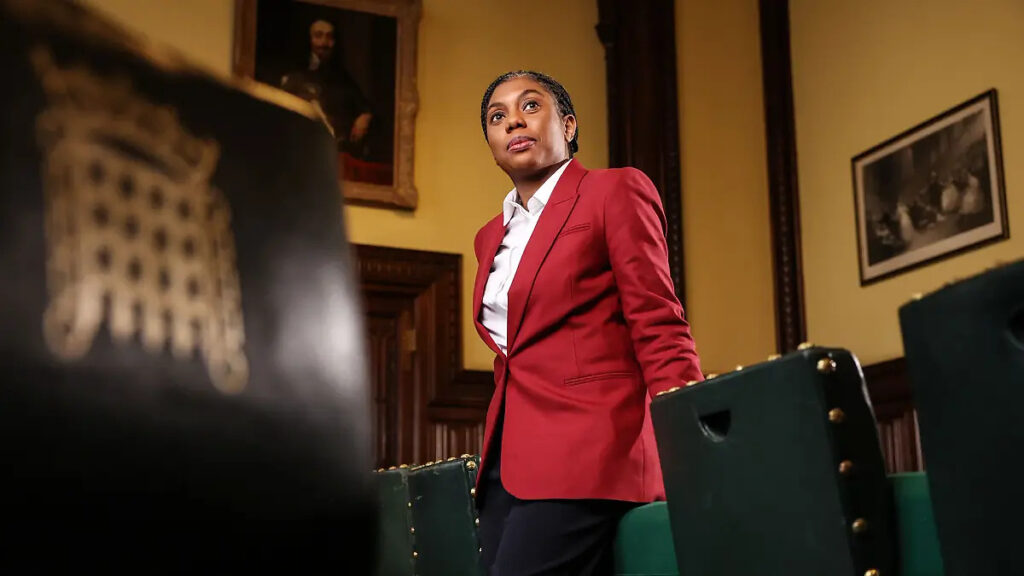
Conservative Party leader Kemi Badenoch has said the death of 18-year-old Henry Nowak should become a defining national turning point, comparing it to the killing of Stephen Lawrence murder that reshaped policing in Britain.
Writing in a national newspaper, she argued that the fatal stabbing of the university student, alongside what she described as a deeply flawed police response, represents a “seminal moment” in Britain’s ongoing struggle with racism and institutional trust.
Badenoch said the case should force the country to confront uncomfortable questions about policing, public narratives, and what she called the growing influence of “identity politics” in shaping official reactions to violent crime.
Fury Over Footage Showing Officers Handcuffing Dying Student
Public anger has intensified after the emergence of distressing footage showing Henry being restrained by officers while critically injured on a Southampton street in Southampton last December.
In the video, the 18-year-old can be heard repeatedly saying he had been stabbed, including the words “I can’t breathe,” as officers initially questioned his claims and kept him pinned to the ground.
He was later confirmed to have suffered fatal stab wounds in the attack.
The incident has triggered widespread criticism of police judgement, with questions raised about how emergency officers responded in the crucial minutes after the assault.
One officer involved in the arrest has since resigned from Hampshire Police following public backlash.
Attack, False Claims and a Fatal Stabbing
Henry Nowak, a finance student, was attacked in December 2025 by 23-year-old Vickrum Digwa, who prosecutors said used an eight-inch ceremonial dagger during the assault.
Digwa was later accused of attempting to mislead authorities by shifting blame and presenting himself as the victim after the stabbing.




He was described in court proceedings as carrying multiple blades, including a religious kirpan, which became part of wider debate about religious exemptions for edged weapons.
He has since been sentenced to life imprisonment with a minimum term of 21 years for murder.
Political Backlash and Claims of “Two-Tier” Policing
The case has rapidly become politically charged, with opposition figures accusing authorities of mishandling both the incident and the public narrative that followed.
Reform UK leader Nigel Farage said the reaction highlighted what he described as an imbalance in how allegations of racism are treated compared with violent crime.
He drew comparisons with global reactions to the death of George Floyd, arguing that the response in Britain had been comparatively muted.
Farage also claimed the situation reflected what he called a “two-tier culture,” where public institutions respond differently depending on the perceived identity of those involved.
Government Response and Questions Over Police Conduct
Home Secretary Shabana Mahmood said she would consider whether existing rules around religious exemptions for carrying blades should be reviewed, though she stopped short of ordering a formal investigation into the policy itself.
Meanwhile, the Independent Office for Police Conduct has confirmed it is examining the handling of the case, though officers involved are currently being treated as witnesses rather than suspects of misconduct.
Authorities say none of the arresting officers have been formally disciplined or issued misconduct notices at this stage.
Legal Fallout and Wider Weapons Charges
Beyond the murder conviction, Digwa, his father Moga Singh, and brother Gurpreet Digwa are also facing multiple weapons-related charges connected to items recovered from their home in Southampton, including machetes, knuckledusters, a baton, and swords.
Police reportedly seized the weapons the day after Henry’s death, adding further scrutiny to the household and the circumstances surrounding the case.
The wider proceedings have been adjourned for further hearings, with additional court dates expected later in the year.
Family Statements and Community Reaction
Following the conviction, Digwa’s family issued a public statement expressing remorse, saying they wished they could “turn back time” and apologising to both Henry’s relatives and parts of the Sikh community they said had been “brought into disrepute.”
Despite this, they also expressed continued emotional support for the convicted killer, a remark that has drawn further public attention.
As the case continues to spark national debate, it remains a focal point for discussions about policing, identity, and justice in modern Britain.
