
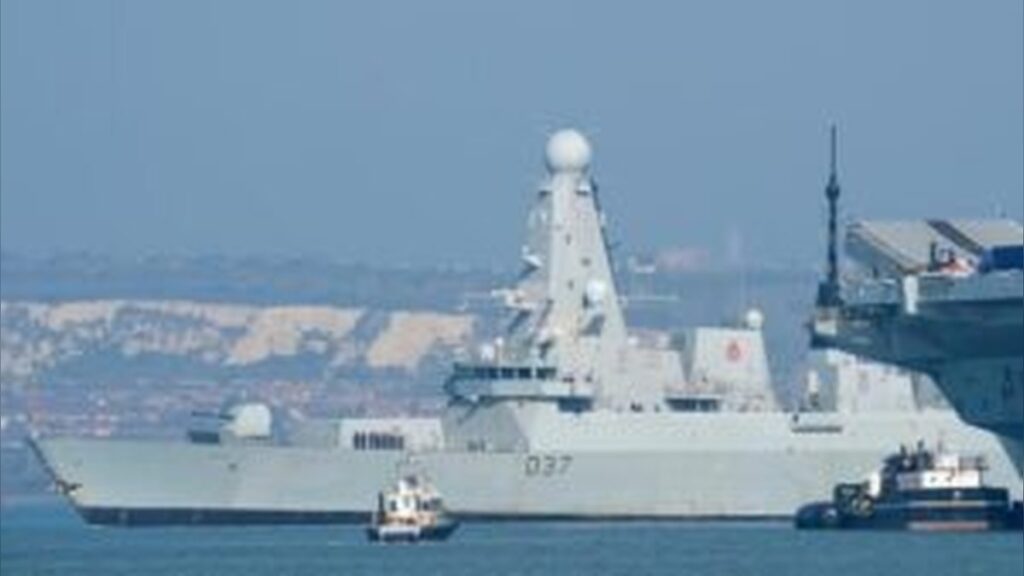
The UK government is preparing to abandon earlier plans for a new generation of traditional destroyers, opting instead to develop a fleet of advanced hybrid warships designed for modern combat.
Under proposals set to feature in the government’s long-awaited Defence Investment Plan (DIP), at least six new Common Combat Vessels will be built to replace the ageing Type 45 destroyers over the coming decade.
Ministers say the move reflects the changing realities of warfare, where autonomous systems and drones are becoming increasingly central to military operations.
Hybrid Ships to Lead Future Naval Operations
Rather than investing in a limited number of large, high-cost warships, the Ministry of Defence believes the new vessels will provide greater flexibility while reducing operating costs.
The Common Combat Vessels are expected to coordinate uncrewed systems across multiple domains, including aerial drones, autonomous surface craft and underwater vehicles.
Officials say this integrated approach will strengthen Britain’s air defence capabilities while expanding the Royal Navy’s operational reach without requiring significantly larger crews.
Construction is expected to begin later this decade, with the vessels entering service during the 2030s.
Defence Secretary Highlights Emerging Threats
Defence Secretary Dan Jarvis said the government’s latest equipment programme is focused on ensuring British forces are prepared for the evolving security landscape.
According to the Ministry of Defence, the new ships are specifically intended to respond to growing military challenges, including increased Russian activity in the North Atlantic and Arctic regions.
The vessels will also play a role in protecting undersea infrastructure and reinforcing NATO’s collective defence posture.
Investment Plan Nears Long-Awaited Release
The naval announcement comes ahead of publication of the Defence Investment Plan, which outgoing Prime Minister Sir Keir Starmer has pledged to release before the NATO summit in Turkey on 7 July.
The strategy has faced repeated delays as ministers negotiated funding levels across government departments.




Although officials have confirmed the hybrid warship programme will form a key part of the plan, no overall budget has yet been disclosed for the project.
The government has described the wider naval investment as a once-in-a-generation opportunity that will strengthen Britain’s maritime capabilities while supporting jobs in UK shipbuilding.
Recent Security Incidents Add Urgency
The renewed focus on naval power follows heightened concerns over maritime security.
Earlier this month, British authorities intercepted a Russian-linked “shadow fleet” oil tanker in the English Channel, an operation that ministers cited as evidence of growing geopolitical tensions. At the time, Sir Keir Starmer said the action demonstrated that those supporting Russia’s war in Ukraine would not be allowed to operate unchecked.
Officials argue that modern, drone-enabled vessels will better equip the Royal Navy to respond to similar challenges in the years ahead.
Defence Spending Debate Continues
Despite the government’s ambitious plans, questions remain over whether enough funding has been allocated to transform Britain’s armed forces.
The prolonged negotiations surrounding the Defence Investment Plan contributed to the recent resignations of former Defence Secretary John Healey and Armed Forces Minister Al Carns.
Both argued that proposed funding levels were insufficient to close capability gaps or keep pace with rapidly changing military technology.
Healey said the government had failed to commit the resources needed to meet rising security threats, while Carns described earlier drafts of the investment plan as lacking both ambition and adequate financial backing.
Opposition figures have also criticised the strategy, with Shadow Defence Secretary James Cartlidge arguing the proposals do not go far enough.
Additional Military Upgrades Included
Alongside the new naval programme, the Defence Investment Plan is expected to include wider investments across Britain’s armed forces.
The Ministry of Defence has already announced £500 million in funding to modernise the UK’s elite Commando Force, including new assault boats and advanced autonomous technologies.
Dan Jarvis has also indicated that front-line troops will receive additional cutting-edge equipment, including new strike drones intended to improve battlefield effectiveness.
Defence Spending Targets Remain Under Scrutiny
The government remains committed to increasing defence spending to 2.5% of GDP by 2027 and has joined NATO allies in setting an ambition of reaching 3.5% by 2035.
Current spending stands at approximately 2.3% of GDP, according to NATO figures covering 2025.
Before resigning, John Healey claimed earlier versions of the Defence Investment Plan would have increased spending to just 2.68% by the end of the decade.
Reports also suggest that Andy Burnham, widely viewed as the frontrunner to replace Sir Keir Starmer as prime minister next month, has already reviewed and endorsed the final investment strategy ahead of its official publication.
With the Defence Investment Plan expected within days, the government’s shift towards drone-integrated naval warfare signals one of the most significant changes in Britain’s maritime defence strategy in decades.

