
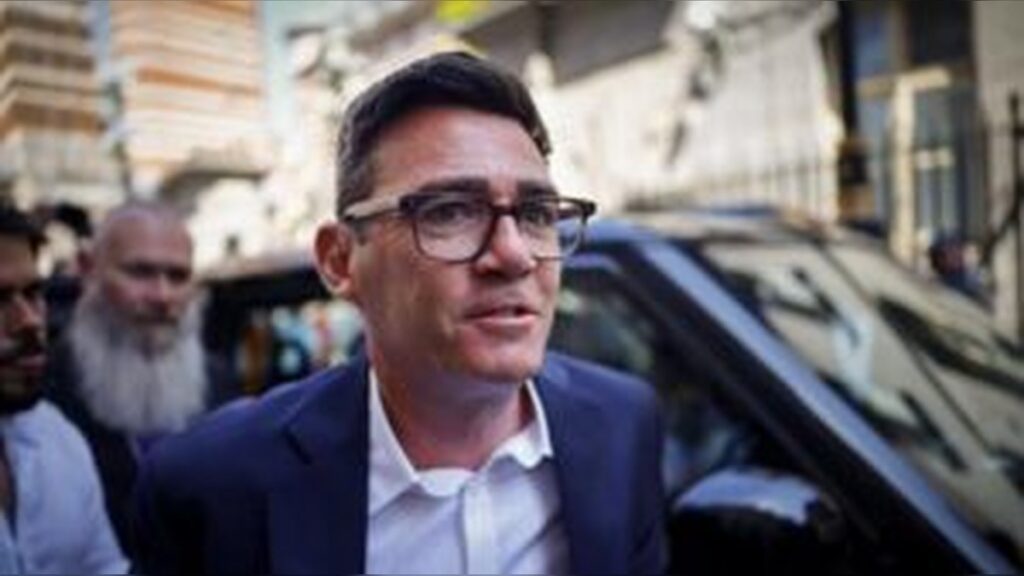
Andy Burnham is preparing to lay out his vision for the country in what his allies describe as the defining speech of his leadership campaign, outlining how he believes Britain can be revitalised through a major shift in political power away from Westminster.
Speaking at Manchester’s People’s History Museum, the newly elected MP for Makerfield is expected to present a broad blueprint for government, arguing that the country needs a decisive break from the way it has been governed for decades.
Supporters within his team have described the address as the foundation of his political programme and a statement of the priorities he would pursue if he became prime minister.
A Promise to Push Power Beyond London
At the centre of Burnham’s proposals is a commitment to expand decision-making powers for local and regional leaders across the UK.
He is expected to argue that governments have repeatedly failed to give communities outside London the authority needed to shape their own futures, despite years of promises about devolution.
Those close to Burnham say his experience leading Greater Manchester convinced him that Whitehall remains reluctant to surrender meaningful control, making reform essential if regional economies are to flourish.
‘No10 North’ Among Flagship Plans
One of the headline proposals expected in the speech is the creation of a permanent northern base for the Prime Minister’s Office.
Dubbed “No10 North,” the initiative would place part of the government’s central operation in Manchester, with the aim of accelerating devolution and promoting economic development across every part of the United Kingdom.
Burnham’s allies insist the proposal is not designed to favour northern England over other areas, stressing that Scotland, Wales, Northern Ireland and every English region would also benefit from a more balanced distribution of power.
Public Services Expected to Feature Prominently
The Labour leader is also due to renew calls for greater public control over essential services, including transport, water and energy.
However, questions remain over how far those ambitions would extend.
Observers will be looking for greater clarity on whether Burnham intends to pursue policies resembling nationalisation or whether his plans would involve more limited forms of state intervention, along with a clearer timetable for implementing any reforms.




Limited Media Scrutiny After Major Address
Despite the significance of the speech, Burnham is not expected to answer questions from journalists afterward.
The decision is likely to draw criticism from opponents, particularly given that he has only recently entered Parliament and has yet to receive a direct national electoral mandate for his leadership ambitions.
His team has rejected suggestions that the move signals an unwillingness to face scrutiny, insisting future campaign events will provide opportunities for more extensive questioning.
Conservatives Accuse Burnham of Dodging Bigger Issues
The Conservative Party has dismissed Burnham’s proposals as a distraction from what it considers the country’s more urgent challenges.
Party chairman Kevin Hollinrake argued that transferring powers between different layers of government would do little to address concerns over taxation, welfare reform or defence spending.
He accused Labour of focusing on constitutional restructuring instead of providing answers on issues affecting working families and businesses.
Cabinet Decisions Still Taking Shape
As Burnham develops his leadership platform, attention is also turning to who could occupy the most senior positions in a future government.
No appointments have yet been made, but discussions continue within his team over possible candidates for key cabinet roles.
Among the most closely watched decisions is who would become Chancellor, with Energy Secretary Ed Miliband emerging as one potential contender.
Supporters point to his previous Treasury experience and clear political direction, while critics argue his environmental policies and opposition to further North Sea oil and gas development could prove divisive.
David Miliband Also Linked to Senior Role
Speculation has also surrounded former Foreign Secretary David Miliband, who left British politics after narrowly losing the Labour leadership contest to his younger brother in 2010.
Since relocating to the United States to lead the International Rescue Committee, David Miliband has remained largely outside frontline UK politics.
Some within Labour believe Burnham could seek his return by appointing him to the House of Lords before offering him the role of foreign secretary.
Three Weeks That Could Define Burnham’s Future
The coming weeks are expected to be pivotal for Burnham’s political career.
Provided he avoids a leadership contest, he could become prime minister within three weeks.
Before then, he must persuade Labour MPs to support his leadership, convince voters that his programme offers a credible path forward and complete the difficult task of assembling a cabinet capable of governing.
Beyond the political manoeuvring, he will also face immediate questions over how to fund increased defence spending, reform social care and manage Britain’s relationship with US President Donald Trump.
For a politician who only entered Parliament days ago, the scale of the challenges ahead is enormous.

